The October 2026 Kayem Foods recall involves selected ready-to-eat meat and poultry products that may have experienced improper storage temperatures. Compare the complete product description, UPC, printed best-before range and USDA establishment mark with the official documents. Do not eat a matching product; follow the instruction to discard it or return it to the place of purchase. This guide was checked October 27, 2026.
Which Kayem Foods products require a closer check
FSIS announced recall 026-2026 on October 17, involving approximately 1,584,361 pounds. The products reached retail and foodservice customers nationwide and in Hong Kong. The FSIS announcement provides the regulatory notice; Kayem's announcement links its detailed affected-product table. This extends beyond packages that display Kayem as the front-facing brand.
The manufacturer's list includes entries under Al Fresco, McKenzie, Triple M and other names. That does not make every product under those brands recalled. A headline about hot dogs can also obscure sausage, bacon, deli and other entries in the full table. Check what you actually own against the complete list rather than using a shortened news list as the boundary.
Match the full product, UPC and best-before range
Open the manufacturer's affected SKU list and find the row matching the brand, item description and size where supplied. Record its published code alongside the barcode on your actual package, then compare the printed date with that row's best-before range. Different products have different ranges; a date from a chicken-sausage row cannot be applied to a frankfurter.
| Selected example, not the full list | Code published in the manufacturer table | Best-before range in 2026 |
|---|---|---|
| Kayem Natural Casing Old Tyme Beef & Pork Frankfurters, 12 oz | 003077101003 | October 15 only |
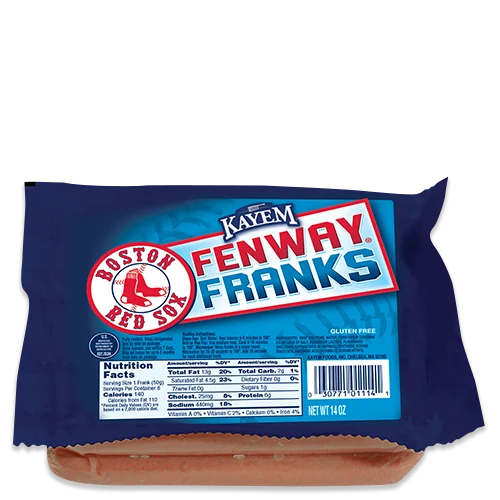
| Kayem Fenway Franks, 14 oz | 003077101114 | October 22-29 |
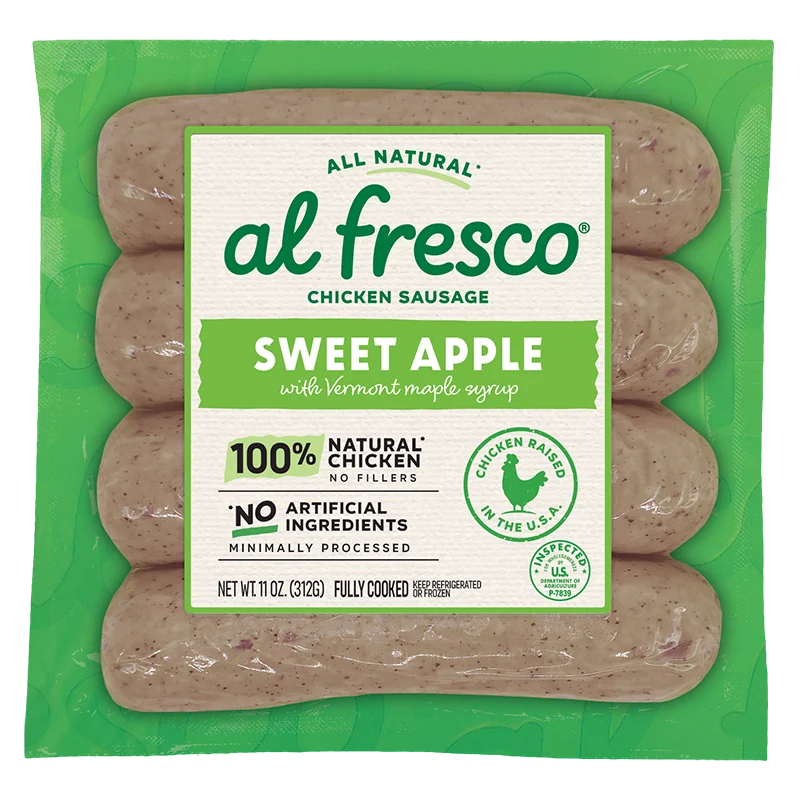
| Al Fresco Sweet Apple Fully Cooked Chicken Sausage, 11 oz | 003077102637 | July 22-December 25 |
| McKenzie Cob Smoked Uncured Bacon, 12 oz | 003077109544 | August 2-November 25 |
Do not force a barcode match by changing digits. There is a format discrepancy to resolve: the PDF lists Fenway Franks as 003077101114, while Kayem's package photograph prints 0 30771 01114 1. Keep both references, the product description, size and date, and ask Kayem to clarify an uncertain comparison. This guide does not establish a conversion rule between the table and a retail barcode.

These examples show why the brand alone is insufficient. If your package is not one of the examples, continue to the full linked PDF. Do not infer clearance from its absence in this small table. Photograph the barcode and date together so a retailer or Kayem representative can review the same combination you checked.
Use the USDA establishment mark as another identifier
FSIS identifies EST. M/P 7839, EST. P 20935A and EST. M 9520 inside the USDA inspection mark. Read that mark alongside the product table, rather than treating an establishment number as proof that every item produced there is included. A factory identifier and a particular product's date range answer different parts of the check.
There are also different time windows in the announcements. FSIS describes approximate production from March 31 through October 7, 2026. Kayem describes storage and shipment from June 7 through October 14. Those are not interchangeable with a package's best-before date. Use the printed-date ranges in the product table for the package comparison, and ask Kayem when an identifier is unclear.
Why a warehouse cooling problem affects fully cooked meat
In this event, "temperature abuse" refers to a failure of appropriate storage conditions before the products reached the consumer. Kayem attributes the recall to a cooling-system malfunction at a warehouse. The government notice forwarded by Michigan's agriculture department says a retail customer reported warm product at delivery on October 1, leading to an investigation of temperature deviations in a warehouse cooler.
That account concerns the distribution chain. It does not mean affected consumers necessarily mishandled their groceries. Someone may have transported a purchase promptly and maintained a cold refrigerator yet still own a package within the recall. Likewise, a store shelf or package that feels cold now does not reconstruct what happened earlier in storage.
The phrase fully cooked describes a processing state, not an exemption from handling requirements. Products intended for refrigerated storage still need the conditions specified on their packaging. For ordinary household guidance, FoodSafety.gov's cold-storage chart uses a refrigerator temperature of 40 degrees F or below and a freezer temperature of 0 degrees F or below. Those general targets do not override this recall's instruction for an affected item.
The available announcement does not identify a particular disease-causing organism or provide a complete temperature-and-duration history for every package. Describing this as a confirmed Listeria or Salmonella outbreak would add facts the notice does not establish. The reason for avoiding the food is the verified recall and storage concern, rather than an assumption about a specific germ.
It is also unhelpful to calculate a household exception using the date of purchase alone. A shopper usually cannot know which warehouse conditions a particular package experienced. The product table and recall contacts provide a documented way to resolve that uncertainty. A social post saying that another household ate the same brand without becoming ill cannot establish the status of your package.
Kayem says it corrected the issue. That is relevant to the company's account of its response, but it does not erase the instruction for products already distributed within the recall. Separate the question of current operations from the question of a retained package. A later purchase may need a fresh identifier check; an earlier matching package still needs the stated action.
The production, storage, shipment and best-before dates therefore serve different jobs. A production window describes when items were made, while a printed date range helps locate affected inventory after distribution. Keeping these concepts separate makes it easier to ask a precise question when the table and a package do not seem to align.
What to do with a matching package at home
Take a matching package out of meal plans and make sure other household members know why. FSIS directs consumers not to eat the recalled products and to throw them away or return them to the place of purchase. If you are still checking a possible match, separate it from food that is ready to serve so someone else does not open it while assuming the question has been resolved.
Before disposal or return, photograph the front, barcode, date and establishment mark if those details are available. Keep the purchase record when you have one. This is useful documentation for a retailer or company question, not a requirement to keep potentially problematic food indefinitely. Follow any current handling instructions supplied through the official recall contacts.
If disposing of a product, make sure it cannot be accidentally eaten by another person or an animal. Do not move an affected package into a shared refrigerator without a clear warning, pass it to a neighbor, or donate it. A return is also different from placing a package back on a store shelf: speak with store staff through the recall process.
After handling food or discarded packaging, wash your hands. Clean utensils and surfaces that contacted the food using appropriate kitchen hygiene. FoodSafety.gov's clean, separate, cook and chill guidance explains everyday handling practices. There is no basis in this notice to declare every other item in a household refrigerator recalled simply because it shared a shelf.
Why reheating, freezing and a normal smell do not clear recalled food
The recall instruction is to remove affected food from consumption, not to follow a special cooking procedure. Do not boil hot dogs, fry bacon or reheat chicken sausage in an attempt to rescue a matching product. A familiar recipe temperature is not an exception to an agency's recall direction. The product being fully cooked already does not change that decision.
Freezing it after purchase also does not prove that earlier storage was acceptable. General freezer-storage advice addresses ordinary food handling; it cannot reconstruct a warehouse's temperature history or cancel the identifiers in the recall table. If you froze a package before hearing the news, read its retained label and compare it just as you would a refrigerated package.
A normal smell, color or sealed wrapper is not a documented recall clearance. Do not taste the food to make the decision. Use the official scope instead, and contact Kayem when a row or code is uncertain. Check separate packages individually: a multiple-pack purchase can contain more than one printed date, and a freezer may hold purchases made weeks apart.
How to check deli purchases and food served outside home
The official distribution includes foodservice as well as retail. That means the question may arise after a deli-counter purchase, a prepared meal or food served by an organization, where the manufacturer's original wrapper is not in the consumer's hands. A menu name or a shop's own label may provide a starting point, but the underlying product and inventory records are what the business needs to review.
Ask a specific question about this event rather than whether the business has ever used Kayem. Give the purchase location, date, food description and any receipt or order number you have. Explain that you want the product checked against recall 026-2026 and the linked affected-product list. A useful answer identifies the product or explains how the business reviewed its supplier information.
When the original package is missing
If you transferred food to another container, look for photographs, remaining labels or the packaging from a second package bought at the same time. These may help locate the relevant product, but do not assume a second package has an identical date. For deli food, ask the seller whether it can check the original bulk label, case identifier or delivery record associated with your purchase.
Do not supply a barcode found on a random product page as though it came from your purchase. A similar product can have a different size, supplier or date range. Tell the seller which details are known and which are missing. If the business cannot resolve the match, ask Kayem for help and avoid treating the unanswered question as proof that the food falls outside the recall.
The same approach applies when a friend or relative served the food. Share the official product list and ask them to inspect retained packaging. A statement such as "it was a chicken sausage" does not establish either inclusion or exclusion. The purpose is to recover identifying information without guessing at a brand or a date.
What schools, restaurants and other foodservice buyers should verify
Kayem says it is contacting wholesale and retail customers directly with instructions to identify and dispose of recalled products. Businesses and organizations should review the official communication alongside the item description, SKU or UPC, relevant dates and establishment information in their inventory. Different deliveries or storage locations may require separate checks.
For an internal review, document which cases were checked, where affected stock was held and what disposition instruction was followed. Make sure the people preparing food know which identified inventory must not be used. These practical recordkeeping steps support a clear handoff between purchasing, storage and kitchen staff; they do not broaden the recall to every meal served by a school, restaurant or other buyer.
Returns, health concerns and the official update trail
For a return, contact the place of purchase and identify the exact recall rather than relying only on an ordinary return window. Keep the package identifiers and transaction record if available. The FSIS release allows disposal or return, but it does not specify a universal receipt waiver, payment method or refund timetable. Ask the retailer about those practical details rather than importing a different company's policy.
Kayem Foods Customer Service lists 800-426-6100 and [email protected], Monday through Friday, 7:30 a.m. to 4 p.m. Eastern. Use the consumer contact for questions about product matching or the company's instructions. The media contact in a press release serves a different audience and is not the household support route.
If someone is concerned about illness after eating a potentially affected product, FSIS advises contacting a healthcare provider. Record what was eaten, when it was eaten and what symptoms occurred, and retain label photographs or the purchase details if available. Do not decide that a person has a particular infection from the recall headline; the notice does not identify a confirmed pathogen behind this event.
FoodSafety.gov explains that foodborne illness symptoms and severity vary. An individual's medical needs are separate from the administrative return process. A refund confirmation is not a health assessment, and waiting for a company's reply should not delay appropriate medical care.
The initial announcement reported no confirmed illnesses associated with these products. Read that statement with its announcement date attached. FSIS labeled this a Class I recall, a risk classification that does not require a confirmed illness count before consumers act. Neither the absence of a reported case nor the classification determines what happened to an individual who ate the food.
For general meat and poultry safety questions, the release lists the USDA Meat and Poultry Hotline at 888-674-6854. It also links the FSIS consumer complaint system for reporting a meat, poultry or egg-product problem. Give accurate identifying information and distinguish an observed problem from an assumption about its cause.
Recheck the official company page and FSIS notice if new information appears, particularly before deciding that an uncertain package is outside the affected range. Our food recall records and latest notices can help locate updates. Product Recall Checker is an independent website; the agency and manufacturer documents control the affected scope and instructions.
Comments
Comments are reviewed before publication. Do not post personal information, serial numbers, medical details, or emergency reports. For urgent safety concerns, use the official agency contact in the recall notice.
Sign in with Google to leave a comment
Loading comments...