Match a dated ALDI notice to the exact product, size, UPC, lot or plant code and use-by date. “ALDI Listeria recall list” is not a warning that every ALDI salad or vegetable is recalled. This guide, checked October 9, 2026, explains historical U.S. notices and how to separate them from a current claim. We did not find a new 2026 Little Salad Bar Listeria or ALDI vegetable Listeria notice on the retailer index we checked.
Open the original notice before acting on an old headline. Product Recall Checker is independent; FDA, USDA FSIS, the manufacturer and ALDI supply the controlling product boundaries and instructions.
What an ALDI Listeria recall list can tell you today
Start at ALDI's official U.S. recall index. It groups announcements by year, allowing you to see whether a result belongs to a recent event or an older one. Its historical Listeria entries include packaged salads, vegetables, waffles and soft-ripened cheese. Those are separate product groups with separate suppliers and identifying information.
Our October 9 check found two entries under the index's 2026 heading: a fish-allergen notice for a kimbap product and a metal-related meatball notice. Neither establishes a 2026 Listeria recall for Little Salad Bar or the vegetables discussed below. This finding is limited to the index checked; it does not establish that every product absent from the page is unaffected by every possible event.
Use this historical reference map to choose the appropriate notice:
| Product group | Relevant historical period | What needs a separate check |
|---|---|---|
| Little Salad Bar and other packaged salads | 2021–2022 | Supplier, exact salad, date and plant or product code |
| Jalapenos, green peppers and green beans | July 2024 | Specific package, UPC and named store distribution |
| Breakfast Best waffles and pancakes | October 2024 | Exact variety and printed identifier list |
| Emporium Selection Brie | November 2024 | Cheese entry and its own date and UPC |
The table is a route into the official documents, not a declaration that those products are currently on shelves or that all present versions are recalled. The dates are important parts of that distinction. A historical recall can explain a search result without supplying a new warning for groceries bought this week.
FDA's food-recall guide explains why notices contain identifiers and distribution details. A matching brand name is only the beginning. Prepare the original packaging or a clear photograph, then compare it with one event at a time. If a message supplies no date or product code, treat it as a claim to verify rather than a complete recall decision.
Little Salad Bar notices from 2021 and 2022
Little Salad Bar appears in more than one supplier's historical notice. Read the recalling supplier and year before applying a code rule. A private retailer label does not mean every salad came from the same plant or that a rule from one event applies to another.
Dole-related salad lots and plant letters
The January 7, 2022 Dole notice identifies Springfield products with a lot beginning W and Best if Used By dates December 22, 2021–January 9, 2022. Soledad products begin B with dates December 23, 2021–January 8, 2022. FDA now marks that recall completed and terminated. It remains a historical identifier reference, not a new 2026 salad warning.
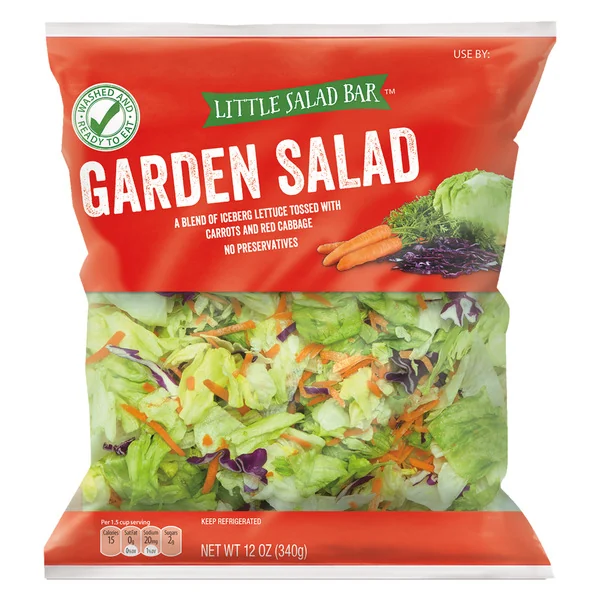
The ALDI January 8, 2022 document supplies more specific retailer rows. Among them are Little Salad Bar Garden Salad, 12 ounces, UPC 4099100082982, with dates December 25–January 9; Shredded Lettuce, eight ounces, UPC 4099100087963, with dates December 23–January 6; and Caesar Salad Kit, ten ounces, UPC 4099100087000, with dates December 22–January 5. The December dates are in 2021 and January dates in 2022.
Use the full retailer table together with the manufacturer plant-code rule. A broad manufacturer date window is not permission to replace a narrower retailer product row. Earlier Dole notices using N or Y plant letters are separate historical entries; do not merge their dates into this W/B example.
Keep the Fresh Express notice separate
The December 20, 2021 Fresh Express notice concerns identified salads with product codes Z324 through Z350. One listed example is Little Salad Bar Avocado Ranch Chopped Salad Kit, 13.2 ounces, UPC 099100219542. That Z code window is not a Dole plant-letter instruction.
For historical records, keep each supplier's notice, its product row and the original package code on the same line. Sharing only a Little Salad Bar front-panel picture removes the date and supplier distinction needed to verify the event. These products' historical dates also prevent an old warning from being used to identify a newly purchased 2026 bag without a new matching notice.
The July 2024 vegetables notice
The ALDI vegetables announcement offers a useful example of a recall that depends on product identifiers and distribution, even when the consumer notice does not print a lot-number range. The company announcement was dated July 22, 2024, and the FDA posted it on July 26. In association with Wiers Farm and R.S. Hanline, ALDI recalled three Freshire Farms vegetables because of potential Listeria monocytogenes contamination. The announcement covered select stores in Kentucky, New York, Ohio, Pennsylvania and West Virginia. Those state names describe the announced distribution; they do not establish that every ALDI store in those states sold an affected bag.
| Freshire Farms product | Package | UPC |
|---|---|---|
| Jalapeno | 8-ounce bag | 4099100087680 |
| Green Pepper | 16-ounce, three-pack bag | 4099100087598 |
| Green Beans | 16-ounce bag | 4099100087826 |

Match the brand, vegetable, package size and barcode together. A green-pepper bag carrying a different retailer's label should be checked against that retailer's or the supplier's separate notice. Similarly, finding the words “green beans” in a broader news story does not establish that every package of beans was recalled. A supplier investigation can produce several retailer announcements with different products and distribution details; combining their rows can create a misleading list for an ALDI shopper.
The FDA-hosted ALDI notice does not supply a consumer lot number or a printed package-date range for these three rows. Do not fill that gap with dates taken from a different Wiers Farm announcement. If a saved label appears to match but lacks enough information to resolve the question, retain a photograph of both sides of the bag and ask the retailer or R.S. Hanline which notice applies. A missing field in the announcement is a reason to obtain confirmation, not a reason to pronounce the bag unaffected.
At the time of the recall, the instructions were to discard the affected products immediately or return them to a local ALDI store for a full refund. Questions were directed to R.S. Hanline at 1-888-484-4834, Monday through Friday, 9 a.m. to 5 p.m. The historical notice records that remedy; availability for an old purchase should be confirmed with the store. Keep any photographs or purchase records needed for that conversation, but do not eat a product that has been confirmed as recalled while waiting for a refund answer.
Other ALDI foods in historical Listeria notices
A search limited to Little Salad Bar misses other ALDI products that have appeared in Listeria announcements. Two examples are Breakfast Best frozen waffles and Emporium Selection Brie. They belong in a historical ALDI Listeria recall list, but neither should inherit the salad notices' plant letters, bag sizes or distribution details. Their different packaging makes the distinction practical: a carton end carries information that may have no equivalent on the lid of a cheese round.
Both FDA-hosted announcements now display completed, terminated recall status. That is an administrative update to the older events. It does not turn a saved recalled package into a suitable food to eat, and it does not mean an unrelated current product shares the old recall. For a newly purchased item, begin with current retailer and manufacturer notices and compare the actual label. Use these historical examples when checking a stored package, an old photograph or a dated purchase record.
Waffles and soft-ripened cheese need different checks
The TreeHouse Foods expanded announcement of October 22, 2024 listed frozen toaster waffles, Belgian waffles and pancakes from one facility. Its Breakfast Best Homestyle Waffles example was a 12.3-ounce carton with retail UPC 041498194468 and best-by dates from October 1, 2024, through October 11, 2025. Recalled lot codes began with 2C. The announcement located the UPC on the carton back and the lot code and best-by date on its end. Keep those fields together when reading the row; a brand name by itself is too broad a match.
The expanded Savencia cheese notice identified ALDI Emporium Selection Brie using UPC 4099100084016 and a December 24, 2024, best-buy date. The consumer item was an 8-ounce round; the manufacturer table's “12/8oz” wording describes its case format. Savencia explicitly corrected the UPC reported in the original release. That correction is a good reason to use the expanded announcement rather than a copied screenshot of the first release. A correct date paired with the old, incorrect barcode can otherwise produce a false mismatch.
Record the notice version as well as the package identifiers when asking about an older purchase. The original waffle instructions allowed disposal or return for credit, with questions to TreeHouse Foods at 1-800-596-2903. The cheese instructions directed consumers to return affected products for a full refund, with questions to Savencia at 800-322-2743 or [email protected]. Confirm present handling with the retailer before transporting an old package. A refund conversation should follow the product-specific notice, while a healthcare conversation should describe what was actually eaten and when.
Cyclospora and Salmonella are different recall reasons
Little Salad Bar has appeared in more than one food-safety event, and the brand name does not identify the organism involved. The 2020 bagged-salad outbreak investigation concerned Cyclospora, a parasite. It should not be relabeled as a Listeria event. The FDA's investigation page says that outbreak ended and that the recalled products were well beyond expiration. An old Garden Salad photograph circulating in a new social-media post therefore needs its original notice date before it can tell you anything about a current purchase.
The corrected June 2020 Fresh Express announcement listed Little Salad Bar Garden Salad in a 12-ounce bag with UPC 4099100082975 and product code Z178 or lower. Compare that with the separate 2021 Fresh Express Listeria notice's Z324–Z350 range and the 2022 Dole notice's plant-letter rules. A letter Z on a salad bag is not a permanent recall flag. The year, affected product row and complete range determine which announcement, if any, matches.
Likewise, the May 2024 Happy Farms cream-cheese announcement concerned potential Salmonella contamination. It is relevant to an ALDI food-recall search, but it is a different event from the Savencia Brie Listeria notice. Putting every cheese recall in one “ALDI Listeria” row would misstate both the products and the reason. A consumer checking a whipped cream-cheese cup should not apply the Brie round's barcode or best-buy date.
The CDC describes Listeria infection as an illness caused by bacteria; its Salmonella information also identifies bacteria. These distinctions matter when reading an announcement and explaining an exposure to a healthcare professional. They are not a way to diagnose an illness from a symptom or from the store where someone shopped. If you feel ill, describe the product, date eaten and matching notice to a clinician. For package verification, record the hazard exactly as the issuing company or agency states it, alongside the date and identifiers, rather than substituting the name of a different organism.
What to do after matching a Listeria notice
Once the product identifiers match an official notice, stop using the food and follow that announcement's instructions. Separate two questions: how to remove the product safely, and how to document a purchase for a retailer. A photograph of the front label, barcode and date or lot panel can help the store identify the item without keeping it available for someone else to eat. If you no longer have the package, a receipt or online order record can help narrow the purchase, but it may not establish the lot.
The FDA's consumer recall guidance says to follow product-specific instructions and not give recalled food to other people, food banks or pets. Contact the issuing company when identifiers are unreadable or the announcement omits a necessary field. Give the representative the product name and available code, then record which notice they used to answer. A general statement about the brand should not replace a decision about your particular package.
Remove the affected food and clean its storage area
If the instructions call for disposal, put the recalled food in a sealed bag in the garbage. The CDC's refrigerator-cleaning guide also directs consumers to discard other foods stored with or touching the recalled item. Empty the refrigerator while cleaning, remove shelves and drawers, and wash removable parts and the interior with hot, soapy water. Rinse away the soap and dry with a clean towel. Let cold glass parts reach room temperature before exposing them to hot water so they do not crack.
Keep other perishable food out of refrigeration for no more than two hours during the cleanup. Clean counters that held the food or refrigerator parts, wash your hands when finished, and wash the towels used for cleaning before reusing them. Use the CDC guide's full instructions for any optional sanitizing step. The FDA explains that Listeria can grow at refrigerator temperatures; simply moving an affected salad to a colder shelf is not a substitute for removal and cleaning. The usual refrigerator target of 40°F or below supports food safety, but it does not cancel a recall.
When to contact a healthcare professional
The CDC advises contacting a healthcare provider if you ate food that was recalled or linked to an outbreak and have fever with other listeriosis symptoms, such as fatigue or muscle aches. Tell the provider about the food exposure. This is especially important during pregnancy, for adults aged 65 or older, and for people with weakened immune systems. Do not postpone that conversation while trying to settle a refund or locate a perfect label photograph.
Prepare a simple account of what you ate, approximately when, when symptoms began, and the name or link of the matching notice. The CDC says most experts believe tests or treatment are not needed after possible exposure when a person does not feel sick, while also recommending that people ask a provider if they have questions. That guidance is not an individual diagnosis. This list cannot determine whether a particular meal caused an illness; a healthcare professional can assess symptoms and personal risk, while the retailer or manufacturer can help verify the package.
Comments
Comments are reviewed before publication. Do not post personal information, serial numbers, medical details, or emergency reports. For urgent safety concerns, use the official agency contact in the recall notice.
Sign in with Google to leave a comment
Loading comments...