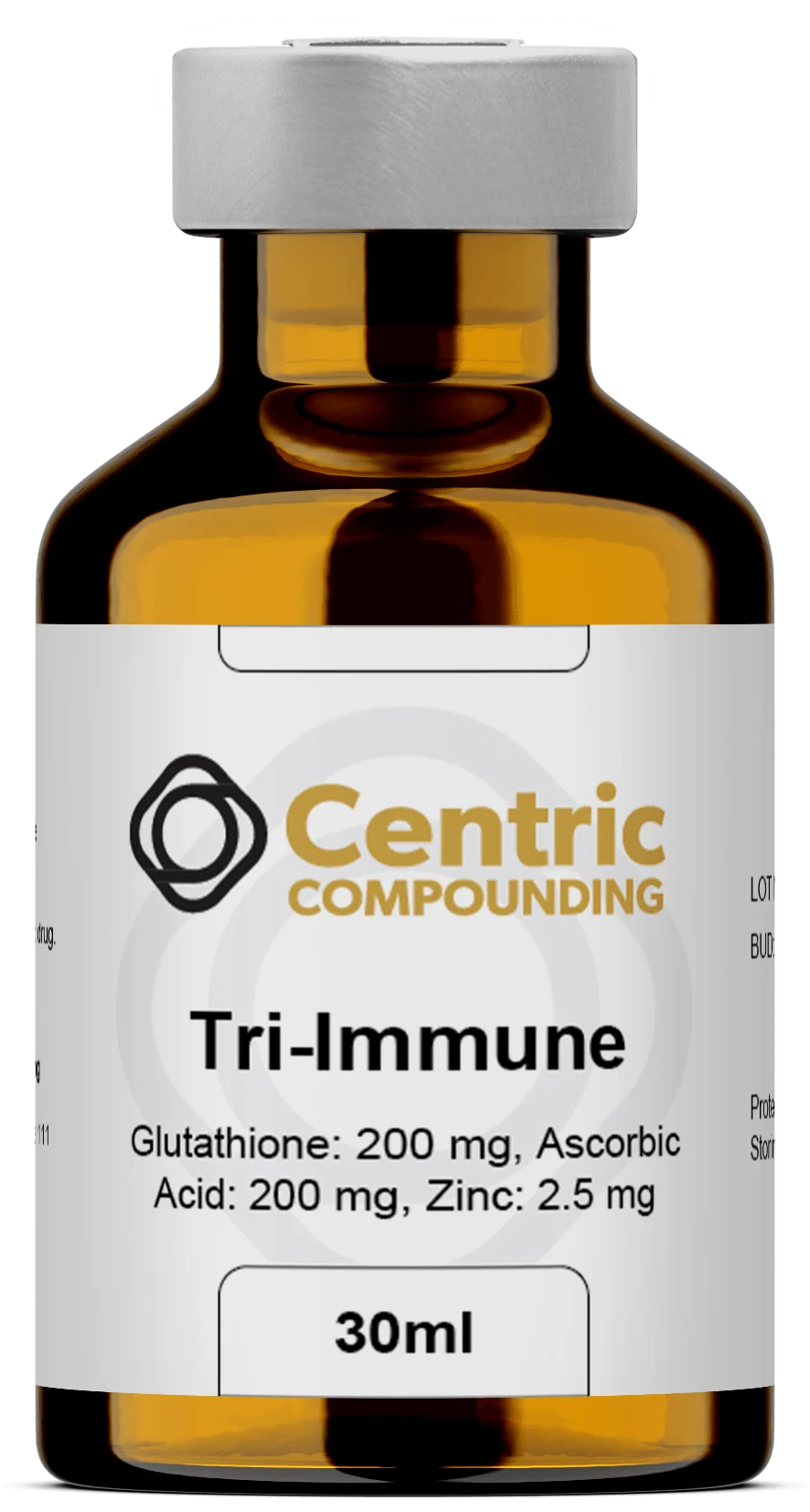
Centric Compounding voluntarily recalled six lots of compounded Glutathione, Myers Cocktail and Tri-Immune Boost injectables after elevated endotoxin was found in an active pharmaceutical ingredient. Patients and clinics should match the exact product, lot and beyond-use date, stop using and discard an affected vial as the company directs, and contact the prescriber because Centric is arranging replacement product.
Check the vial before another dose
This is a lot-specific nationwide recall at the consumer level. It covers six lots packaged as 30 mL multidose vials: Glutathione 200 mg/mL, Myers Cocktail and Tri-Immune Boost. Read the exact product name, lot number and beyond-use date from each vial or dispensing label. All three fields must align with the official table.
If a vial matches, the company announcement says to stop using and discard the affected vial. Contact the prescribing clinician and Centric Compounding because the company is arranging replacement of all recalled products. Do not substitute a different compounded injectable, change dose timing or resume from a questionable vial based on general online advice; medication decisions beyond the recall instruction belong with the prescriber.
The products were delivered nationwide both to patients at home and to prescribers. That means a patient may have a vial even when a clinic administered earlier doses. Check home medication storage, insulated delivery packaging and clinic records rather than assuming the dispensing site will find every affected vial first.
Centric’s immediate-release announcement is dated September 9, 2026, and FDA published the company notice on September 13. FDA notes that it posts company announcements as a public service and does not endorse the product or company. Use the FDA recall page as the reference table.
Do not decide from the therapy name alone. A Glutathione vial from another pharmacy, a Centric product with another lot, or a different formulation is not automatically within this notice. When a label is missing or unreadable, quarantine the vial and ask the pharmacy or prescriber to identify it from the dispensing record.
Match the product, lot number and beyond-use date
Read the lot character by character. The colon and final letter are part of the identifier, so “062326:B” is more precise than “062326.” Compare the beyond-use date as a second check, not as a replacement for the lot. Photograph the vial label, dispensing label and outer package if available before discarding anything.
Three recalled Glutathione lots
The recalled Glutathione product is 200 mg/mL in a 30 mL multidose vial. Its three lot and beyond-use-date pairs are:
| Product | Lot | Beyond-use date |
|---|---|---|
| Glutathione 200 mg/mL, 30 mL | 062326:B | August 7, 2026 |
| Glutathione 200 mg/mL, 30 mL | 070826:A | August 22, 2026 |
| Glutathione 200 mg/mL, 30 mL | 072726:D | September 25, 2026 |
Do not assume a vial is exempt merely because its BUD has passed. An expired recalled vial that remains in a home or clinic still needs removal from potential use and handling under the recall direction. Conversely, a similar-looking lot not shown above should not be declared recalled without another official notice.
Myers Cocktail and Tri-Immune Boost lots
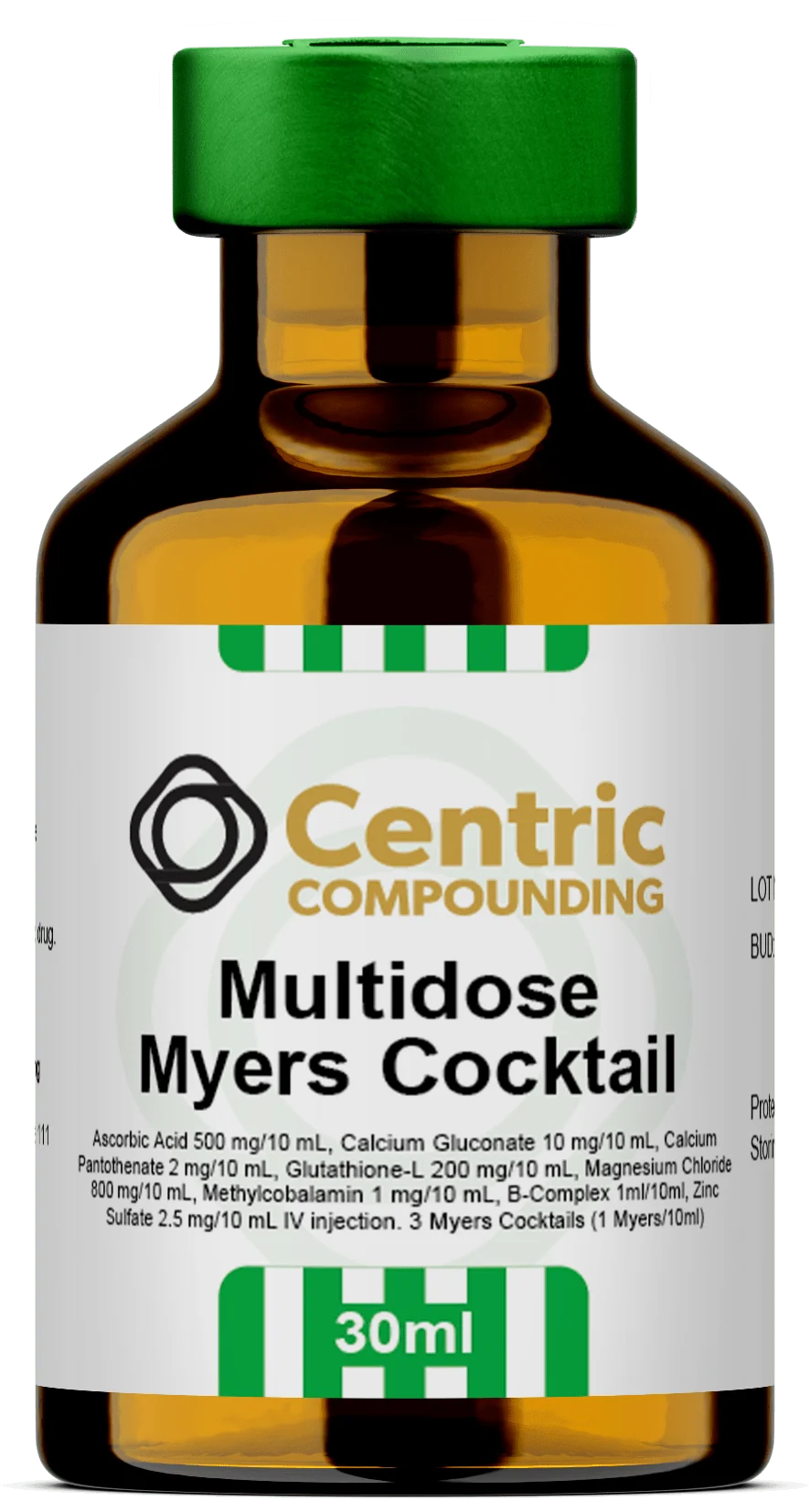
The announcement spells the product “Myer’s Cocktail” in its table. Two 30 mL multidose lots are recalled: 070226:D with BUD August 16, 2026, and 072126:A with BUD September 4, 2026. The recalled 30 mL Tri-Immune Boost lot is 071626:B with BUD August 30, 2026.
When a clinic label abbreviates a name, use the original pharmacy record to connect it to the exact compounded product. Do not combine two partial clues from different containers. Keep each vial with its own label and record the remaining quantity, storage location and patient or prescription reference in a privacy-protected inventory.
If the lot print is obscured, do not administer it to “use it up.” Set it apart from usable stock and call Centric or the prescriber with the prescription number and delivery date. They may be able to trace the dispensed lot through their records.
Why elevated endotoxin is a serious injectable risk
The company found that the recalled products had been compounded with a Glutathione active pharmaceutical ingredient containing elevated endotoxin. Because these are injectable preparations, the announcement’s risk statement is severe: exposure could cause significant medical events including fever, hypotension, inflammatory reactions, anaphylactic shock and death.
The nine adverse-event reports
Centric reported receiving nine adverse-event reports involving fever, chills, chest pain, nausea or vomiting, headache and/or malaise. The announcement does not assign each report to a particular product, lot, dose or outcome. It also does not say that all nine events had identical clinical findings.
These are company-received reports published in the recall announcement. They should not be converted into a rate or treated as proof that only nine administrations created risk. At the same time, the presence of a recalled vial does not mean a patient will experience every listed effect. The right response is identification, stop-use of the affected vial, clinician contact and appropriate reporting.
Symptoms that need prompt medical attention
Contact the physician or healthcare provider if any problem may be related to use of a recalled product, as Centric directs. Be ready to share the product, lot, BUD, dose date and time, route of administration, when symptoms began, and whether emergency care was needed. Bring a photo of the label instead of transporting a used needle or unsecured vial into a waiting room.
Call emergency services for signs of a severe reaction, such as trouble breathing, collapse, severe chest pain, confusion or symptoms of shock. Fever, chills, repeated vomiting or worsening illness after an injection also warrant prompt professional evaluation. Do not attempt to diagnose “endotoxin exposure” from a symptom list or treat a serious reaction solely at home.
Someone who feels well after an earlier dose should still check remaining vials. The recall action concerns the affected product, not only symptomatic patients. Ask the prescriber what follow-up is appropriate for a completed dose; the public announcement does not provide an observation schedule or laboratory-testing protocol for every patient.
What patients and caregivers should do now
Act in a sequence that protects both safety and continuity of care: isolate the affected vial, document it, contact the prescriber and pharmacy, and report any event. Keep needles and other administration supplies out of reach and do not transfer medication to an unlabeled container.
Set aside and discard affected vials safely
Centric instructs consumers to stop using and discard affected vials. Before disposal, photograph the intact label and record the lot, BUD, prescription number and remaining quantity. Mark or bag the vial so another person cannot mistake it for usable medication, but keep the printed identifiers visible until the pharmacy confirms the record.
The announcement does not publish a detailed disposal method. Ask Centric, the dispensing pharmacy or a local medication take-back program how to handle a compounded injectable in your location. Never place a needle loose in household trash or recycling. Use an approved sharps container for sharps and follow local rules; do not flush medication unless an authoritative instruction specifically tells you to.
Contact the prescriber and arrange replacement
Centric says it is notifying distributors and customers by email and arranging replacement of all recalled products. Call 833-777-6664 or email [email protected], Monday through Friday from 9 a.m. to 5 p.m. Central. Include the exact product, lot, BUD, patient or prescription reference and delivery date through the secure channel the pharmacy specifies.
Also tell the prescriber that the next planned dose cannot use the recalled vial. The clinician can decide whether therapy is still appropriate, whether timing changes, and how a replacement fits the treatment plan. A replacement vial should be checked again on arrival; do not assume a new shipment is automatically a different lot without reading it.
Report a suspected adverse event
Seek care first when symptoms require it. Then a patient or healthcare professional can report an adverse reaction or quality problem through FDA MedWatch. Online reporting is available, or a form can be requested at 1-800-332-1088 and submitted by mail or fax; the published fax number is 1-800-FDA-0178.
A MedWatch report does not request the replacement, and a replacement request does not create the FDA safety report. Tell Centric and the prescriber as well. Keep copies of the submission confirmation, clinical records and lot photos, while removing names and other personal information from anything shared publicly.
What clinics and prescribers should document
Clinical offices sit between the pharmacy notice and many patients, especially when the product was delivered to the practice or a home-injection plan was coordinated through it. A structured trace reduces the chance that an expired but still stored vial, a partial multidose vial or an unread email is missed.
Trace home deliveries and remaining inventory
Quarantine each matching vial from usable inventory and record product, strength, size, lot, BUD, quantity and storage location. Search dispensing and administration records for the recalled lots, including shipments directed to patients’ homes. Track whom the office attempted to contact, the communication method, whether the patient confirmed receipt and whether any vial remains.
These are practical trace steps, not a substitute for Centric’s instructions or a clinic’s professional obligations. A prescriber should follow applicable pharmacy, clinical and facility procedures. If an adverse event is reported, preserve timing, symptoms, treatment and product identifiers without altering the clinical record to fit a recall summary.
Keep replacement communication specific to lot
A patient message should name the exact product and affected lot rather than saying all wellness injections or all Centric products are unsafe. Tell recipients where to find the lot, what the announcement instructs for a match, whom to contact for care, and how the practice will coordinate the treatment plan.
When replacement arrives, reconcile it to the patient and original quantity, document the new lot and BUD, and verify that the recalled vial left active storage. Do not re-label a replacement in a way that hides its pharmacy lot. If only some vials in a shipment match, physically separate them before contacting patients so unaffected inventory is not inadvertently discarded.
Email notification can be missed or filtered, so a clinic’s closure record should show more than “message sent” when its workflow calls for confirmation. Escalate nonresponse according to clinical policy and the importance of the planned dose. Protect patient information in spreadsheets, shared messages and photos.
For more official drug and food recall explainers, use our Food & Drug Safety category. The pharmacy’s current notice, FDA page and clinician judgment remain the operational sources.
Common questions about expired lots and completed doses
The beyond-use date passed. Can I ignore the notice? No. A passed BUD means the vial should not be used, but a remaining recalled vial still needs to be identified, removed from usable stock and discarded through an appropriate process. It can also provide the label evidence needed to trace a prior dose or replacement.
I already received a dose. Does that mean I was harmed? The announcement describes a risk and nine reports; it does not say every administration caused an event. Contact the healthcare provider if you experienced any problem that may be related. Ask the provider what follow-up is appropriate for your circumstances rather than ordering tests or treatment from a general article.
The vial looks clear. Is it usable? Visual appearance cannot rule out elevated endotoxin. The recall is based on the affected ingredient and lot, not visible particles, color or odor. Do not administer a matched vial to test it.
Will Centric replace an opened multidose vial? The announcement says the company is arranging replacement of all recalled products, but it does not describe every eligibility or quantity scenario. Give Centric the remaining amount, prescription information and lot, then retain its written instructions.
What if the pharmacy already emailed me? Verify that the message points to official contact information and that the listed lot matches your vial. Reply through a secure patient or pharmacy channel, not by posting a label with personal details in a public thread. Save confirmation that the replacement or disposal step is complete.
Is every Glutathione injectable recalled? No. This announcement names specific Centric Compounding products and six exact lots. Other pharmacies or lots require their own official evidence. Search current recall records when the product differs.
Product Recall Checker is an independent educational site. It cannot diagnose a reaction, direct an individual treatment plan, approve a replacement or expand the FDA-posted scope. Confirm current instructions with Centric Compounding, the prescriber and the official FDA notice.
Comments
Comments are reviewed before publication. Do not post personal information, serial numbers, medical details, or emergency reports. For urgent safety concerns, use the official agency contact in the recall notice.
Sign in with Google to leave a comment
Loading comments...