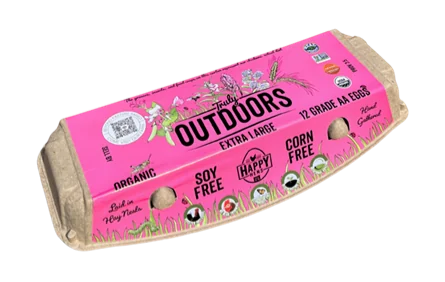
To check an egg recall in 2026, compare the exact carton brand, printed plant or handler code, pack or lot date, and any sell-by range in the official notice. A familiar brand or the word “organic” does not establish a match. This guide explains the different carton codes and uses selected July and September notices to show how the rules change between suppliers. Checked October 9, 2026. Product Recall Checker is an independent website; use the issuing agency's latest announcement to confirm scope, status and instructions.
What a 2026 egg recall means at the time you check
A search result headed “egg recall 2026” can describe the original recall, a later risk classification or the final update of an outbreak investigation. These are different milestones. Check the date of the company's announcement and the agency's latest update before reading an older headline as today's situation. This article uses selected examples to explain carton verification; it is not a complete list of every egg-related action during the year.
For example, the FDA's July 2026 Midwest Poultry outbreak page now states that the outbreak ended and the FDA investigation closed. Its September 3 update also says the recalled eggs are beyond expiration and should no longer be available for sale. Those findings belong beside the July announcement when explaining this event. They do not imply that the separate September California and Vermont notices have the same status, or that every carton currently in a refrigerator is unaffected.
The FDA's egg guidance explains that FDA and USDA share egg-safety authority, with FDA generally regulating shell-egg production, transportation and storage. USDA FSIS handles processed egg products. A carton of shell eggs therefore should not be checked only against meat-and-poultry recall pages. State health or agriculture departments can also issue notices relevant to local farm eggs, restaurants and farmers' markets.
For a practical check, keep the original product notice and the latest agency update together. Record what the notice says to match, and distinguish it from context such as where illnesses were reported. A state with reported illnesses is not necessarily identical to a product's distribution area. A date on a news article is not the pack date on a carton. Start a fresh comparison for each remaining carton rather than assuming that one purchase, one brand or one shell color determines all the eggs in your kitchen.
Read the carton without confusing its codes
Set the carton where you can see both ends, the sides and the lid. Keep the identifying fields separate when you write them down: brand and egg type, number of eggs, plant or handler code, lot or pack date, and labeled sell-by or best-by date. A barcode can help identify a product, but the issuing notice may rely on another code entirely. Do not assume that a barcode lookup answers a recall whose scope is defined by ink-stamped plant and date information.
Plant numbers and state egg-handler codes
The USDA Agricultural Marketing Service's shell-egg grading Q&A explains that consumer packages carrying its grade mark identify the facility with a P followed by three or four digits. That is a plant identifier, not a three-digit date. A shell-egg carton uses this grading context; do not substitute a poultry establishment-number rule taken from a chicken-meat package.
State systems can use a different identifier. The California Department of Food and Agriculture's labeling guidance lists a USDA plant-of-origin number, shell-egg surveillance number or California handler code among the alternatives on consumer egg packages. If a recall says to look for a CA handler code, compare that field as printed. Do not look only for a P number and conclude that a carton without one is excluded. Likewise, a matching facility identifier does not mean that every date or product from that facility belongs to the notice.
Julian pack dates and sell-by dates
The AMS day-of-the-year chart explains the three-digit code for the day eggs were processed and packaged. In 2026, 001 corresponds to January 1 and 198 to July 17. This is commonly called the Julian pack date. It does not tell you the date you bought the eggs or establish the exact day a hen laid each egg.
A calendar sell-by or best-by date is a separate field. Keep its accompanying words when recording it, rather than copying only the numbers. The USDA's food-dating explanation distinguishes calendar quality dates from manufacturer production codes. For recall matching, use whichever combination the announcement actually specifies. A carton still within its normal quality-date period can match a recall; an expired recalled carton does not become acceptable merely because the investigation has ended.
Manufacturer ink codes may use a different rule
Read the instructions about where and how a code appears. The Midwest Poultry notice specifically refers to date-coding ink on the left or right side of the carton. A permanently printed or molded packaging number can look authoritative without being the identifier that announcement uses. Preserve leading zeros, letters and the grouping of digits when photographing or transcribing the ink.
If the mark is smeared, photograph the entire side panel and ask the supplier or retailer to interpret it alongside the notice. A dark area that might be a zero should remain uncertain until confirmed. If you have moved eggs into a reusable tray, retain the original carton photograph and purchase record; a shell color or size alone cannot reconstruct the missing batch information. Keep cartons from different purchases separate during the comparison so a readable code from one is not assigned to another.
2026 egg notices with different carton rules
The following examples show why a useful egg recall list needs more than a brand name. A producer can supply several store brands, a state notice can use an egg-handler number, and a farm recall can identify cartons by ordinary calendar dates. Read each example as a separate matching rule. There is no single combination of numbers that identifies all three events.
Midwest Poultry Services and the July recall
The July 22 FDA-posted Midwest Poultry Services notice identifies shell eggs potentially contaminated with Salmonella Enteritidis. Its selected retail examples include the following packages; this abbreviated table does not replace the notice's complete retail and bulk-product table.
| Brand and package | UPC |
|---|---|
| Kroger Large, 12 eggs | 011110609038 |
| Simple Truth Cage Free Large Brown, 12 eggs | 011110797704 |
| Brookshire Large, 12 eggs | 092825095552 |
| Country Morning Large, 12 eggs | 078566200004 |
| Sunups Medium, 2.5 dozen | 028621304987 |
The producer's recall FAQ directs shoppers to ink on either side of the carton: P-1950 or 0840962, together with Julian dates 157 through 184. The notice also lists sell-by or best-by dates July 20 through August 17, 2026. Match the package row and its code requirements together. The FDA prose uses 0840962 while its table displays 840962; retain the exact printing on your carton and seek clarification if that leading-zero difference makes a match uncertain.
A Kroger carton is therefore a starting point, not a complete decision. Photograph its size, barcode, side ink and date rather than sending customer service only a picture of the store logo. If two cartons in your refrigerator have different codes, check them separately. A receipt for one purchase does not identify the second carton, even when both packages look alike.
The original company's statements about illnesses should not be treated as a later outbreak update. FDA's separate July outbreak investigation page records that the outbreak ended and the investigation closed on September 3. The company notice now also carries completed and FDA-terminated language. Those dates explain the record's current status; they do not cancel the instruction for a matching carton retained at home.
Happy Hens and California's September notice
California's September 11 warning describes a voluntary recall initiated September 8 by Happy Hens in Ramona. The affected organic in-shell eggs, all grades and sizes, use handler code CA-0677. Three lot/date combinations are listed: 223 with Sell By September 10; 226 with Sell By September 13; and 237 with Sell By September 24. Consumer packages include 12- and 18-count cartons and 20- and 30-count flats. Foodservice cases contain 15 dozen eggs, packed as six 30-egg flats.
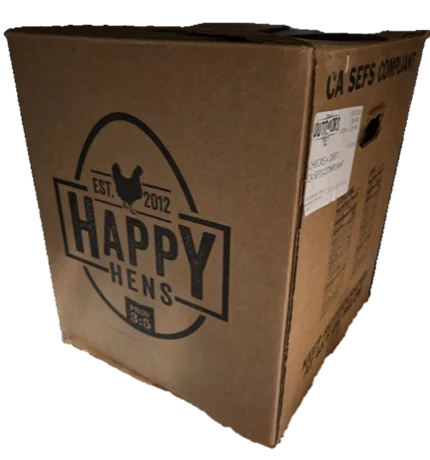
The department describes distribution through restaurants, grocery stores and farmers markets in Southern California and the Central Coast, plus direct farm sales. That scope does not imply that every organic egg or every California egg is recalled. It does mean a household may encounter the product without buying a familiar supermarket carton.
For a flat purchased from a market, preserve the seller's details and any outer packaging instead of assuming a missing retail sleeve rules out the recall. For a business, compare the case with the delivery record and the eggs still in storage. A photograph of a pink retail carton is helpful for recognizing the brand, but the same notice also includes larger foodservice packaging. Checking only the color or the number of eggs would leave part of the notice unchecked.
Leaping Bear Farm's dated cartons in Vermont
The Vermont agency's September 11 notice covers Leaping Bear Farm chicken eggs in cartons dated June 1 through September 5, 2026. The packages carry the farm logo and describe Grade A Pasture Raised Organic eggs. Distribution includes local markets and retailers, the Reading farm and Putney Food Co-op. Its identification rule is the dated carton range, rather than the Midwest plant numbers or California's handler code.
This notice specifically tells consumers to discard affected eggs in the trash and not compost them. The farm's October 2 update continues to advise households that still have its recalled eggs not to eat them and to clean surfaces they contacted. The later update does not provide a replacement household clearance test.
Record the carton date exactly as printed before discarding it. Do not silently label that date a sell-by date or translate it into a Julian number when the notice has not required either step. If eggs have been transferred into a reusable tray, the farm name and purchase location can help an inquiry, but they cannot recreate a discarded carton date with certainty. Keep uncertain eggs out of meals while obtaining clarification rather than using the absence of a code as evidence that they are unaffected.
What to do with a matching or uncertain carton
Once you have a match, stop using that carton and follow its notice. If the carton is unreadable or missing, separate the eggs from food you plan to serve while you contact the producer or seller. An unresolved match is a question to investigate, rather than a reason to assume the eggs passed a safety check. No photograph of an uncracked shell can replace the package information.
Returns, disposal and cleaning
FDA's consumer recall guidance says to follow product-specific instructions. Returns for a refund are often available; otherwise, contaminated food should be securely wrapped before disposal in the trash. Do not give recalled food to other people, food banks or pets. The Vermont egg notice adds a specific no-compost instruction. Preserve that distinction when deciding how to dispose of those eggs.
Before disposal, save clear photographs of the front label, date and codes, plus the receipt if available. For a return, contact the retailer about its procedure and whether it needs the package, a photograph or purchase evidence. This avoids opening a carton repeatedly merely to document it. A recall's refund offer does not establish the same receipt or handling policy at every store, so ask about the process instead of promising another shopper a universal requirement.
Clean items and surfaces that contacted the eggs, including reusable trays and relevant refrigerator areas, and wash your hands after handling them. FDA advises washing and sanitizing contaminated-food contact surfaces. Use the cleaning product's directions for the surface and contact time; do not improvise a stronger chemical mixture. The package code check and cleanup are separate tasks: identifying the lot does not remove contamination left on another container.
FDA's egg safety advice explains that even clean, uncracked fresh eggs can contain Salmonella. Routine cooking guidance for other eggs is not permission to salvage a recalled carton. Do not taste an egg, rinse its shell or prepare a small test portion to decide whether to keep the rest. If recalled eggs were used in a dish, stop serving it and consult the recall contact or public health agency about the specific situation.
For an uncertain purchase, a useful inquiry is: “I bought this brand and size at this store on this date; here are photographs of every printed code. Does this package meet the notice's rule?” If you no longer have the carton, say that plainly. Describe which evidence remains rather than supplying a remembered number as if it were copied from the package.
Symptoms and questions for a healthcare professional
CDC's Salmonella symptoms page lists diarrhea, stomach cramps and possible fever, nausea or vomiting. Symptoms usually begin six hours to six days after infection and commonly last four to seven days. Contact a doctor for diarrhea or vomiting lasting more than two days, blood in stool or urine, a fever above 102°F, or dehydration. Signs of dehydration include little urination, dark urine, a dry mouth and dizziness. Young children can become dehydrated quickly.
Tell the healthcare professional when the eggs were eaten, when symptoms began and whether the carton appears to match a recall. A clinician can assess the illness and decide what testing or care is appropriate. A recall article cannot diagnose Salmonella from symptoms, and a package match alone does not prove that it caused an illness.
Keep the package photographs available for a medical or public health inquiry, especially if several people shared a meal. Note what each person ate and the timing rather than assuming everyone had the same exposure. Do not delay care while searching for a missing code or waiting for a retailer's refund response. Product identification can continue alongside medical assessment; the two inquiries answer different questions.
Comments
Comments are reviewed before publication. Do not post personal information, serial numbers, medical details, or emergency reports. For urgent safety concerns, use the official agency contact in the recall notice.
Sign in with Google to leave a comment
Loading comments...