A frozen food recall list is useful only when it leads you to the product, size and printed codes on your own package. A box of fruit bars, a bag of berries and a chicken meal may be covered by different notices and regulators. This guide, checked October 9, 2026, compares selected official notices and explains how to investigate food already in a household freezer. It is not an exhaustive list of every ongoing recall, and older notices retain their original dates.
Where to check a frozen food recall list in 2026
Start with the FoodSafety.gov recalls page, which links FDA and USDA notices and distinguishes recalls from public health alerts. Then open the underlying agency announcement. A headline may identify the brand, but the full notice establishes which packages, dates and lots are involved. A public health alert has its own meaning and should not automatically be relabeled a recall.
FDA's recall directory warns that not every recall has a press release or appears in that directory. It also provides archive access for older announcements. Searching the producer and product name is useful when a retailer's list does not contain the package you have. Absence from a short list, including this article's examples, does not establish that a food has never been recalled.
The agency split matters. FDA explains that meat, poultry and processed egg products are regulated by USDA rather than FDA. Frozen fruit, desserts and plant-based foods commonly lead to FDA notices, while a poultry meal may lead to FSIS. Follow the authority identified on the actual notice instead of using the freezer aisle as a regulatory category.
There are also three different dates to keep straight: the announcement date, any later expansion or correction date, and the date printed on the product. An updated announcement may add codes without representing a separate original event. A date printed in 2027 can appear on food recalled in 2026. Neither circumstance can be understood by searching only one calendar year.
FSIS's freezing guidance explains that frozen microbes can become active again after thawing. Keeping a recalled bag solidly frozen does not remove its recall hazard. Long storage also makes older notices relevant to retained food, even when stores no longer have that production run.
Record the notice URL and the day you checked it next to the package details. If the notice says completed or terminated, distinguish that administrative status from the instruction for a matching package still in your possession. You are checking a particular item, not asking whether a brand as a whole is safe or unsafe.
Frozen desserts have their own product and code rules
Fruit bars and frozen dessert pints are useful examples of two different matching methods. One notice supplies separate batch lists for several packages. The other identifies a particular flavor with a date cutoff. Apply the rule attached to the product in front of you rather than borrowing the easier rule from another announcement.
Outshine fruit bars and the updated glass recall
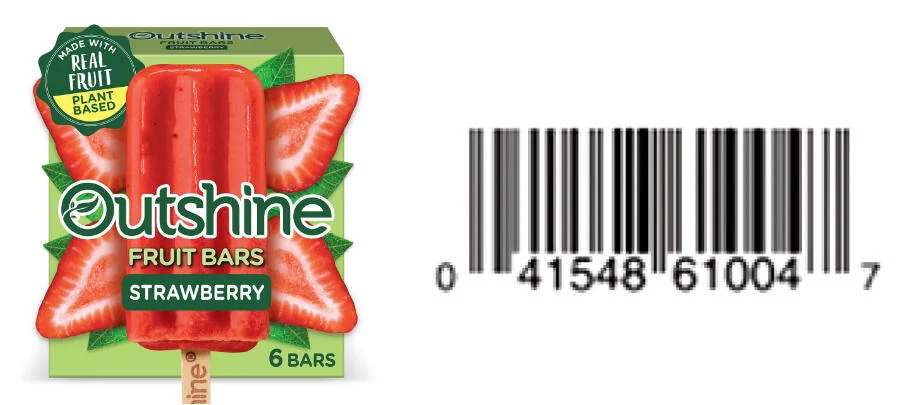
The updated August 18, 2026 Outshine notice covers possible glass contamination in selected Strawberry, Watermelon, Grape, Tangerine and Black Cherry six-count packages of 2.5-ounce bars, plus a 24-count variety pack of 2.5-ounce bars. The notice describes nationwide retail distribution and excludes other Outshine products and varieties. Strawberry six-count packaging uses UPC 041548610047; the 24-count variety package uses 041548816678. These examples identify product forms, not every affected lot.
Check the batch code and best-before date on the bottom of the outer package against the complete row for that product. The official FDA bulletin preserves multiple batch/date pairs with 2027 dates. Do not collapse them into one broad “all 2027 bars” rule. Likewise, do not apply a strawberry batch list to a different flavor merely because its box has the same number of bars.
The practical order is package size, flavor, barcode, then that row's printed codes. Keep a photo of the entire row you used with the photo of your package. This helps resolve a question such as “I found the same batch characters, but is this the same product?” A number copied without its row label can lose the part of the notice that explains what it belongs to.
If you removed individual bars from the box, look for the retained outer carton before relying on the smaller wrappers. A wrapper may not preserve every identifier required by the notice. Report a missing box as missing evidence, and contact the company or retailer rather than assuming that an unlisted wrapper number proves the bars are unaffected.
So Delicious frozen dessert and a separate notice
The September 15, 2026 U.S. So Delicious notice identifies Salted Caramel Cluster Non-Dairy Frozen Dessert pints, SKU 136603 and UPC 744473476138, with best-by dates on or before April 3, 2028. It describes possible small stones and other hard objects in the cashew inclusions. That is a foreign-material concern; this notice does not describe an undeclared-cashew allergy recall.
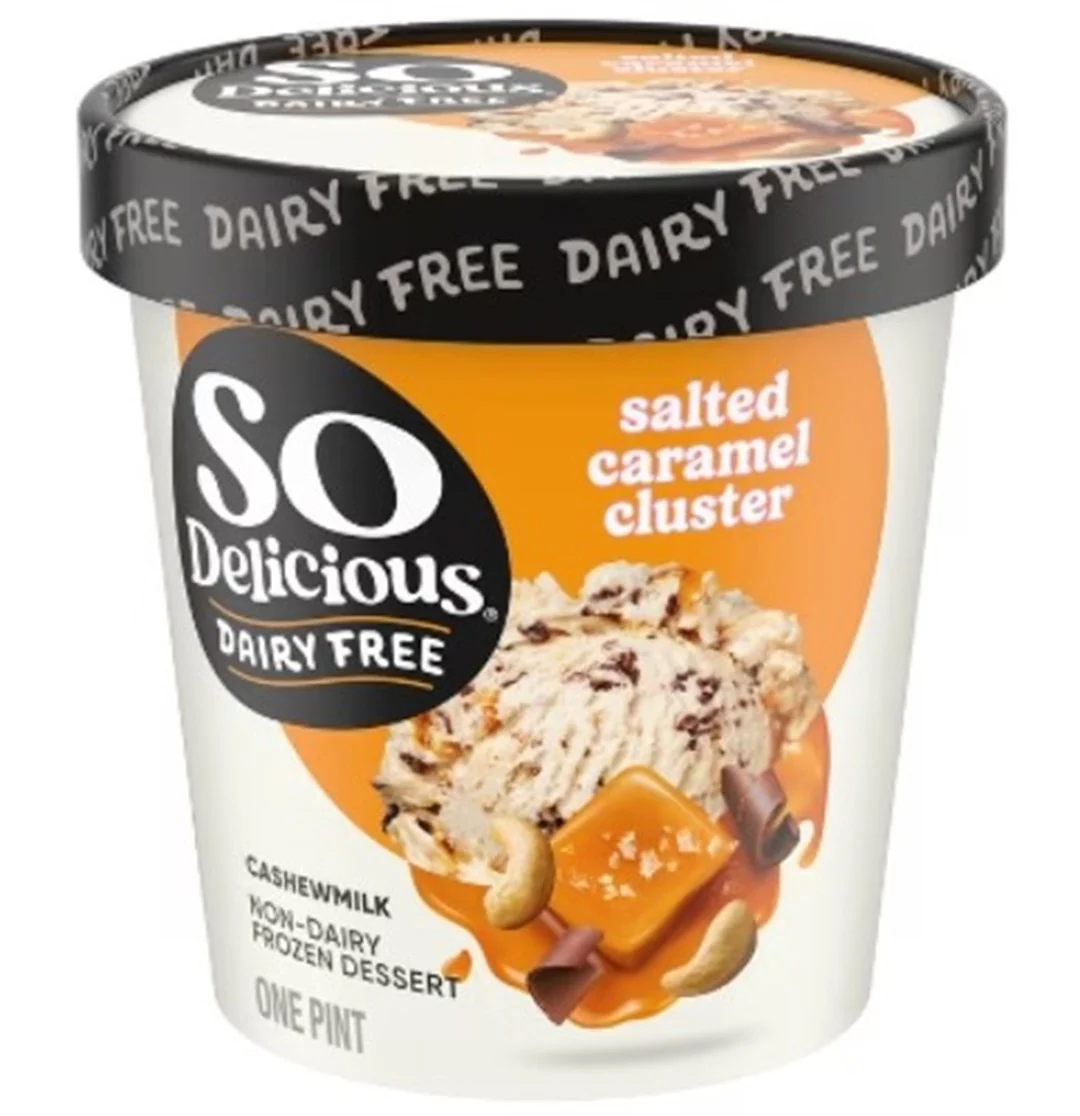
The manufacturer's recall FAQ locates the date on the bottom of the pint and says no other codes, flavors or products are included. Its instruction is not to consume the product and to contact Consumer Care. The FDA-posted announcement provides 1-833-367-8975 for a replacement coupon or refund.
“On or before” includes the cutoff itself and earlier dates for the identified product. It does not mean only a pint printed April 3 is affected. Record the full date, including the year, so a comparison does not accidentally treat April 2027 and April 2028 as the same printing. Check any older pint already in the freezer individually, even if a more recently purchased pint of the same flavor has a different date.
Frozen meals can lead to different regulators
Product names can make a plant-based nugget sound like a poultry product. Use the actual product description and notice, rather than the words “nugget” or “sausage” alone, to choose where to verify it. The following examples also illustrate why one meal's printed-date rule cannot be applied to another producer's lot correction.
MorningStar Farms plant-based products
The FDA-posted MorningStar Farms notice identifies two plant-based products because of possible plastic pieces. The company announced the recall June 18, 2026; FDA published it June 22. The U.S. product table specifies these combinations, preserving the source's UPC formatting.
| Product and size | UPC as listed | Better if Used Before |
|---|---|---|
| Buffalo Chik'n Nuggets, 10.5 oz | 000 28989 10110 5 | July 7 or 8, 2027 |
| Hot & Spicy Sausage Patties, 8 oz | 000 28989 10094 8 | July 5, 6 or 7, 2027 |
The manufacturer's announcement excludes other MorningStar Farms products and instructs affected consumers to discard the food and contact the company for a full refund. Consumer Affairs is listed at 800-962-0120.
A bag of a different flavor is not identified merely by a shared logo. Compare the wording and net weight before reading the date, especially when several plant-based products are stored together. Copy the barcode exactly, including leading zeros, rather than treating it as an ordinary number in a spreadsheet. The notice's two rows also use different date sets: July 5 belongs to the identified patties row, not automatically to the nuggets row.
If you bought multiple bags in one shopping trip, record each bag's printing. A purchase date does not establish that every bag came from one production run. This small distinction can prevent a household from clearing a second package on the basis of a first package that has a different printed date.
Ajinomoto meals and the March lot-code correction
For the Ajinomoto chicken and pork fried rice, ramen and shu mai event, use the FSIS expanded recall and its linked product list. The March 9, 2026 official correction states that products with the listed lot numbers are subject to recall regardless of best-by date. FSIS's companion bulletin for the original fried rice notice points readers to the expanded list and repeats the correction.
Here, a best-by date outside a previously quoted window cannot cancel a listed lot match. Record the product, package size and full lot, then consult the corrected row. Preserve any establishment number too, but do not treat an establishment number alone as a recall of everything that facility has ever produced.
The distinction is practical: the MorningStar table supplies product-specific dates, while FSIS explicitly corrected a date limitation for listed Ajinomoto lots. Neither rule is a universal frozen-meal rule. If a retailer's older summary appears to disagree with the correction, keep the current official list with your package photographs and ask about that exact discrepancy. An unreadable lot should remain an unresolved identification question rather than being replaced with a nearby best-by date.
Check frozen produce without changing an older recall's date
A frozen berry search can return both an older strawberry outbreak and a recent blueberry recall. Keep the original year and hazard attached to each. FDA's 2023 frozen strawberry investigation describes hepatitis A and an ended outbreak, while retaining instructions not to eat recalled frozen strawberries. A search result rediscovered in 2026 does not make that a new 2026 announcement.
There is also a separate, verified 2026 berry event. The October 2 Frutas y Hortalizas del Sur expansion adds these products because of potential E. coli O145:H28 contamination. Codes below preserve the notice's printing; the table covers that expansion, not the entire event.
| Product | UPC as published | Lot and corresponding date in 2028 |
|---|---|---|
| Great Value Organic Triple Berry Blend, 10 oz | 7874211226 | 6 031 01 — January 31; 6 041 01 — February 10 |
| Great Value Organic Blueberries, 10 oz | 7874211213 | 6 019 01 — January 19; 6 040 01 — February 9; 6 163 01 — June 12 |
| Trader Joe's Organic Mixed Berry Blend, 12 oz | 00977654 | 6 051 01 — February 20 |
The notice locates Great Value lot codes on the front and Trader Joe's code on the back. Do not substitute a different package size or a different berry blend based on a similar photograph. The abbreviated UPC strings are reproduced as published rather than padded with guessed digits.
FDA's October 5 outbreak update explains that the outbreak ended September 21, but additional products were identified and recalled October 2. It tells households to check retained products with dates ending in 2028. The page also links earlier GreenWise and Great Value notices. Those earlier notices remain part of the investigation record; the October table does not erase their product rules.
This distinction matters when an older screenshot and a newer announcement name overlapping brands. Consult the earlier notice relevant to your package as well as the expansion, instead of interpreting a missing row in the newest excerpt as a release from recall. Save the date of the notice you used alongside the full bag code.
For a produce blend, read the complete product name and ingredient list when locating the notice. A berry ingredient can appear in a mixture with another retail name. For frozen vegetables, use the same package-based process: name, size, producer, lot and dates, followed by the applicable official announcement. A berry recall is not evidence of a recall of every vegetable, nor does it answer an unrelated vegetable-bag inquiry.
Turn the notice into a freezer inventory decision
Make one record for each package, rather than one record for a whole brand. A short inventory can include product name, size, UPC, lot, printed date, notice URL and the result of the comparison. Record the fields the notice actually requires. A blank or unreadable field should remain marked unknown; it should not be filled with the code from a neighboring bag.
Partly used bags, loose portions and missing labels
The Product Recall Checker search can help find possible notices using a brand, UPC, lot or official recall number. The latest recall page offers another starting point. Product Recall Checker is an independent website; confirm the affected details and instructions with the linked official notice. A search result is useful for discovery but does not inspect the package in your freezer.
FoodSafety.gov emphasizes specific product matching. For a bag you already opened, the remaining food still belongs to that original package. Using half a bag does not create a new batch. Photograph the label and every printed code before deciding what to do with the remainder, and keep the notice that explains the match.
A reusable container creates a different problem: the brand may be known while the original lot is lost. A receipt can establish a purchase, but it may not establish the printed production code. A date written on a household freezer container often records when you stored it, not the manufacturer's best-by or lot. Label those details separately when asking the producer for help.
For loose portions, do not pool uncertainty into an invented answer. Say, for example, that you have an unlabelled portion of a named berry blend purchased at a particular store, and that its original lot is unavailable. Ask what the notice recommends in that circumstance. Keep it out of meals while resolving the question. Do not use the appearance of the fruit, a familiar flavor or the absence of a search hit as evidence that the required lot check was completed.
For future purchases, retain a photograph of the original label when transferring food to another container. Include the full product name and code in the same record so the number cannot later be associated with the wrong bag. This improves identification; it is not a guarantee that future recalls will never expand.
Returns, disposal and food-contact cleanup
FDA's recall guidance says to follow the specific instructions, return food where applicable or dispose of it properly, and never give recalled food to other people, food banks or pets. Save the identifying photographs before disposal. For a refund or coupon, use the manufacturer or retailer contact specified for that event and ask about its documentation procedure. Different notices in this article offer different routes.
Where germ contamination is involved, food-contact cleanup also matters. CDC's refrigerator cleaning guidance describes sealed-bag disposal, washing reusable containers and removable parts, cleaning and rinsing the interior, and washing hands afterward. It warns against running cold glass shelves under hot water because they can crack. Follow your appliance and cleaning-product instructions when addressing freezer surfaces; do not improvise an appliance-defrost procedure.
Keep the hazard in view. An unopened box recalled for possible glass, food spilled from a berry bag, and an undeclared-allergen event may call for different cleanup decisions. Follow the notice for the actual problem and consider surfaces the food contacted. If you think consuming the product caused illness or injury, contact a healthcare professional and preserve the package details for the inquiry.
Comments
Comments are reviewed before publication. Do not post personal information, serial numbers, medical details, or emergency reports. For urgent safety concerns, use the official agency contact in the recall notice.
Sign in with Google to leave a comment
Loading comments...