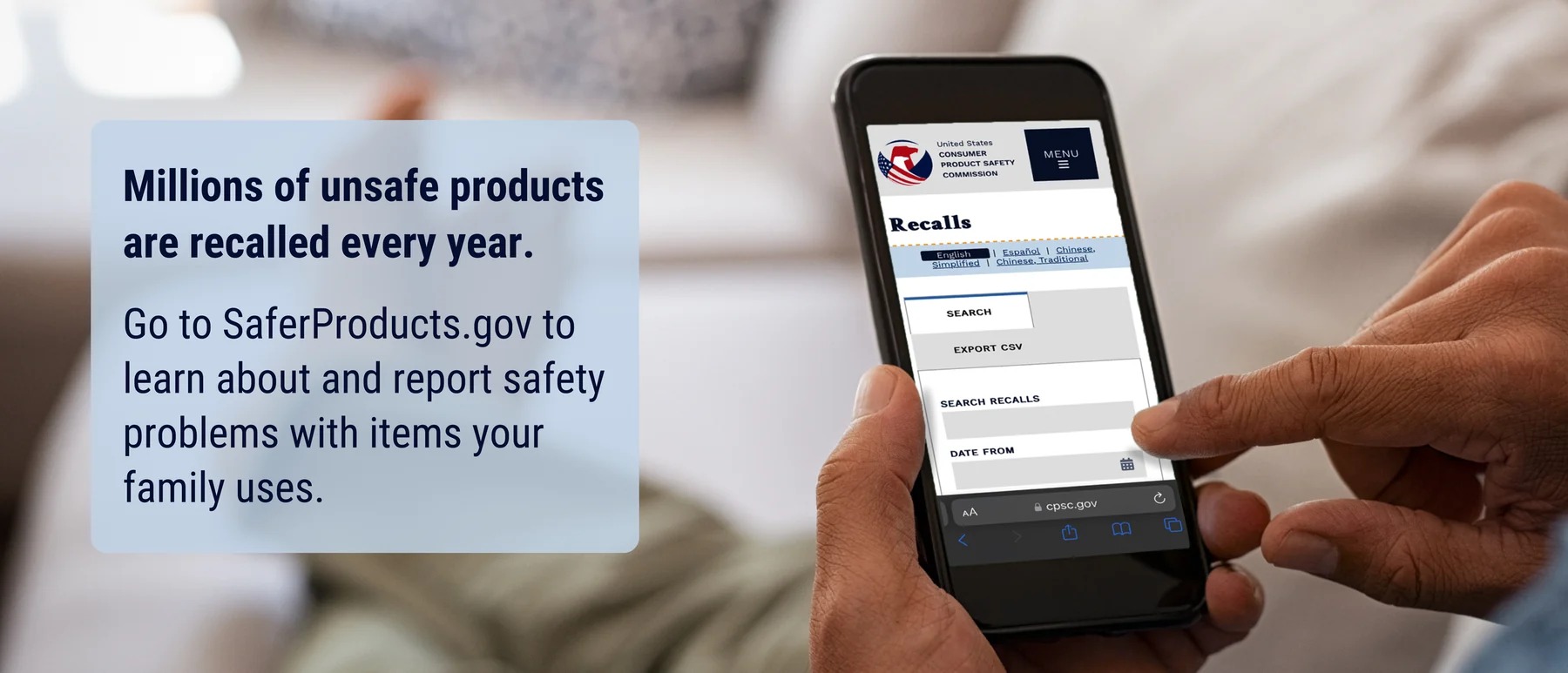
Use the CPSC Recall Complaint Form if you already contacted the company named in an official U.S. Consumer Product Safety Commission recall and still cannot get the promised remedy. Use SaferProducts.gov to report an unsafe consumer product, including an injury or a near miss. Have the product's brand and exact model handy, along with any serial number, date code or lot number the recall notice names. If both problems apply, file each through its own route. CPSC Recall Complaint Form and SaferProducts.gov incident reporting.
Choose the CPSC form that fits the problem
Start with what happened. An unanswered replacement request for a product that matches a recall is a problem with the remedy. A chair that collapsed during ordinary use is a safety incident, even if you cannot find a recall for that model. A purchase that arrived in the wrong color is normally a retail issue. If the chair also matches an official recall and the company fails to supply the published repair, you have two useful sets of facts to share.
| Situation | First place to go |
|---|---|
| You found a recall and have yet to request the remedy. | Find the company and instructions in the official notice. |
| The official recall applies and the company has had a chance to resolve your request. | Use the CPSC Recall Complaint Form if the problem persists. |
| A product injured someone or presented a potential safety hazard. | Report the incident on SaferProducts.gov, regardless of whether you find a recall. |
| You are dealing with an order, price or warranty problem without a safety concern. | Start with the seller or warranty provider. |
To find the official notice, search by the full product name and model. Open the notice that describes the likely match and check any other limits, including the affected serial range, batch, manufacturing date or retailer. A similar-looking unit may fall under another notice or outside the scope. If a number is unclear, use the product label or packaging and ask the listed company to help identify it. Our consumer product recall search can point you to a notice, and the issuing agency supplies the controlling details.
Read the current notice before deciding what to do with the item. Check the instructions about use and handling as well as the remedy. If you saved an older copy, compare it with the live page because a remedy can change. A report in the public incident database describes a safety concern. It cannot establish that your unit is included in a specific recall or that a company owes you a particular remedy. CPSC recalls and product safety warnings.
File a complaint when a recall remedy stalls
A recall remedy is the action offered for an affected unit. Check what the notice actually provides and how a consumer requests it. Some programs ask for a repair appointment. Others require a form, a label photograph or proof of purchase. A useful complaint identifies the step you completed and the part of the announced remedy you still cannot get. Follow the published safety instructions while you wait for the claim. CPSC recall-remedy guidance.
Contact the company listed in the recall first
Open the notice's Consumer Contact section. The company named there may differ from the store or marketplace that sold the item. For example, the JKMAX heated blanket and heating pad notice says the products were sold on Amazon and lists JKMAX's channels for the remedy. The same notice explains where to find the model number on the remote or packaging. It also provides a complaint link if the company remedy stalls. JKMAX recall notice 26-778.
When you contact the company, save the date, method and any case reference. Keep a copy of what you sent so you can check whether it met the notice's requirements. If the company asks for another image, follow its official process and keep the original files. Carry out any marking, return or disposal step according to the instructions for that program. If you bought on a marketplace, your receipt may be useful for the company's claim even when the marketplace only sent the alert. How Amazon-linked recall claims are routed.
Give the firm a chance to respond and follow up through the same verified contact. If the company has published a processing window, compare your dates with it. CPSC's form asks consumers to contact the firm first and wait for a response. The guide on that form sets no single waiting period for every recall. Record what happened and describe what you are still waiting for. CPSC's instructions for unresolved remedies.
Send the recall notice and a clear timeline
Open the complaint link from your recall notice, or use the general online form and put the product name and notice link in your message. The form shows contact fields and a message box. Begin the message with the recall number if supplied, then describe how your item matches and what you did to request the remedy. Include a case reference if it helps the agency understand the chronology. Keep payment credentials and other unnecessary information out of the message.
Here is an example of the level of detail to provide. Suppose a company confirmed your replacement request on June 2 and gave you reference R-1234. Your June 18 follow-up received an automated acknowledgment, and the original unit is still awaiting pickup on July 1. Say what the notice promises, explain which records you have and identify the outstanding step. This timeline describes a hypothetical case. It gives the hotline something more specific than a request to look up a missing refund.
Keep your company claim reference and a copy of what you submitted to CPSC. The complaint can help CPSC monitor whether companies are carrying out recalls. The firm still handles the individual claim under the published terms. CPSC says its staff does not negotiate a higher refund or a different remedy for an individual consumer. Recall Complaint Form and remedy limits.
Report an unsafe product through SaferProducts.gov
SaferProducts.gov takes reports about harm or potential harm from consumer products. An incident can be worth reporting even if nobody was injured. A piece that came loose and nearly hit someone, for example, gives the agency information about the hazard, the product and how it was being used. If you have already reported a company remedy problem, a separate incident report gives safety staff the details of what happened. SaferProducts.gov guidance on what to report.
Deal with immediate danger or injury before gathering records. Describe the incident you observed, using information you can retrieve safely. If an item's label is inaccessible because the item was damaged or discarded, try its packaging, instructions or order record. Explain where you found the identifier. That helps someone assessing the report distinguish a marking on the item from a model name shown only in a listing.
Document the product and what happened
Write down the exact brand and product name. Check the box, label or instructions for the manufacturer or private labeler. Include the model, serial number, lot code or other markings you can read. Record where you got the product and about when. Keep clearly labeled photos of the product, the identifier and any visible damage that you were able to capture without handling an unsafe item. Use the fields on the official form to explain missing or approximate information. CPSC's official incident-report worksheet.
Describe events in the order they occurred. Give the incident date or an estimate, the setting, how the product was being used and what changed. A useful description might say that a folding chair's seat dropped as someone sat down and a support was visibly detached afterward. Add whether anyone fell or was hurt. If you do not know which component failed first, describe the condition you saw and leave the cause open. An investigator can work with observations that are specific enough to compare with another account.
Before completing the form, check the brand and model against what you originally recorded. Distinguish the seller from the manufacturer if both names appear. Use the designated fields for contact information, and leave identifying personal details out of the narrative. Attach only material that helps explain the product or incident. A photo of the label can help clarify an easily misread character without putting unrelated household details in view. CPSC report completeness and privacy guidance.
Submit online, by phone or with the official incident PDF
Start at the public incident reporting page, choose the role that fits and open the form. Use the questions to describe the product and the occurrence, then review what you entered and confirm it is accurate to the best of your knowledge. If you already started a report and have the report number and retrieval code, use the retrieval option to reopen it. Keep that information private so you can return to the same report. Public incident reporting.
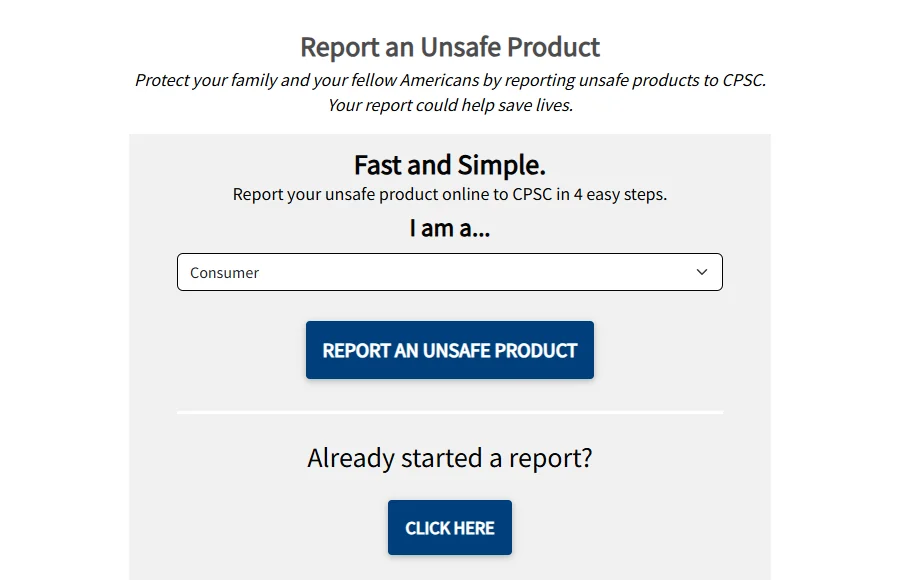
If you prefer to file by phone, the incident reporting page lists the hotline at 800-638-2772. For email or postal mail, open the English or Spanish report PDF linked under the site's alternate filing instructions and follow the current directions on the entry page. Use one filing method for the same report. The PDF collects an incident or safety concern. Direct a complaint about an unavailable advertised recall remedy to the separate CPSC web form. Current alternate filing options.
Review the privacy and publication choices
CPSC asks for certain details before a report can appear in the public incident database. These include the product and company, the date or approximate date, an explanation of the injury or risk, the submitter's role and contact information, and consent and confirmation of accuracy. The agency says the submitter's name and contact details are kept out of its public incident database. The option to share contact details with the company for verification is a separate choice from public posting. Publication and privacy requirements.
Agency staff can review reports that remain private or lack enough information for publication. If a report is forwarded to a company, the company may provide a comment. A published entry documents a submitted account and may contain that response. Use an official recall notice if you need to determine whether a particular remedy applies to your unit. CPSC says it examines submitted reports and may take action where appropriate. Individual replies and investigations depend on the case. What CPSC does after receiving a report.
Find the right contact for special cases
If you are unsure how to route a consumer-product problem, call the CPSC Consumer Hotline at 800-638-2772 or use the agency's general contact form. The hotline can also help verify the identity of a person who says they are a CPSC investigator. Start from the agency's own site or phone listing. If the question is whether your replacement has shipped, call the company listed in the recall and have your company reference ready. CPSC contact information and CPSC consumer investigator FAQ.
For a motor vehicle, food, medicine or other item outside the ordinary consumer product category, start at the federal recall directory and choose the product type. A vehicle problem may call for the National Highway Traffic Safety Administration's reporting process and a vehicle identification number. A food or medicine concern may lead to a food safety or health regulator and a package lot number. Follow the relevant agency's own instructions so the staff who handle that product type receive the report. Federal recall and agency directory.
For a purchase complaint that concerns delivery, price or warranty service and involves no safety issue, use the merchant's or warranty provider's help channel. Prepare the order or contract details the merchant needs. If a delivery problem concerns a recall remedy, document that relationship because the route changes. A seller may need your original receipt, while the CPSC complaint message is most useful when it identifies the specific recall and the remedy attempt.
Use the business portal for a firm's reporting duties
A firm dealing with a potentially reportable hazard involving products it makes, imports, distributes or sells has a separate process. CPSC's business portal provides the route for an initial report under Section 15(b) of the Consumer Product Safety Act. Use the agency's business instructions to identify the proper staff and submission fields. The process asks for information about the reporting firm, product and distribution. Official Section 15(b) reporting instructions.
CPSC also has a business contact form specifically for a firm flagging a competitor's potentially unsafe or noncompliant product. Submissions there serve that separate purpose. For a company reviewing whether its own information triggers a reporting obligation, use CPSC's duty-to-report guidance. Consumers reporting something that happened with a product at home can go directly to the public incident intake. Business product safety complaint contact form and CPSC duty-to-report guidance.
Keep a record when the hazard and remedy both matter
Consider a hypothetical folding chair that partially collapses and nearly causes a fall. The owner finds the folding mechanism bent, photographs the model label and files an incident report. Later the owner checks an official recall notice, confirms that their model and batch are covered and requests the listed replacement. The company acknowledges the request, but the replacement stalls after follow-up. The same product is involved in both events, and each report needs different details.
- For the safety incident, record the chair's identifiers, describe the way it was being used, say what was damaged and whether anyone was injured, and retain the incident reference the portal provides. If you have an earlier photo showing the relevant component, indicate when it was taken.
- For the remedy complaint, give the official notice link, the product and batch match, the remedy described there, and the dated history of contacting the company. State the last reply received and the next step you are waiting for under that notice.
Keep the company's case reference and your incident information together in a private record. If you discover an important error in the incident report, such as a manufacturer name copied from the wrong box, CPSC asks you to write promptly with the correction. Include enough detail to identify the original report and the field that needs updating. An agency review and a company's replacement can proceed at different speeds. Both records can remain useful after one issue is resolved. CPSC guidance on correcting an incident report.
Product Recall Checker is an independent guide. Use the responsible agency's current notice for the latest product scope, remedy and contact details. Report a recall remedy problem or file an unsafe product report.
Comments
Comments are reviewed before publication. Do not post personal information, serial numbers, medical details, or emergency reports. For urgent safety concerns, use the official agency contact in the recall notice.
Sign in with Google to leave a comment
Loading comments...