
Updated November 10, 2026. To check food recalls in the UK, start with the Food Standards Agency's official alerts for England, Wales and Northern Ireland, or Food Standards Scotland's alerts for Scotland. Open the individual notice and compare the full product, pack size, date and any batch code with the food you actually own. Then follow that notice's consumer instructions.
This is a guide to finding and reading current official information, not a permanently complete “food recalls today” list. Product Recall Checker's searchable feed uses U.S. sources; a missing result here cannot establish the status of a UK purchase. Retailer and government notices remain the authority for the affected scope and action.
Start with the official source for the right part of the UK
A supermarket name alone does not tell you which country's notice applies. Before searching, record where the food was bought and whether the warning concerns a particular market. Keep that information with the product details rather than assuming a UK headline includes every country where the brand is sold.
England, Wales and Northern Ireland
The Food Standards Agency's stated food-safety remit covers England, Wales and Northern Ireland. Its official alerts portal provides food and allergy notices, with search and filters for the nation, content type, allergens and dates. Use these to locate a relevant notice, then read the full record and any linked customer document.
A useful search starts with the complete product name or a distinctive brand and variant. If the first search gives no result, check the spelling and the issuer named on the original warning. A filter can hide a relevant record, and a news story may shorten a product description. Do not convert one unsuccessful search into a safety conclusion.
Scotland and cross-border purchases
Food Standards Scotland is Scotland's public-sector food body. Its alerts page provides official food and allergy notices, with keyword and category filtering. A Scottish shopper can use that entry point and the retailer's corresponding customer notice to investigate a product.
Still read the actual distribution information. Food can be bought on a trip, delivered from another market or brought to a different household. Where you now store it does not necessarily establish where it was sold. If a relative bought it, ask for the purchase location before applying a country-specific warning.
The Republic of Ireland is not part of the UK, and an Irish notice should not automatically be relabeled as a UK-wide recall. Equally, a notice restricted to Northern Ireland should not become a warning about all Great Britain. When the market is uncertain, retain the uncertainty and ask the issuer about your product; do not merge date codes from two countries to create a new scope.
Distinguish a recall from a withdrawal or an allergy alert
Read the type of notice as well as its headline. The FSA's withdrawal and recall guidance explains that a withdrawal removes unsafe food from the supply chain before it has reached consumers. A recall also involves advising consumers to take appropriate action, such as returning or disposing of the affected food. Those terms should not be exchanged casually when sharing a warning.
An allergy alert can itself concern a product being recalled. The label describes the nature of the problem and communication; it does not mean the notice is less relevant than a headline using the words “food recall.” Read the specified allergen, affected product and advice rather than assuming an item is relevant to every allergy or that all products from the company share the defect.
| Notice term | What to establish from the full record |
|---|---|
| Withdrawal | What was removed from distribution and whether any consumer action is specified |
| Product Recall Information Notice | Which food is affected and the action for customers |
| Allergy Alert | The missing or incorrect allergen information and the affected product identifiers |
| Food Alert For Action | The issue requiring enforcement intervention and any separate advice for consumers |
Food Standards Scotland explains these alert types, including Product Recall Information Notices, Allergy Alerts and Food Alerts For Action. Some communications primarily coordinate authorities or businesses. A consumer should identify the applicable customer instructions rather than treating every operational direction as something a household must perform.
Likewise, do not turn the appearance of two official pages into two separate incidents. A retailer notice and an agency record may concern the same product while using different publication dates or formats. Compare the product and identifiers before combining them. A related investigation or an explanation of a hazard should not silently broaden the exact products listed in a recall.
This distinction helps when a shared post uses “withdrawn,” “recalled” and “unsafe” interchangeably. Return to the issuer's current wording, note the stated measure, and keep any uncertainty visible. The goal is to find the action that applies to your food, not to infer it from a label alone.
Match the physical package to the complete notice
The FSA's consumer recall explainer identifies the key matching information: product name, pack size, batch or lot number, and use-by or best-before dates. Read all the fields supplied for the relevant product. A matching retailer, brand or flavor is a starting clue, not the complete comparison.
Use the notice's table carefully when several products are listed. The date range beside a small pack cannot automatically be applied to a larger one, and a code beside one flavor should not migrate into another row. Keep the product, size and code from the same row together. If a field is absent, do not invent it from a shopping-page number or a barcode-decoding claim.
| Physical item | Notice field to compare |
|---|---|
| Full name, variant and quantity | The complete affected-product description |
| Printed date and its label | The specified use-by or best-before value or range |
| Batch or lot marking, if supplied | The exact published characters |
| Purchase location and market | Distribution restrictions in the notice |
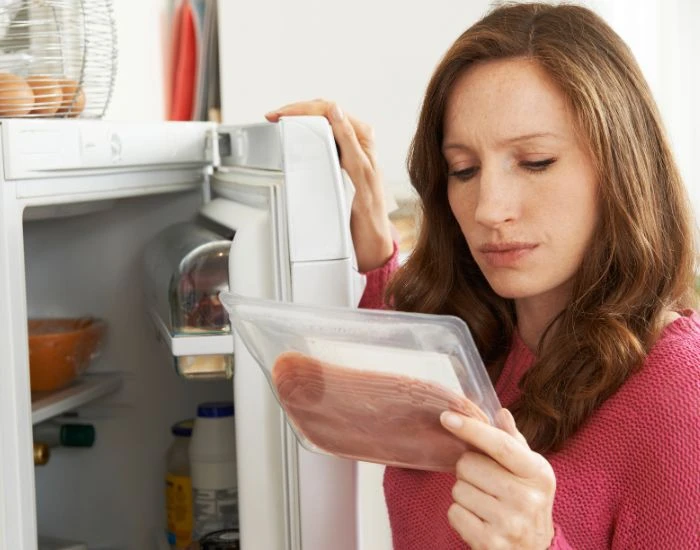
Keep date meanings separate. Food Standards Scotland's labeling guidance distinguishes use-by dates from best-before dates. In a recall, either may be an identifier defining the affected scope. A date that has not yet passed does not override an instruction not to eat a matching product.
Missing codes and food moved into another container
If the wrapper has gone or the food was decanted, record that limitation. An old order record or an existing package photograph may help identify the purchase without proving the batch of everything now in a container. Do not borrow a date from a nearby package or assume that two purchases necessarily came from the same production run.
Contact the retailer or manufacturer listed in the official notice and explain what you know and what is missing. Ask how to resolve the uncertain product and any return question. Neither an unreadable code nor an unsuccessful database search establishes that the food is unaffected. Keep personal purchase details private when seeking help, and do not use tasting or ordinary appearance as a replacement for the published identifiers.
Read the consumer action before choosing a remedy
After matching the product, read the advice addressed to consumers. The FSA's recall explainer says that the notice will tell you whether not to eat the food, how to return it for a refund or whether another action, such as disposal, is required. Some advice may be directed to particular groups, including people with a specified allergy. Preserve those qualifications when passing the message on.
Do not replace an official instruction with a home treatment or an assumption that normal preparation removes the issue. A package's ordinary cooking directions and a recall's consumer action serve different purposes. If the notice says not to eat an affected product, do not test a serving to decide whether it appears normal or whether you personally think the recall should apply.
A retailer's instructions belong to that particular product
A refund arrangement in one notice is not a universal rule for every retailer or product. Read whether the issuer asks for return, contact, photographs or another step, and use the stated market's contact route. If a notice permits a return without a receipt, retain that wording with that notice rather than extending it to unrelated purchases.
If you have already discarded the packaging or cannot follow the stated process as written, ask the retailer or manufacturer what it can accept. Give the product details and explain the missing information. This guide cannot promise an alternative claim process, a particular processing time or compensation that the official notice does not provide. Keep any purchase evidence or account details private.
If someone has already eaten the food
A product check cannot diagnose an illness or establish what caused it. If someone is unwell or concerned after eating affected food, seek health advice suited to their condition. The NHS food-poisoning page explains when to get help. A suspected severe allergic reaction requires urgent attention; the NHS anaphylaxis guidance says to call 999. Do not wait for a retailer to answer a refund enquiry before obtaining urgent medical help.
Keep the product name, readable codes, approximate consumption date and official notice available if needed by a healthcare professional. Separately, the FSA's consumer guidance explains reporting food concerns to the business and relevant local food-safety team. Reporting a concern is different from confirming the cause of symptoms. Describe what happened accurately and let the appropriate professionals assess the health and product questions.
Keep current without relying on a frozen weekly list
For “food recalls today” or “this week,” open a current official alerts page and inspect the date filters and individual notices. A dated blog roundup is useful history, but it cannot remain a live list merely because its headline still says “latest.” Check when the record was published or updated and which period a roundup actually covers.
Use official notifications as an additional route to new information. GOV.UK provides the FSA email-alert signup entry point, while Food Standards Scotland offers its own subscription options. Use the relevant official service directly. Notification preferences and filters affect what you see; not receiving a message is not proof that no product you own has a notice.
Watch for an update label or a revised attachment. A later version can require another comparison with the products you still hold. Do not assume an earlier check remains sufficient without reading what changed. Equally, do not count every revision or retailer copy as a wholly separate event when you are trying to understand one product question.
Keep four dates distinct: the original announcement, a later update, your own checking date and the marking on the product. A future best-before date does not cancel a recall. An older announcement can still be relevant to food retained in a cupboard or freezer, so an item's long storage history is a reason to check its exact codes rather than dismiss the notice as old news.
If a saved link no longer loads, return to the official agency or issuer's current site and search for the exact notice title or reference. A moved page, unavailable attachment or missing front-page entry is a source-access problem, not a published statement that an action has ended. Do not substitute a guessed URL, a narrower news summary or an unrelated product's table.
There is no single checking interval that this guide can guarantee will catch every change. Revisit the official record when a new alert concerns something you own, when a notice is updated or when an unresolved identifier needs clarification. Keep the source and date with your conclusion so that someone else can understand what information it relied on.
Build a household check that preserves useful evidence
A reliable household routine preserves the information behind a decision. Choose someone to record the notice and inspect the relevant packages, then make clear which items were checked and which questions remain unresolved. This is particularly useful when several people shop, a relative buys food for you, or more than one cupboard contains the same brand.
Keep a private worksheet with the official link and the physical product details. Do not let a note saying “checked” conceal an unreadable code or a container whose original wrapper has gone. A second person should be able to tell whether the item matched, whether the source was updated later and what action was actually taken.
| Record | Why it helps |
|---|---|
| Product, variant and size | Distinguishes similar packages |
| Readable code and date | Preserves the physical matching evidence |
| Purchase market | Keeps geographic scope attached to the item |
| Official source and notice date | Identifies the record you relied on |
| Checking date and unresolved fields | Shows the limits of the comparison |
| Action and any issuer response | Distinguishes a plan from a completed return or other step |
If a new version appears, revisit the affected records rather than assuming an earlier decision covers the revision. If an issuer needs more information, provide the relevant evidence directly through its official contact route. Avoid publishing receipts, account information or personal health details in public comments simply to ask whether a package matches.
Know what an independent checking tool actually covers
Before relying on any recall tool, check its countries, source agencies and stated limitations. A database can be useful without containing every notice from every country. A missing brand, an unsuccessful barcode search or a record that has not yet arrived from an agency is not a safety certificate. Read the linked official notice for the applicable product scope and action.
Product Recall Checker is an independent website and is not affiliated with the FSA, FSS, any retailer or another government agency. Its about page describes its U.S. source coverage, and its terms explain that information can change or lag behind official sources. It should not be used to clear a UK product merely because the search produces no matching result.
Use the official UK entry points in this guide for UK food questions. Our recall articles can explain verification methods, while the actual notice and its issuer must resolve an individual product question. Keep your record precise enough to show which country, package and official instructions supported the action taken, including anything that still needs clarification.
Comments
Comments are reviewed before publication. Do not post personal information, serial numbers, medical details, or emergency reports. For urgent safety concerns, use the official agency contact in the recall notice.
Sign in with Google to leave a comment
Loading comments...