Updated November 10, 2026. To check an Asda recall, find the original retailer or responsible UK government notice, compare its complete product identifiers with the item you own and follow that notice's action. A matching retailer name or a recent headline is insufficient. This is a checking guide, not a live inventory of every Asda product currently subject to a recall.
Decide which Asda notice you need
Start at Asda's official product-recalls page rather than a repost that omits its source. Keep the actual item nearby. Write down the product name as printed on it, including a brand such as George or Hapello if present, and the reason you are checking: a named notice, a package code or a message about a purchase.
Do not turn a general concern into a confirmed match. “Asda toy recall” might lead to several unrelated products with different identifiers and actions. The useful outcome is a connection between one item and one official notice, not a conclusion about every toy or household item sold by the retailer.
Start with the product type and purchase market
Food and drink need food-safety sources. Many toys, furnishings and other consumer products can be checked through the Office for Product Safety and Standards collection. The government's product-recall guidance expressly directs food enquiries to separate Food Standards Agency and Food Standards Scotland sources. Searching a nonfood collection alone will not settle a food question.
Also identify where the product was bought and the market covered by the notice. A foreign-language package, an overseas manufacturer or a similar-looking product in another country does not establish whether your item is included. Read the distribution and product details in the original document.
Product Recall Checker's searchable feed uses US sources. It should not be treated as a comprehensive UK Asda checker. Use the official UK routes in this guide for the actual decision, especially when a US search returns nothing. An empty result is not a safety certificate.
Find the original retailer and government record
Use Asda's recall page as the retailer entry point, then open the individual notice or its linked document. If the page does not display its cards, that is a navigation problem rather than a finding that no products are affected. Try the responsible government source and the product's exact name instead of relying on the blank page or repeatedly changing the date of a news search.
For nonfood items, the OPSS collection on GOV.UK offers keyword searches and filters for product category, alert type and corrective measure. Search the product brand as well as Asda. A George item, for example, may be easier to identify by its product description and label details than by a general supermarket search.
For food, use official food-alert sources. The FSA's incident and recall guidance applies to England, Northern Ireland and Wales and points readers to Scottish guidance separately. Food Standards Scotland's alerts provide food and allergy notices. Choose the relevant original alert and read its distribution information; a regulator's general guidance page is not itself a product recall.
Once you find a candidate, record its title, official reference where supplied, publication or update date, and the document containing the identifiers. Follow any link to a fuller product list. A retailer poster and a government report can describe the same event, so compare them before treating them as separate recalls.
News coverage can help identify what to search for, especially when an event has been expanded. It should lead you to the primary record rather than replace it. If an article's count, photograph or shortened product name differs from the official document, investigate that difference before deciding whether your own item matches.
Read identifiers from the item you actually own
Work from the physical product to the notice, not from a news photograph to an assumption. Copy what is printed before deciding whether it agrees with the announcement. If several items are at home, check them individually. They may share a brand, outer design or purchase date while carrying different identifiers.
Food packs need their own size, batch and date check
For a food alert, compare the full name, variety, pack size, batch and date information provided. Keep each row of an official table together: a batch paired with one date should not be combined with a date from a different row. The FSS Rubicon alert, for example, pairs individual batch codes with best-before months. It illustrates the checking method; this guide does not use that alert alone to establish where a particular carton was sold.
Distinguish the printed product date from the date you bought it and the date the alert appeared. They answer different questions. A receipt may help identify a purchase, but it does not automatically reproduce the manufacturing batch on the package. If the notice includes a size or flavor condition, retain it rather than broadening the warning to every product under the same brand.
Toys and household products need model and label details
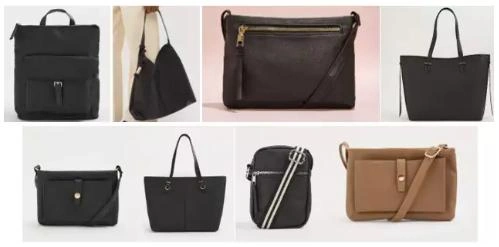
For a toy, bag or furnishing, inspect the identification label or the location shown in the official photograph. Notices may use a model, article number, barcode or batch. Treat those as separately named fields. The OPSS George handbag notice lists descriptions alongside article numbers and barcodes; the word “black bag” would not be a sufficient comparison.
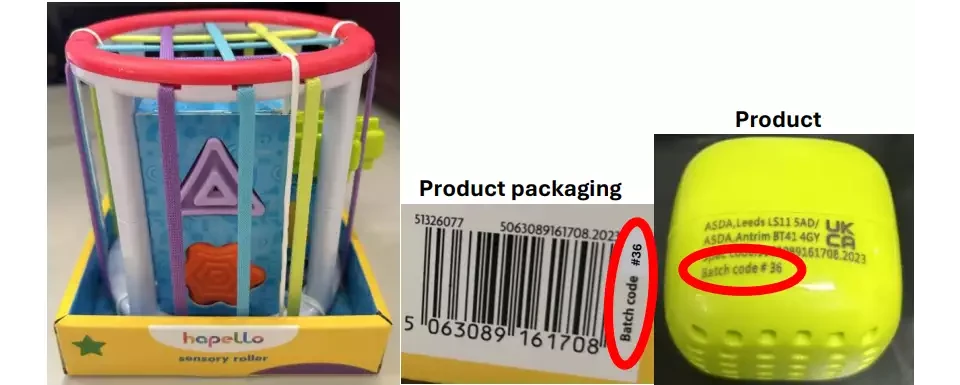
The Hapello Sensory Roller notice illustrates why packaging and product markings can both matter. Its example photographs help locate the information, but a pictured batch is not necessarily the whole scope. Read the written list as well. Do not infer a match from color, shape or a photograph that lacks the identifying field.
Separate the first announcement from a later update
An official page may show an original recall date and a later update date. Read both labels. The original date tells you when that notice began; the history explains subsequent changes. A new newspaper article can describe an older event, while an update to an existing government page can add products without creating a completely separate recall record.
The George handbag page illustrates this distinction. OPSS first published it on September 2, 2026. Its history records an expansion on October 6 and another addition on November 2. Someone relying on the earliest product list could therefore miss a later-added description. The relevant task is to inspect the current table and its identifying conditions, not to decide from the age of the first headline.
Compare the substance of the change. Did the firm add a model, another color, a batch or a date range? Did the action or contact route change? A short statement that the recall was “updated” does not tell you which of these happened. Keep a note of the version you actually checked, especially when an earlier comparison found no match.
The Hapello Sensory Roller record provides a different chronology: an original notice on March 24, 2025 and an update on November 17, 2025 broadening the affected batches. Those remain 2025 dates when someone reads the page in 2026. Neither the year of your search nor the date of this guide turns them into a newly announced 2026 event.
For products kept for months or years, check whether an old notice describes the item still in use. At the same time, do not label a notice active, completed or withdrawn merely from its age. Use an explicit official statement when one is provided, and ask the named contact about unresolved identification or remedy questions. A durable product being old and an official action being finished are different facts.
Follow the action for the specific product
After identification, make a separate decision about the required action. Do not assume that every notice means returning an unopened item with a receipt, or that every affected product should immediately go into household rubbish. The corrective-action paragraph and retailer instructions determine what to do with the particular product.
Food instructions depend on the problem and notice
Read who the warning addresses and why. An allergy notice may give instructions specifically to people with the stated allergy or sensitivity. The FSS Rubicon notice, for example, identifies undeclared sulphites and gives consumer advice for people sensitive to sulphur dioxide or sulphites. Preserve that wording instead of substituting a different allergen or presenting the example as proof that all drinks from the same brand have the same problem.
Other food notices can concern contamination, foreign material or incorrect information. Read their instructions independently. Do not taste a product to settle an uncertain label comparison or invent a cooking method as a substitute for the official action. If you need clarification, ask the contact named in the alert rather than treating another customer's account of a refund as the governing policy.
The FSA distinguishes a withdrawal before food reaches consumers from a recall involving consumer action. A message saying stock has been removed from shelves does not, on its own, tell you how a package already at home should be handled. Look for the consumer instruction in the actual notice. If someone is unwell or concerned about their health, use appropriate medical advice; the NHS food-poisoning guidance explains when to seek help. A recall search cannot diagnose the cause of symptoms.
Nonfood remedies are not interchangeable
For the specified George handbags, OPSS tells owners to stop using the product and return it to any Asda store for a full refund. Follow that product-specific direction. A modification or replacement offered for another consumer product would involve a different process; it is not permission to improvise a repair or continue using an item contrary to its notice.
Before a return, check whether the notice says to contact the firm first, retain an identifying label or follow a particular handling instruction. Keep the relevant information available without performing a destructive test to confirm the hazard. If the notice does not answer a practical question, ask Asda through the stated channel. This guide does not add a universal no-receipt rule, guaranteed processing time or entitlement to a particular payment method.
Handle a partial match without guessing
A partial match is a question to resolve, not a reason to rewrite the notice. If the name looks right but the barcode differs, record both observations. Check whether you are comparing the same size, color, version and identifier field. Do not remove digits or substitute a code from an online listing simply to make the numbers agree.
For food, the FSA's current alerts portal allows a more focused search by alert type, nation and date. Start with the actual product name and then inspect the candidate notice. A tight filter can hide an older relevant document, while a loose search can return unrelated brands. Adjust the search without losing the identifying information you began with.
For an unresolved product question, use the contact attached to its official record. The handbag notice supplies 0330 053 0111, for example; another notice can provide a different route. Explain the conflicting field and ask which information would resolve it. A retailer answer about one item should not be recorded as clearance for every similar item in the household.
When the packaging or label is missing
Use photographs, an existing order record or other information already available, but say what is missing. A purchase description can identify a product line without establishing its batch. Ask what alternative information the firm can use rather than assuming a receipt proves a particular production run or guarantees a remedy.
Keep this material privately. A useful message describes the product, the relevant notice and the uncertainty; it does not require posting account credentials, payment details or a full receipt in public comments. Do not cut open a furnishing, dismantle a toy or test a suspected hazard to create evidence. If identity remains unresolved, record that limitation and the next official contact step instead of labeling the item unaffected.
Keep a dated household record and recheck the source
A small record makes a recall check easier to finish and easier to revisit. Keep one entry for each product rather than combining a toy, a food pack and a furnishing under a single “Asda recall” heading. Record the evidence you actually inspected, not just the conclusion someone forwarded to you.
| Record | What to keep |
|---|---|
| Actual item | Full description and the identifiers you can read. |
| Original notice | Official URL, reference and the version or update date. |
| Comparison | Matched fields and any unresolved or conflicting information. |
| Required action | The instruction in that specific notice. |
| Follow-up | Contact made, answer received and any action still outstanding. |
If another household member handles the return or stores the product, share the relevant notice and identifiers with them. A message naming only the shop can leave someone checking the wrong item. Once you have acted, note what was completed, while keeping that separate from any statement about whether the official recall itself has ended.
For future information, use official sources rather than relying entirely on forwarded warnings. The FSA's recalls-and-alerts publication explains its subscription service. Treat a notification as a prompt to read the product notice, not as a replacement for matching your package. For concerns about an unsafe nonfood product, the government's consumer reporting guidance identifies the appropriate reporting routes.
Product Recall Checker is an independent information website and is not affiliated with Asda or the UK government. Our other recall guides can explain checking methods, while the searchable recall feed uses US sources and does not clear UK Asda purchases. The original retailer or government notice remains the basis for the affected scope and the required action.
Comments
Comments are reviewed before publication. Do not post personal information, serial numbers, medical details, or emergency reports. For urgent safety concerns, use the official agency contact in the recall notice.
Sign in with Google to leave a comment
Loading comments...