Updated November 10, 2026: to check an M&S recall, find the retailer's official notice for the exact item, compare its product codes and any food date range, then follow that notice's particular action. Some products are returned to store; other notices give disposal instructions instead. This UK guide uses dated examples to explain the check, rather than presenting every example as a new recall today.
Find the official M&S notice before using a shared list
The readable M&S Product and Brands Information page includes a Product Recalls section with food and nonfood notices and links to individual posters. Locate that section and open the notice matching your item. The surrounding help page also discusses guarantees, brands and ordinary product questions, which should not be mistaken for recall-specific terms.
Keep the individual poster or notice open while checking the product. A short news list can help you recognise a name, but it may omit a barcode, date, variant or instruction. A social post may also combine several retailers' notices into one message. Follow the official entry far enough to establish which company, product and market the instruction concerns.
Use the full product description rather than a category such as “M&S food” or “children's toy.” Two products sold by the same retailer can involve different suppliers, reasons and remedies. A notice about a particular jug does not describe every item of glassware, and a named prepared-food recall is not a statement about everything sold at the food counter.
If a recall link displays only general help or navigation, use the retailer's other official help route or ask customer service to identify the notice. A page-loading problem or an empty-looking list is not evidence that no product has been recalled. The purpose of the search is to find an actual instruction, not to obtain reassurance from an unsuccessful search.
For each item, establish the source and territory first, then compare the identifiers and the action. Keeping those three tasks separate makes it easier to see exactly what remains uncertain, particularly when the original packaging or a shared message is incomplete.
Read each food product's barcode and dates together
A food notice can name several products while giving each one a different date range. Read across the row that matches your package. Do not combine a barcode from one item with the dates for another, and do not assume that a broadly similar salad or sauce is included because it uses the same ingredient.
The M&S pistachio-products poster issued October 8, 2026 provides a useful dated example. It concerns possible Salmonella and identifies three products. The following fields illustrate that notice's scope; they are not an announcement that every M&S salad or pesto is recalled today.
| Product row on the poster | Barcode | Use-by dates in October 2026 |
|---|---|---|
| Super Nutty Wholefood Salad | 00797016 | 8, 9 and 10 |
| Nutrient Dense Nutty Super Wholefood Salad | 00961035 | 8, 9, 10 and 11 |
| Collections Pistachio Pesto | 29526734 | 8, 9, 10, 11, 12 and 13 |
Compare a complete product row
Keep the leading zeros in the first two barcodes. These are the identifiers printed in the notice; adding or removing digits to make a number resemble another barcode format is not a valid comparison. Use the full product name and the relevant date alongside the code, particularly when a shortened receipt description omits part of a name.
The salad rows end on different dates, and the pesto row extends later. That difference is a reason to read the table carefully rather than forward a single date as the limit for every item. A product with a different date or description requires its own check; this example cannot establish the status of a different production run.
The poster also has an issue date and a separately labelled removal date. Neither should be substituted for the package's use-by code. Those administrative labels do not, by themselves, state a consumer refund deadline or declare that a matching package retained at home is cleared. Read the instructions and any later official update rather than making that inference.
If the food packaging has already gone
A missing sleeve, lid or label can leave an identification question unresolved. Keep any private purchase photograph or receipt, note which product was bought and where, and ask the retailer how the available information can be checked. A memory that “it was a nutty salad” does not supply the missing barcode or date.
Do not eat food that you know matches a notice instructing you not to consume it while seeking a refund answer. Conversely, avoid telling another household that all its groceries are affected when the information supports only a particular product and dates. The goal is a reliable match and the stated action, with uncertainty made explicit where the evidence is incomplete.
Identify nonfood items by their own product codes
For homeware or toys, a food date table is usually the wrong starting point. Look for the product name, model or retailer product code, colour or other variant, and the barcode if the notice supplies one. Keep those fields distinct: a product code with letters and slashes is not the same field as a numerical barcode.
The M&S Hand Painted Jug poster dated July 30, 2026 identifies the blue jug, product code T34/9829D, with barcode 25959376. It describes a glass-breakage risk and gives its own action. That specificity matters more than a general headline saying that M&S has recalled “a jug.”
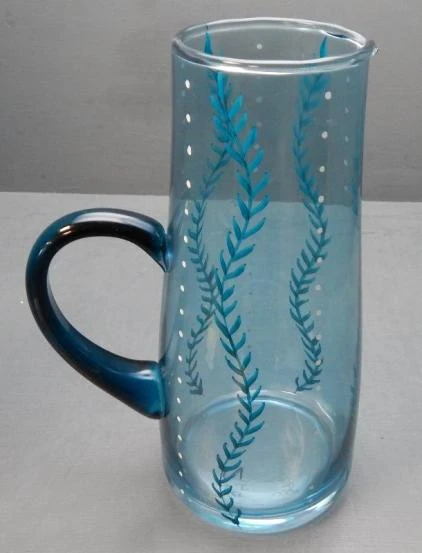
The poster also says the product had been on sale in the UK and Republic of Ireland since February 28, 2026. Keep that sales-history statement separate from the poster date and the date you bought your own item. A date printed for displaying a notice is not, on its own, a statement that a retained product becomes cleared when that date passes.
A product photograph helps recognise the shape and decoration, but it should not be stretched into a rule covering similar-looking goods. Save a picture of your own item and any available marking if you need the retailer's help. Do not stress the glass or try to reproduce the reported problem as an identification test.
Keep partner brands and similar-looking items separate
M&S also lists notices for named partner-brand items. For example, the retailer identifies the Paw Patrol Bumper Craft Set with code T554446 and refers to Addo Play. The retailer name, the product brand and the company handling a question can therefore be different names within the same notice.
Record the full set or item name and its code rather than treating the brand as the affected range. Another toy using the same characters is not automatically the Bumper Craft Set, and a different Addo Play item needs its own notice. The next step is to read the action for the matched product, not to borrow the jug's instructions because both were sold by M&S.
Follow the notice's own return or disposal route
The remedy is part of the product check, not a standard final paragraph that can be copied between notices. Read the action attached to the item you matched. “Return it,” “dispose of it” and “contact the named company” are different instructions, particularly where handling the product itself matters.
Do not replace these directions with a general returns deadline or a seasonal shopping policy. The retailer's ordinary Returns and Refunds page answers routine purchase questions; a recall poster may set out a particular action for a safety issue. Keep that individual instruction with your identification record.
When the notice tells you to return the product
The Hand Painted Jug poster instructs owners to stop using the item immediately and permits a return for a full refund to an M&S store, excluding Outlets and Franchise stores. Those exclusions are material: “any store” without the accompanying qualification would give an incomplete account of the published route.
The October pistachio-products poster also instructs customers not to consume the affected food and gives a nearest-store refund route. It is still a separate notice with its own scope. A refund direction does not mean that a matching food can be eaten while waiting for a convenient store visit, or that all foods carrying the retailer's name qualify under that poster.
If the identified return raises a practical problem, use the contact supplied for that notice before assuming a different collection, postal or payment arrangement. This guide does not promise receipt exemptions, reimbursement for other purchases or a particular processing time where the official notice does not state them.
When it says to dispose of the item instead
The Paw Patrol Bumper Craft Set poster, updated March 3, 2026, illustrates why a universal return instruction would be wrong. It tells customers to stop use, keep the product away from children, follow its disposal directions and not return it to M&S. The poster includes handling information for sand that remains packaged and for material already used. Read that complete instruction rather than inventing a home-cleanup method from a headline.
The retailer's associated notice also describes an automatic online code worth £15 in lieu of a refund for customers who purchased the named set online. That is a stated product-and-channel arrangement. It should not be rewritten as a promise that every shopper, every partner-brand product or every purchase method will receive an automatic cash payment.
If you are unsure how an instruction applies to an opened item, or cannot reconcile it with a message about your order, ask the contact given in that notice. Do not carry a product to a branch against an explicit no-return direction merely because a different recall allowed returns. Likewise, a disposal instruction does not remove the need to clarify the relevant remedy using the official route.
Ask the correct contact to resolve an uncertain match
A retailer's name on the receipt does not mean that every question goes to the same team. Read the contact attached to the particular notice. The jug notice and its OPSS record give 0333 014 8434, whereas the October food poster supplies 03330 148 555. Preserve the association between a number and its product instead of building an unofficial universal recall helpline.
For a partner-brand item, the notice may direct product questions to the manufacturer. Addo Play's official Product Safety Notices page provides its current notices and support details. Check that live source when contacting the company, particularly if an old saved poster or copied retailer message carries different contact information.
Prepare a short private description of the question. Include the complete item name, available product code or barcode, any relevant date or variant, where it was bought and which notice you are comparing. Say clearly if a character is unreadable or the packaging is missing. A representative can then address an actual identification problem rather than a general question about the retailer's entire range.
If a manufacturer uses a different item reference from the retailer, do not guess a conversion between them. Give the code that is actually printed on your item and the retailer notice you found. Similar names across a range are a reason for careful clarification, not proof that every set or variant shares the same instructions.
Keep product identification separate from a payment-status enquiry. An online purchaser asking about a stated code arrangement should identify the relevant order and notice through the retailer's official support route. Someone who cannot read a batch or model needs that uncertainty resolved first. Neither question is answered by posting a bank-account number or login detail in an article's comments.
Product Recall Checker does not authenticate goods, issue vouchers or decide claims. Keep any written clarification with your own record and confirm how it applies to your item. Do not assume that a reply about another size, model, country or purchase channel automatically resolves your case.
Keep a dated UK record rather than a permanent all-clear
Save the product name, identifier, relevant food date or nonfood variant, market of purchase, official notice link and the day you checked it. Add the instruction you followed or the question still awaiting clarification. That record is more useful than a generic note saying that “M&S was checked,” which does not identify what was compared.
Use the appropriate official source as well as the retailer. The Food Standards Agency alerts page provides food notices. The OPSS recalls guide explains its product-safety notices and points readers to separate food sources, including Food Standards Scotland. A food search and a nonfood product search do not necessarily cover the same records.
Check the territory in the individual notice. The Food Safety Authority of Ireland's M&S ready-to-eat-products notice belongs to an Irish agency. It should not be used to silently extend a UK list or replace a UK product's stated dates. Similarly, a poster that expressly covers the UK and Republic of Ireland for one jug is not evidence that every M&S notice has identical geographic scope.
Keep a notice's original date separate from this guide's checking date and from a later news report. A new article about an old product does not announce a new recall, while an old notice can still require attention to an item retained at home. Do not declare a case closed merely because it is no longer prominent on a short retailer list.
The site's US search feed does not replace UK notices
Product Recall Checker's searchable feed draws on U.S. agency data. It is not a complete UK retailer-recall register. A missing result here would not establish that a UK M&S product is unaffected; use the official notice and retailer or manufacturer clarification for that market.
The About page explains the site's independent role. Our U.S. food-recall guide discusses FDA and USDA information, which is a different source set from the UK food notices above. Keep that distinction explicit when sharing a link with someone who bought a product in another country.
Product Recall Checker is an independent information website, not M&S, a manufacturer or a government agency. This guide does not provide an individual product clearance, process a remedy or replace an official notice. Make the match using the actual item, follow the action attached to it, and keep unresolved details visible until the appropriate source clarifies them.
Comments
Comments are reviewed before publication. Do not post personal information, serial numbers, medical details, or emergency reports. For urgent safety concerns, use the official agency contact in the recall notice.
Sign in with Google to leave a comment
Loading comments...