FDA's Major Product Recalls page is a curated hub for recall events with significant downstream effects, typically five or more related events. It is useful when one ingredient or supplier action reaches many brands, stores or prepared foods. It is not a complete recall list and “major” is not an FDA recall class.
As of September 3, 2026, FDA's hub includes 2026 groupings involving fresh jalapeños and powdered milk. Always open the live event page and then the specific downstream notice. Match the exact product, package size, UPC, lot and date code before acting.
What FDA means by a major product recall
On this particular FDA page, “major” describes a recall situation with broad downstream connections. FDA says the hub generally features events with at least five related recalls. A contaminated ingredient, component or supplier shipment can trigger notices from processors, distributors, restaurants and retailers that used it in different products.
That is different from Class I, II or III. Recall class reflects FDA's health-hazard assessment for a product. A major-recall grouping organizes connected actions so people can find them. The words answer different questions: “How serious is the health hazard?” is about class; “How many related notices or downstream effects are connected?” is why an event may be grouped on the Major Product Recalls hub.
The hub is also not a top-ten ranking, a count of units, or proof that every product containing a named ingredient is affected. Each linked company announcement can specify different brands, package sizes, UPCs, lots, date codes, distribution areas and consumer remedies. You must move from the group page to the exact downstream notice before deciding that an item matches.
Use FDA's Major Product Recalls page to understand the event map. Use the individual notice for the action. For all other current announcements, search FDA's regular recall page or our latest recall index.
FDA's 2026 major recall groupings at a glance
Checked on September 3, 2026, FDA's Major Product Recalls hub displayed two groupings carrying a 2026 label. This is a dated snapshot of that curated page, not the total number of FDA recalls during 2026 and not a promise that the list will remain unchanged.
| FDA grouping | Why it became a chain | What consumers must check |
|---|---|---|
| Fresh jalapeños from Sinaloa, Mexico, distributed by Coast Citrus | Bulk peppers moved into downstream prepared foods and food-service channels | Brand/product, package, UPC, use-by date, retailer and notice-specific distribution |
| Powdered milk from California Dairies Inc. | An ingredient was used in multiple finished products | Finished-product notice, lot/date code, package and distribution—not ingredient name alone |
The hub also shows older major events, so do not assume everything visible happened in 2026. Read the year in the event title and dates inside each linked notice. A page may be updated as firms identify more downstream customers, remove resolved entries or add new product tables.
For that reason, bookmark the live FDA hub instead of relying on a screenshot or social-media list. A saved list can help document what was known on a date, but only the current notice can show later scope or instruction changes.
Case study: the 2026 fresh-jalapeño recall chain
FDA's event page says Coast Citrus Distributors initiated a limited recall on July 22, 2026 involving jalapeño peppers in bulk generic Coast Tropical packaging. The investigation connected relevant peppers to a grower in Sinaloa, Mexico. Once an upstream produce item enters restaurant and manufacturing channels, the consumer-facing products may no longer look like bulk peppers.
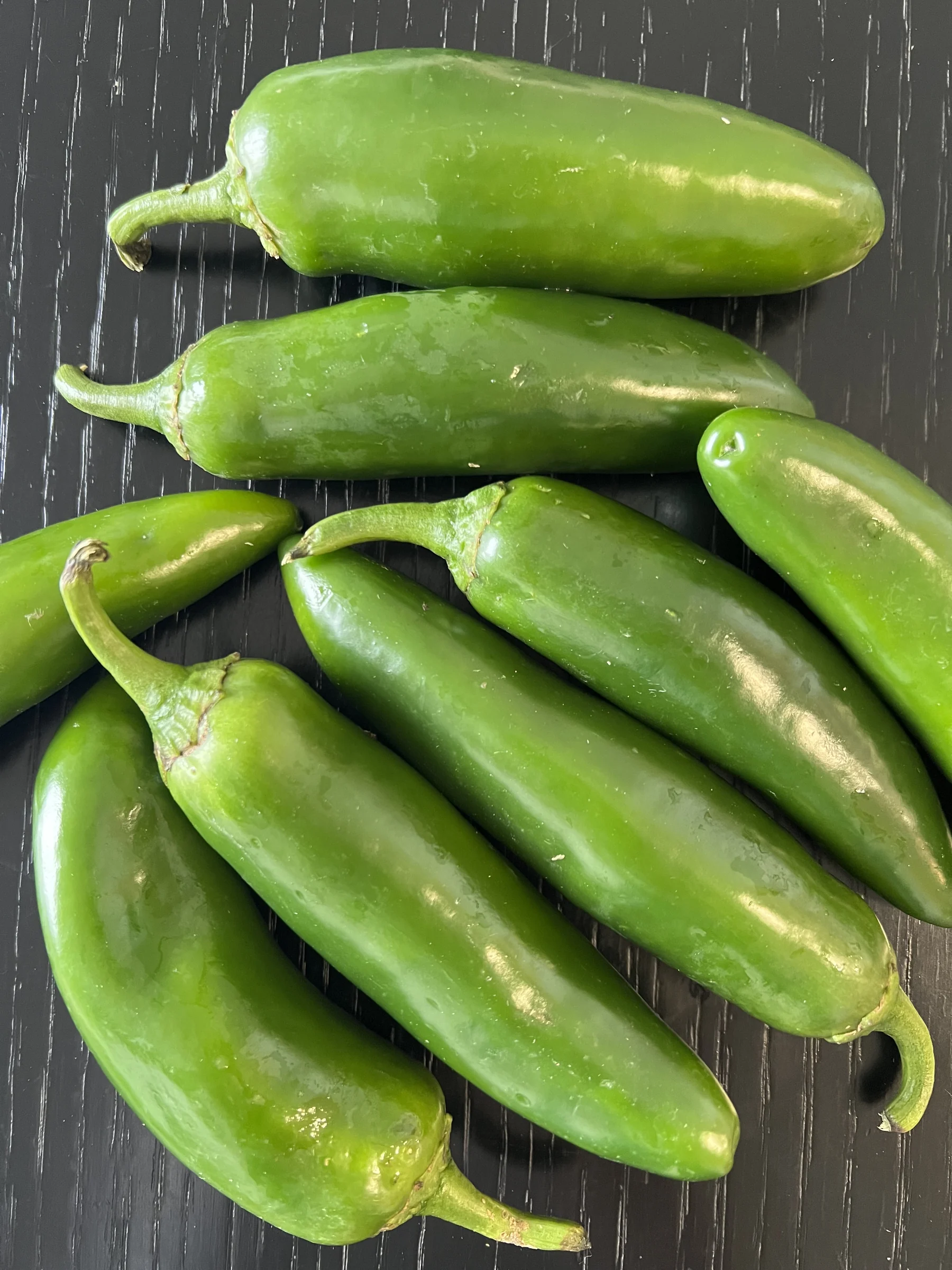
Downstream companies may receive peppers as an ingredient for guacamole, pico de gallo, dips, salads, sandwiches or other prepared foods. Each firm must determine what it received, when it was used and which finished lots were distributed. The resulting notices can carry different brands, UPCs, package sizes and use-by dates even though they point back to the same supplier event.
The chain also crossed agency lines. FDA's group page notes that USDA FSIS issued a public health alert for meat and poultry products containing FDA-regulated jalapeños of concern. That does not make all meat or poultry part of an FDA recall; it shows how jurisdiction follows the finished product while agencies coordinate around the ingredient.
Consumers should use FDA's live jalapeño event page as an index, then open the exact brand notice. The word “jalapeño,” a store name or a restaurant visit is not enough to establish a match.
Case study: the 2026 powdered-milk recall chain
FDA's second 2026 grouping concerns finished-product recalls associated with powdered milk from California Dairies Inc. because of a potential Salmonella risk. The supplier ingredient can be incorporated into products sold under other company and brand names, so a shopper may never see “California Dairies” on the front panel.
The official event page said FDA was working with downstream consignees to determine whether additional customer recalls were necessary. That wording matters: a supply-chain review can continue after the group page first appears. A company must trace which ingredient lots it received, which recipes and production runs used them, and where those finished products went.
For consumers, the correct match is the finished product identified in a downstream notice. Check brand, product name, net weight, UPC, lot or date code and distribution. Do not discard every food that lists milk powder, and do not assume every product from a named retailer is included. Supplier association explains the event; it does not replace the finished-product scope.
Revisit FDA's powdered-milk event page for additions or updates. If a package code is missing or illegible, use contact details from the specific company notice. Our weekly food-recall guide can help with recent navigation, but FDA determines the official affected range.
How one supplier event creates many retail notices
A major recall chain starts with traceability, not headlines. The upstream firm identifies affected production lots and consignees. Each direct customer checks receiving and inventory records. If it repacked, processed or used the material, it maps the ingredient to finished-product lots and its own customers. Those customers may repeat the process.
| Supply-chain stage | Record that matters | Consumer-facing result |
|---|---|---|
| Supplier | Ingredient lot, shipment and consignee | Initial recall or customer notification |
| Manufacturer/processor | Recipe, production date and finished lot | Separate branded-product notice |
| Distributor/retailer | Store, state, delivery and sale dates | Store alert, shelf removal or customer outreach |
| Consumer/food service | Package identifier or preparation record | Notice-specific discard, return or other action |
One upstream lot can become multiple brands and UPCs; several upstream lots can also converge in one finished product. That is why counting announcement rows does not equal counting independent root-cause events, and why a long retail list does not mean every item in a store is affected.
FDA's grouping connects the chain, while the company notice preserves exact identity and remedy. When a summary omits a code, do not fill the gap from a neighboring firm's notice. Contact the company listed for that product and check later updates.
How to check whether your exact product is included
Start at the major-event page, find the downstream company or product, and open its full FDA-posted announcement. Then compare the package in a fixed order:
- Brand and exact product name, including flavor or variety.
- Package size and type, such as cup, tray, bag or multipack.
- UPC, item number or SKU, preserving leading zeroes.
- Lot, batch, use-by or best-if-used-by date, including ranges.
- Distribution, such as named states, stores or food-service channels.
- Updates and photos that clarify where codes appear.
A retailer name narrows the search but does not complete it. Large retailers sell many packages from the same brand and may carry a recalled product only in certain regions. Likewise, seeing “jalapeño” or “powdered milk” in an ingredient list does not prove that the ingredient came from the supplier and lot under review.
If every limiting field matches, follow that product notice. If one limiting field clearly differs, document it and continue checking for other related notices. If a field is missing, illegible or presented in an unfamiliar date format, contact the company using the official notice. Call the retailer only through a verified corporate channel.
A no-match search is not a guarantee of safety. FDA's public announcement list is not exhaustive, and new downstream notices can be added. Recheck the live event page when a supply-chain investigation is developing. Our general recall-checking guide offers a printable comparison method.
What “major” does not tell you about risk or status
Placement on FDA's Major Product Recalls page does not by itself reveal the recall class, amount distributed, illness count, geographic reach or whether the action is ongoing. It chiefly signals that the event has substantial downstream connections. Read each notice and enforcement record for those other facts.
- Major is not Class I. Class comes from FDA's hazard evaluation and can be pending when a firm starts action.
- Many notices are not many root causes. Several rows may trace back to one supplier lot.
- Nationwide does not mean every store. It describes distribution reach, while actual packages remain identifier-limited.
- Recall is not outbreak. A recall removes or corrects product; an outbreak investigation evaluates illnesses and exposure evidence.
- Completed is not necessarily terminated. FDA termination is a formal status determination.
Counts also need a denominator. Counting downstream announcements can make a single ingredient event look like dozens of independent failures. Counting root events can hide how many brands and households were affected. State which unit you count—events, recall records, notices, products, lots or units—before comparing years.
For personal decisions, neither “major” nor a class replaces exact matching and the official remedy. Someone with a matching package should follow the notice even if the event is absent from the major hub; someone with a different lot should not assume inclusion because the headline sounds serious.
What consumers, restaurants and retailers should do
Consumers: isolate a matching package so nobody eats or donates it, preserve the label, and follow the exact downstream notice. It may direct you to discard, return or contact the firm. Do not assume a refund unless the notice or retailer offers one. Clean surfaces and containers only according to appropriate food-safety guidance, and wash hands after handling suspect food.
Restaurants and food-service operators: stop using inventory that matches the supplier or downstream notice, identify menu items and preparation dates that used it, preserve invoices and lot records, and follow instructions from the supplier and regulator. Prevent recalled ingredients from being mixed with unaffected stock. Customer communication and disposition should follow the official action and local requirements.
Retailers and manufacturers: review receiving, transformation and distribution records, identify finished products, control affected inventory and communicate with FDA's recall coordinator as appropriate. A shelf pull alone may not address online orders, warehouses, prepared-food departments or downstream customers. Maintain documentation needed to assess recall effectiveness.
Anyone with serious symptoms should seek medical care rather than waiting for a recall lookup. Report suspected food problems through FDA's designated complaint or safety reporting channels; meat and poultry issues may belong to USDA FSIS. A report contributes information but does not prove that one product caused an illness.
Across all roles, use contact details in the official notice. Major events attract copied posts and refund scams, so avoid unsolicited links requesting payment credentials or account codes.
Major product recalls 2026 FAQ
Does FDA's Major Product Recalls page list the biggest recalls by units?
No. FDA describes the page in terms of significant downstream effects, typically five or more related events. It is not a unit-volume ranking.
Were jalapeños and powdered milk the only FDA recalls in 2026?
No. They were the 2026-labeled groupings visible on the major-event hub when checked September 3. FDA's regular announcement page and Enforcement Reports contain many other actions.
Is every product containing the named ingredient recalled?
No. Inclusion depends on supply-chain records and the exact finished product, lot, UPC and date range listed by each company. Ingredient similarity alone is not a match.
Why can FDA and USDA appear in the same event?
Regulatory responsibility can follow the finished product. FDA may oversee produce or another ingredient, while USDA FSIS handles meat or poultry products containing it. Each agency retains its own notice type and scope.
How often should I recheck a major event?
Recheck while an investigation and downstream review are developing, after a company alert, and before using a stored package. FDA may add or revise linked notices as consignees complete tracing.
Does a missing retailer mean my item is unaffected?
Not necessarily. Distribution details may be incomplete or expressed by state, distributor or date. Match identifiers first and ask the company through the official notice when uncertain.
The practical rule is to use the major page as a map, not a verdict. Navigate to the specific notice, compare every limiting identifier, and follow only that notice's remedy. Product Recall Checker is independent and does not replace FDA, USDA, a recalling firm or medical advice.
Comments
Comments are reviewed before publication. Do not post personal information, serial numbers, medical details, or emergency reports. For urgent safety concerns, use the official agency contact in the recall notice.
Sign in with Google to leave a comment
Loading comments...