This August 2026 food recall recap is a verified navigation snapshot checked September 3, 2026. It covers notable FDA food and pet-food announcements, linked outbreak investigations and USDA FSIS records—not every enforcement entry, local action or later update. Always open the official notice and match the brand, product, UPC, lot/date code, package size and distribution before acting.
August included several linked produce events, allergen and labeling actions, and a raw pet-food recall. Related notices can share one ingredient, so a long product table does not necessarily represent the same number of independent contamination events.
August 2026 Recap at a Glance
The month's official information sits in more than one record system. FDA company announcements identify recalled products and remedies. FDA outbreak pages track illnesses and investigations. FDA Major Product Recalls group events with significant downstream effects. FSIS publishes separate meat, poultry and processed-egg recalls and public health alerts.
| August theme | Official example/source | Verification focus |
|---|---|---|
| Produce ingredient and downstream foods | FDA jalapeño grouping | Individual brand, product, UPC and use-by date |
| Sprout outbreak and recalls | FDA sprouts investigation updated Aug. 31 | Brand, 5-oz cup, product type and listed lots |
| Allergen/label actions | FDA company notices and FSIS records | Undeclared allergen plus exact package codes |
| Raw pet food | FDA Northwest Naturals announcement Aug. 28 | Recipe, bag weight, lot and date information |
| Meat/poultry alerts | FSIS recalls and public health alerts | Establishment number, label PDF and dates |
Dates require care. A company announcement date can differ from FDA's publication date, and FDA may classify an action later. An outbreak update may be revised after a recall begins. For this recap, “August” means an official public notice or meaningful update posted during August 2026, not necessarily the date production started or a firm first contacted customers.
Do not total the rows as independent incidents. One recalled ingredient can prompt many prepared-food notices, while one notice can list dozens of packages. A valid count needs a stated unit, agency, date field and cut-off. Use the 2026 archive guide for that methodology.
Jalapeños and Downstream Prepared Foods
One of August's most visible food-safety stories involved jalapeños from Sinaloa, Mexico, distributed by Coast Citrus Distributors. FDA's grouping says the distributor began a limited recall July 22 and agreed in early August to recall remaining implicated jalapeños. On August 20, FDA created a Major Product Recalls page to organize downstream company notices.
The grouped event matters because peppers were not sold only as loose produce. Recipients used or repacked them in dips, salsa, guacamole, pico de gallo, salads and other prepared foods under various brands. Every downstream announcement has its own package sizes, UPC/PLU entries, date ranges and states. The root event is a map—not a universal package description.
For example, FDA's Dairyland Produce/Hardie's Fresh Foods page lists a company announcement date of August 12 and FDA publication date of August 17 for a five-pound jalapeño product. That narrow example should not be applied to every pepper or every Hardie's item. Consumers with a retail prepared product should locate its separate announcement rather than trying to match a bulk case description.
How to check this linked event
- Open FDA's live jalapeño Major Product Recall grouping.
- Find the company or retailer responsible for the product you bought.
- Open that individual notice and product table.
- Match brand, exact recipe, size, UPC/PLU and best-before/use-by dates.
- Recheck the grouping for corrections or newly added downstream notices.
Do not use the store name alone. A retailer may carry affected and unaffected products, and distribution can span selected states. FDA's investigation page provides public-health context; the recall announcements provide package scope and the company's stated remedy. Keep those roles separate.
Sprouts, Berries and Other Produce Events
Sprouts: a late-August expansion
FDA's sprouts investigation page, updated August 31, said Everything Sprouts expanded its recall on August 28 to certain five-ounce cups of Robust Radish Sprout Mix with lots 223, 226, 230 and 233. The page also describes an August 22 action involving specified five-ounce alfalfa sprouts and mixes sold under Calco and Everything Sprouts, with separate lot lists for each product.
Those codes are useful only for the exact products listed. Do not apply the four Robust Radish lots automatically to every alfalfa or garlic mix; each line on the FDA page has its own scope. Reopen the investigation because it was ongoing at the month-end cut-off.
Frozen berries: recall date versus later classification
CDC's July 7 release states that Frutas y Hortalizas del Sur recalled frozen blueberries on July 3 during an E. coli O145 investigation. If an FDA classification or downstream notice appeared in August, that does not change the initiation month. A month recap should label later classification and expansion separately rather than rewriting the whole event as an August recall.
Frozen produce remains practically important because bags can stay in home freezers. Match brand, package size, UPC, lot and best-by date. Do not infer that all blueberries or mixed berries are involved.
Iceberg lettuce: an August explanation of a July action
FDA's August 28 constituent update explained its classification of the Taylor Farms de Mexico iceberg-lettuce recall. The agency says the voluntary action began July 17 after traceback linked the product to a Cyclospora outbreak. This is an August regulatory update about a July recall, not a new blanket recall of lettuce.
These examples demonstrate why monthly archives need two dates: the original product-action date and the later publication/update/classification date. Consumers should follow the latest scope, while researchers should preserve the chronology.
Allergens, Labeling, Pet Food and Other Hazards
Not every August action involved an outbreak. FDA's rolling page included an August 19 announcement for Momchipz vegetable chips involving undeclared gluten. Allergen and labeling notices can be highly specific: the product name, bag size, UPC, lot and affected allergen determine scope. A person without the relevant package should not generalize the alert to every vegetable chip.
Pet food belongs in FDA's system
On August 28, Northwest Naturals announced a voluntary recall of two raw frozen Chicken Recipe pet-food products because of Salmonella and/or Listeria monocytogenes contamination. The FDA page states the action covered 53 cases (1,272 pounds) of two-pound cat-food bags and 19 cases (684 pounds) of six-pound dog-food bags in two identified lots.
Those figures and product forms are exact scope clues. They do not describe human chicken, every Northwest Naturals recipe or every raw pet food. Pet owners must compare the bag weight and lot/date details on the official notice. They should also read the pet- and human-exposure precautions because contaminated pet food can expose people during handling.
FSIS labeling and public health alerts
Meat or poultry products with undeclared allergens or misbranding appear in FSIS records rather than the FDA list. FSIS can issue a recall or public health alert, each with an establishment number and label information where available. A public health alert should remain labeled as such; it is not made more accurate by calling it a recall.
Foreign material, processing deviations, lack of inspection and microbial contamination also produce different action types. The hazard tells you why an agency acted, but the identifiers tell you whether your package is included. Browse by hazard only as a starting point.
For every August notice, preserve the original wording. “Potential contamination,” “undeclared allergen,” “produced without inspection” and “linked to illness” are not interchangeable. Avoid upgrading a potential hazard to confirmed contamination unless the primary source says so.
How to Check Your Product
Start with the newest agency page, not an August screenshot. The notice may have been corrected in September. Place the product beside the official table and work through every available field.
- Confirm agency and action type. FDA announcement, FSIS recall, FSIS alert and CDC investigation mean different things.
- Match the exact name and form. Fresh versus frozen, raw versus ready-to-eat, pet versus human food, and recipe/flavor matter.
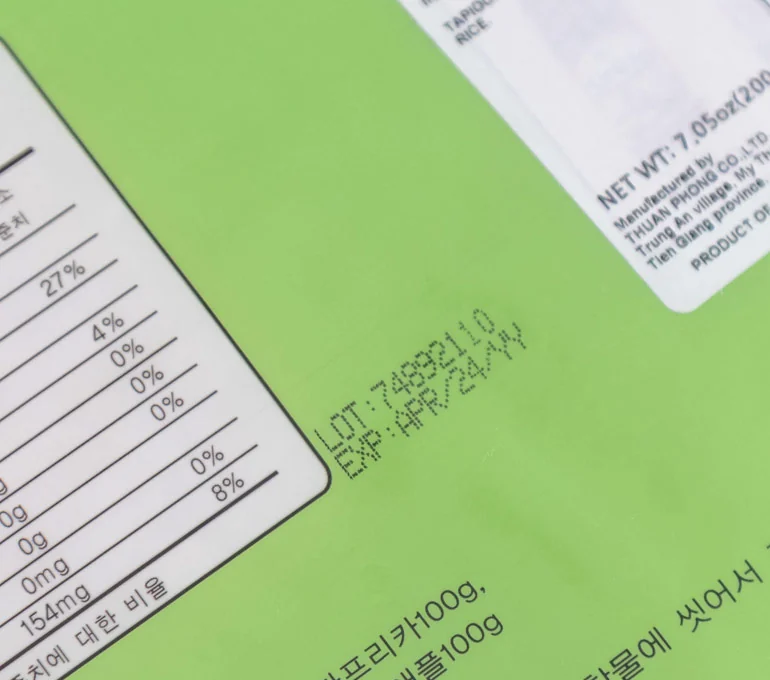
- Match package size and code. Compare UPC/GTIN, lot, batch, best-by/use-by date and, for FSIS products, the establishment number.
- Compare label images. Private labels may share a producer but use different fronts.
- Use location as confirmation. Retailer/state lists can change and do not replace codes.
- Read the remedy and contact. Follow the company instructions for the specific product.
For loose produce, save the sticker and receipt and ask the retailer to compare supplier/carton records. For frozen food, inspect older stock. For food service, check outer cases and receiving logs. If one decisive code is unreadable, isolate the item and contact the company through the official notice.
A negative search does not certify safety. The notice might use a distributor rather than retail brand, the action may be local, or indexing may lag. Search product name, manufacturer and code variants on FDA and FSIS, then check your health department for local events.
Our produce recall guide and food category provide navigation, but primary notices control.
What to Do With a Match
Do not eat, serve or feed a product that exactly matches the notice. Separate it from other foods and follow the company/agency instructions. Depending on the event, the notice may direct consumers to discard, return or contact the company. Product Recall Checker cannot promise a refund or substitute a different remedy.
Photograph the package, identifiers and receipt first. If discarding, make the item inaccessible to people and animals. When an opened product or liquid contacted a refrigerator, shelf, container, cutting board or utensil, clean those surfaces using the official guidance. CDC recommends removing affected foods, washing removable shelving with hot soapy water, cleaning interior surfaces and washing hands afterward.
If someone ate the product
Read the official page for the specific hazard and symptom information. Contact a healthcare professional for serious symptoms, higher-risk individuals or uncertainty about care, and provide the product and timing details. Use local emergency services for an emergency. A recall match does not by itself diagnose illness; a non-match does not rule out other foodborne causes.
Check for later changes
Reopen the notice after taking action. August events can receive September expansions, corrected dates, added downstream products or status changes. An outbreak can close while recalled frozen or shelf-stable product remains at home. Keep the URL and your product photos with the date checked.
For business or institutional inventory, quarantine matching product, identify all storage/service locations, retain receiving records and follow supplier/regulator instructions. Avoid posting customer or employee personal data in a public request for help.
Frequently Asked Questions
Is this every U.S. food recall from August 2026?
No. It is a notable-event navigation recap checked September 3. FDA enforcement reports, company announcements, FSIS records, state/local actions and later updates have different scopes. Use official date filters for a research-grade dataset.
Why does a July recall appear in an August article?
A classification, expansion, investigation update or downstream notice may occur later than the original recall. This article identifies the difference rather than changing the initiation date.
Were all jalapeños or sprouts recalled?
No. Only products and lots defined by the official notices are included. Follow FDA's current grouped page and each downstream announcement; do not generalize from a commodity headline.
Do pet-food recalls belong on a food list?
FDA categorizes animal and veterinary products separately but pet-food contamination can affect animals and people handling it. This recap labels the product as pet food so it is not confused with human food.
Can I use an August PDF or screenshot?
Use it as a dated reference, not a current authority. Live FDA and FSIS pages may contain corrected codes, additional labels or status updates.
How should I count August recalls?
Define agency, record type, action date and whether downstream notices are grouped. Do not add FDA company announcements, enforcement events, FSIS alerts and outbreaks as though each row were the same unit.
Product Recall Checker is independent. It does not issue recalls and does not replace FDA, USDA FSIS, CDC, company, retailer or healthcare guidance.
Comments
Comments are reviewed before publication. Do not post personal information, serial numbers, medical details, or emergency reports. For urgent safety concerns, use the official agency contact in the recall notice.
Sign in with Google to leave a comment
Loading comments...