A reliable produce recall list for 2026 must separate fresh loose items, packaged produce, prepared foods containing a recalled ingredient, and frozen fruit or vegetables. Search FDA's official notices, then match the item by brand, packer or distributor, package size, UPC, PLU, lot, date code and distribution details. A fruit or vegetable name alone is never enough to identify a recalled product.
This guide uses verified 2026 examples to show how the matching process works. Because FDA can update an investigation or add downstream notices, always reopen the linked official page before acting.
What Is on the 2026 Produce Recall Radar?
Produce-related actions can appear in three official places. FDA's recall page carries company announcements for defined products. The agency's outbreak table follows investigations that may or may not yet have an identified food. Its Major Product Recalls page groups high-impact events with several related downstream notices. Check all three when a fresh ingredient has moved through many distributors or prepared-food companies.
| Produce form | Identifiers most likely to matter | Common complication |
|---|---|---|
| Loose whole fruit or vegetable | Sticker/PLU, grower, shipper, carton mark, country and purchase window | The consumer may no longer have the shipping carton |
| Bagged or clamshell produce | Brand, net weight, UPC, lot and best-by/use-by date | Similar packaging may cover unaffected codes |
| Fresh-cut produce | Processor, item name, UPC and use-by date | Short shelf life and many private labels |
| Prepared food containing produce | Retailer/brand, recipe name, PLU/UPC and date | One ingredient can create many downstream notices |
| Frozen fruit or vegetables | Brand, UPC, lot, best-by date and bag size | Product can remain in home freezers long after sale |
In 2026, official pages have illustrated several different pathways: FDA grouped recalls associated with jalapeños from a common distributor; CDC and FDA posted information related to frozen blueberries; and FDA published an explanation of a lettuce recall classification. These are separate events with different products, evidence and instructions. They should not be merged into a warning about all peppers, berries or lettuce.
Freshness is especially important. A search snippet or social-media graphic can survive after the official scope changes. Start with the date on the regulator's live page, open linked company announcements, and note whether the event is an outbreak investigation, recall, market withdrawal or completed investigation. Browse current food recall records, but verify every item at FDA.
How to Match Loose, Packaged and Frozen Produce
Begin by deciding what form you bought. A loose mango with a sticker, a bagged salad, a store-prepared salsa and a frozen berry pouch can all contain produce but use different traceability systems. Keep the receipt, package and sticker together while you read the notice.
Loose produce
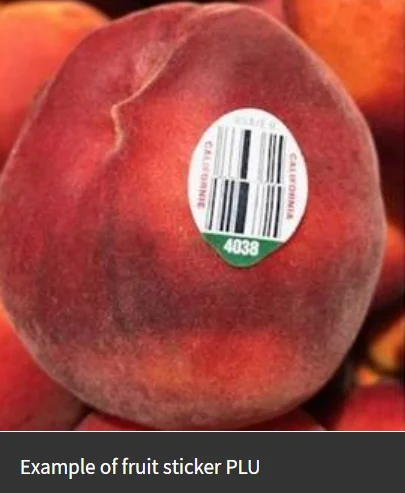
Compare the commodity and variety, sticker wording, PLU or UPC, grower/shipper, country of origin and purchase dates. A PLU often describes a type of produce rather than a unique lot, so it should not be treated as conclusive by itself. If the notice relies on carton markings that consumers normally never see, contact the retailer with the purchase date and store location.
Packaged or fresh-cut produce
Match the brand, exact product name, net weight, UPC and use-by/best-by date. Some notices include numerous private labels made by one processor. Work through the official table row by row rather than assuming all products from a listed retailer are included. A salad with a different dressing or size can carry a different UPC.
Frozen produce
Check the front and back panels, lot stamp, UPC, bag size and best-by date. Frozen products deserve a long look because they may remain in the freezer after the retail recall has ended. Do not rely on the purchase month if the official identifier is still readable.
- Find the newest official notice and note its update date.
- Match every available identifier, not merely the food name.
- Use state/retailer distribution as confirmation, not the sole criterion.
- Open any label-photo attachment and downstream company notice.
- Follow only the remedy written for that product.
If information is missing, set the item aside and use the company contact listed by FDA. An unsuccessful search cannot certify safety; the record may use a different distributor name or may be newly posted.
Why One Produce Recall Can Create Many Product Notices
Produce often moves as an ingredient rather than a finished consumer package. A grower or distributor can ship peppers, onions, lettuce or fruit to processors, restaurants and retailers. Those businesses may dice it, mix it into salads, blend it into salsa, place it on sandwiches or sell it under private labels. When the root ingredient is recalled, each recipient evaluates whether its own products contain the affected lot.
FDA's 2026 jalapeño grouping is a clear example of the structure. The agency says Coast Citrus Distributors initiated a limited action on July 22 and later agreed to recall remaining implicated jalapeños from Sinaloa. FDA then linked downstream company announcements and worked with firms to determine whether additional recalls were needed. One downstream Taylor Fresh Foods notice contained a product table with names, weights, date ranges, UPCs and states.
That does not mean every Coast Citrus item, every jalapeño, or every Taylor product was affected. Each notice defines a separate commercial scope. A consumer with diced peppers must match that product's table; a consumer with prepared guacamole must open the notice for its brand and codes. The root ingredient page explains the relationship but does not replace downstream labels.
How to navigate a linked event
- Open the FDA Major Product Recall grouping, if one exists.
- Identify the root supplier or ingredient and the stated production/distribution period.
- Find the downstream company whose product you actually bought.
- Match its specific UPC, weight, date and retail distribution.
- Recheck the grouping for new or corrected announcements.
This approach avoids two common errors. First, counting every downstream notice as a completely unrelated contamination event can exaggerate totals. Second, collapsing all notices into one line can hide products and remedies consumers need. For a year-wide food recall archive, preserve both the root event and the individual package records.
Current 2026 Examples and What They Teach
The examples below are snapshots checked on September 3, 2026. They are not a complete current recall list. Open the linked agency page for corrections, expansions, case updates and the exact company announcement before deciding whether a product matches.
Jalapeños and downstream prepared foods
FDA's grouped page describes Coast Citrus Distributors actions beginning July 22, 2026 and an expanded action involving remaining implicated jalapeños from Sinaloa in August. Downstream notices cover different prepared foods and private labels. Lesson: search the grouped ingredient event, then locate the individual brand, product, UPC and date row. Do not discard every jalapeño nationwide based on the commodity name.
Frozen blueberries
A July 7 CDC release said Frutas y Hortalizas del Sur recalled frozen blueberries on July 3 during an E. coli O145 investigation. Because frozen foods remain in storage, check bags even if they were purchased weeks earlier. Lesson: for frozen produce, lot and best-by codes are usually more useful than freshness or purchase month, and later downstream notices may add separate private-label packages.
Iceberg lettuce
FDA said Taylor Farms de Mexico initiated a voluntary recall of iceberg lettuce from central Mexico on July 17 after traceback linked the product to a Cyclospora investigation. FDA later published a classification explanation. Lesson: an investigation update, a company recall and an FDA classification can appear on different dates. Use the recall's product table for package scope and the outbreak page for evolving epidemiologic advice.
| Example | Best matching field | Do not infer |
|---|---|---|
| Jalapeño downstream foods | Brand/recipe, UPC and use-by date | All peppers or all products from a retailer |
| Frozen blueberries | Bag size, UPC, lot and best-by date | All frozen berries |
| Iceberg lettuce products | Brand code, product name and date | All lettuce or every salad mix |
These events also show why a static “safe brands” list is unsound. A company can sell many unaffected items, and an investigation can evolve. Verify the package; do not attempt to prove safety by absence from a short editorial list.
What to Do With Matching Produce
If every available identifier matches, stop eating or serving the product and read the official action instructions. Do not assume that rinsing, peeling, freezing or cooking makes a recalled item acceptable; the agency notice is written for the specific hazard and product. Keep it separated from other food while you decide whether to discard, return or contact the company.
Photograph the package, sticker, lot/date panel and receipt. If the notice says to discard the item, make it inaccessible to people and animals. For loose produce with no remaining label, give the retailer your purchase date, store and description; it may be able to compare supply records. Product Recall Checker cannot decide refund eligibility or promise a retailer remedy.
Clean contact surfaces
Remove foods that touched the recalled item or its liquid when the official guidance calls for it. Wash removable refrigerator parts and containers with hot soapy water, clean interior surfaces, and wash hands after handling. Produce drawers, cutting boards, knives and reusable bags are easy to overlook. Follow any stronger or more specific cleaning instructions in the notice.
Respond to possible illness
Review the outbreak or recall page for pathogen-specific symptoms and higher-risk groups. Contact a healthcare professional if symptoms are serious, if the person may be at higher risk, or if you need medical advice. Retain the product details and dates if safe to do so. In an emergency, call local emergency services.
Revisit the official page after acting. Fresh-produce notices can add downstream products, while frozen-product scope may stay relevant for months. Save the notice URL rather than relying only on a screenshot.
How to Monitor New Produce Recalls
Bookmark three FDA resources rather than relying on one search result: the rolling recall and safety-alert page, the foodborne-outbreak investigation table, and Major Product Recalls. The first helps with product notices, the second with evolving illness investigations, and the third with linked downstream events. Their scopes overlap but are not identical.
Subscribe to official FDA notifications for food if produce safety affects your household or business. Treat an email as a cue to open the agency page. Do not enter credentials or payment information through an unfamiliar link. For a local cluster or restaurant notice, add your state and local health-department feeds.
Keep a repeatable check sheet
- Date and time checked, with the official page URL.
- Food form: loose, packaged, fresh-cut, prepared or frozen.
- Brand/shipper, exact name, weight, UPC/PLU, lot and date code.
- Purchase location/date and listed distribution.
- Notice type and status: recall, outbreak, market withdrawal or investigation.
- Official remedy and contact channel.
This record is useful if a notice changes or a retailer asks for details. It also prevents a common counting mistake: treating an outbreak advisory, root-ingredient recall and every downstream product announcement as unrelated events. For an editorial or research dataset, preserve the links between them.
Our latest recalls page and guides can make discovery easier, but no independent index can guarantee completeness or safety. If a product looks spoiled, damaged or improperly stored, ordinary food-safety judgment still applies even when it is absent from a recall search.
Frequently Asked Questions
Can a PLU code prove that loose produce is recalled?
Usually not by itself. A PLU can describe a commodity and variety rather than a unique shipment. Combine it with sticker wording, grower/shipper, country, purchase location and dates. Ask the retailer to compare carton or supply records when the notice relies on information consumers cannot see.
Are organic products excluded from produce recalls?
No. Production claims such as organic do not exempt food from contamination or recall. Match the exact product and certification/brand information only when the official notice lists it.
If my state is not listed, can I ignore the recall?
Distribution is an important clue but can be updated, and products may be transferred or resold. Match the package identifiers first and reopen the newest notice. Contact the company if a code matches but location information is unclear.
Does washing recalled produce make it safe?
Do not substitute washing for the official instruction. Follow the notice, which may direct consumers not to eat and to discard or return the item. No home visual, smell or taste test can rule out microscopic contamination.
Why are prepared foods listed in a produce recall?
A processor or retailer may have used an affected ingredient in salads, dips, sandwiches or meals. Each downstream notice has its own product names, UPCs and dates. Use the root event to find connections and the downstream notice to check your package.
Where can I check lettuce specifically?
Start with FDA's live pages and then see our lettuce recall verification guide. Do not treat an old lettuce notice as a warning about every current product.
Product Recall Checker is independent and does not replace FDA, CDC, a manufacturer, retailer or healthcare professional.
Comments
Comments are reviewed before publication. Do not post personal information, serial numbers, medical details, or emergency reports. For urgent safety concerns, use the official agency contact in the recall notice.
Sign in with Google to leave a comment
Loading comments...