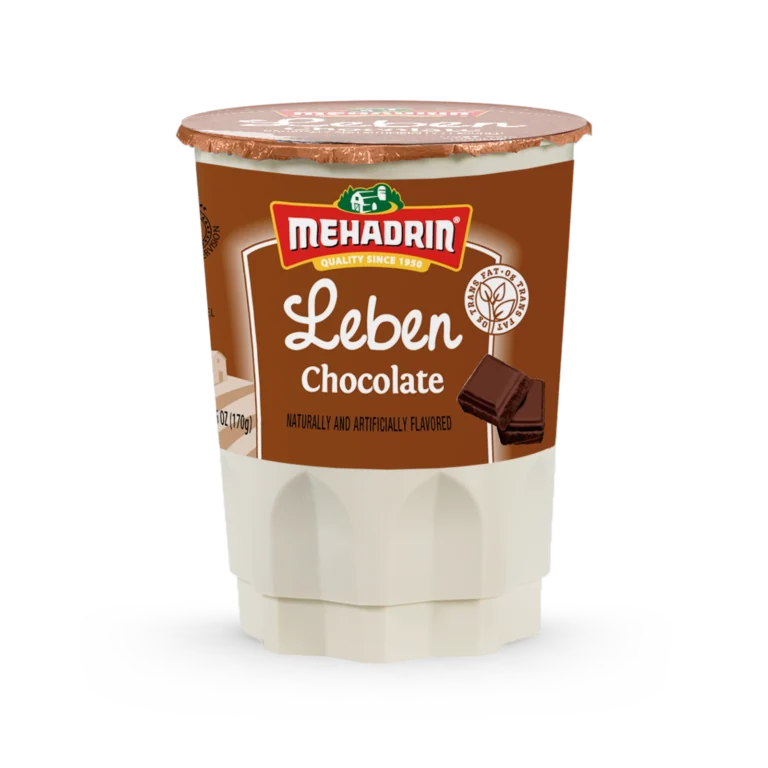
A verified US 2026 record concerns Mehadrin Chocolate Leben, 6 oz cups, UPC 070784023144, with lot 101426 L5 2W and use-by October 14, 2026. Match the complete combination, including the New Jersey distribution information, before associating your package with this action. The reason recorded by FDA is possible improper pasteurization.
This yogurt-checking guide was reviewed October 9, 2026. It distinguishes the verified 2026 enforcement record from older US notices and Canadian news that also appear in search results. Product Recall Checker is independent, and an official FDA record or company notice remains the authority for scope and consumer instructions. A search for “yogurt recall today” does not establish that every yogurt from a named brand is currently recalled.
The verified 2026 Mehadrin Chocolate Leben record
The official FDA enforcement record H-1332-2026 names Upstate Niagara Cooperative as the recalling firm. Its product description is Mehadrin Chocolate Leben in 6 oz, 170 g cups. Use that exact description when asking a store about inventory; a yogurt aisle location or the word “Mehadrin” alone is less specific than the product FDA identifies.
| Field | Recorded value |
|---|---|
| Recall number | H-1332-2026 |
| Product and package | Mehadrin Chocolate Leben; 6 oz (170 g) cups |
| UPC | 070784023144 |
| Lot | 101426 L5 2W |
| Use-by date | 10/14/26 |
| Distribution | NJ |
| Reason | Product may have been improperly pasteurized |
| Classification and snapshot status | Class II; Ongoing |
The dataset response retrieved for this guide reports a September 30, 2026 update date. Its status is a database snapshot, not a claim that FDA performed a fresh inspection on October 9. For a decision about a package still in your refrigerator, confirm current instructions with the seller or recalling firm and consult FDA's current recall information.
Notice another geographic distinction: the recalling firm's address is in New York, while the distribution field says New Jersey. A company's office or facility location is not the same field as the places to which the affected product was distributed. Do not rewrite the address as evidence of additional affected states. Equally, if a purchase route is uncertain, ask the retailer to trace it instead of assuming the firm's home state answers the question.
The available enforcement row does not publish a consumer refund promise, a consumer contact number or an illness total. Those missing fields should remain missing until a relevant official notice supplies them. It would be misleading to attach the phone number or refund offer from a different dairy recall simply because both involve cultured products. The identifiers above are a starting point for verification, with the package, transaction and official record read together.
This is a verified example rather than an assertion that the table contains every yogurt-related recall in 2026. FDA's food enforcement dataset and public announcements have different coverage and presentation. A broader check should search both when your product does not match this entry.
Separate recall dates from use-by dates
A package date and a recall date answer different questions. The package code helps identify the affected item. The firm's initiation date describes when its recall began, while a government report or public announcement can appear later. Keep each label attached to its date rather than turning whichever year is most visible into the event's start year.
For example, the Mehadrin row records an August 10, 2026 initiation date and September 2 report date, while its affected use-by date is October 14. A reader checking the refrigerator in October should compare that October package date with the notice, but should not describe the August action as a newly launched October recall. These distinctions also help you ask the retailer about the correct notice.
Initiation, publication and database update dates
FDA's enforcement response documentation identifies separate record fields and dataset metadata. The API's overall last-updated value is not the product's manufacturing date or a new consumer announcement. Write down the recall number as well as the dates so you can recognize the same event when another page presents a different date field.
A useful checking note reads “initiated August 10; reported September 2; package use-by October 14,” rather than “September yogurt recall.” If you find an additional company notice, add its announcement date in a separate column. Do not silently overwrite the initiation field with a news publication date. Missing or unexpected dates are a reason to consult the original record, not to rearrange them into a more familiar narrative.
What ongoing and terminated mean
The FDA public recall index explains that termination follows the agency's determination about removal or correction efforts and proper disposition. It does not mean an old recalled cup becomes suitable to eat. Conversely, an ongoing label does not by itself establish that affected units are still on a particular store shelf.
There is another limitation for enforcement-data readers: openFDA's food enforcement introduction cautions that the status in published enforcement reports can remain unchanged after publication. Check current official or company information when present status matters. Treat a dataset label as information about that record, and treat your package match as a separate question requiring identifiers and the consumer instructions.
Match the yogurt cup rather than the brand alone
Take the package out only as needed to read its identifiers, and keep it separate while checking a possible match. Compare the full product name and flavor first, followed by size, UPC, lot and the date specified in the notice. A barcode usually identifies a product configuration; the lot and date narrow the question to the affected production described by the recall.
FDA's consumer food-recall guide explains the identifying details notices may supply. Use the actual notice's fields rather than requiring every recall to use the same list. If a notice supplies a plant code, include it; if it does not identify where a lot appears on the cup, do not assume a location based on a different manufacturer's packaging.
A practical label-check worksheet
| Write down | Why it helps |
|---|---|
| Product, flavor and container size | Separates similar dairy or plant-based products |
| Complete UPC including leading zeros | Connects the package with the exact listed configuration |
| Lot and date, photographed clearly | Avoids transcription errors and identifies the affected range |
| Selling store and purchase date | Helps the retailer trace an uncertain purchase |
| Official recall number and URL | Keeps later conversations attached to the same action |
This is a practical personal worksheet, not an FDA claim form. Leave a field marked unknown if the packaging was discarded or the code is illegible. Photograph the characters as printed before trying to interpret them. For the Mehadrin example, keep the letters in 101426 L5 2W alongside the October 14 use-by date; recording only the six digits loses information included in the official row.
Check single cups and outer multipack packaging where available. If an order history shows a different display name, retain that wording too, then ask the seller how it corresponds to the physical package. Do not edit either description merely to make them match. Similar names, a new label design or a missing outer carton can create a question that needs the supplier's confirmation.
A cup's appearance does not resolve its recall status. Avoid opening or tasting a possible match as a checking method. The decision should come from the official scope and verified package information. If the UPC matches but the lot remains uncertain, contact the seller or manufacturer with the photograph instead of declaring the item affected or unaffected from the barcode alone.
Keep older US notices and Canadian recalls separate
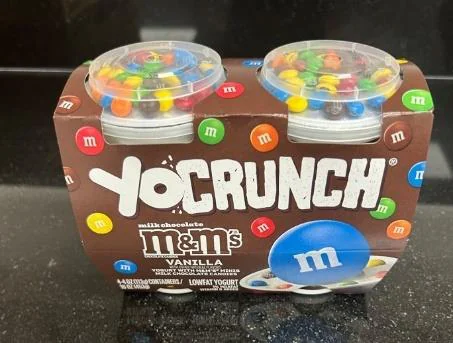
Broad yogurt searches often mix countries and years. Three recognizable results illustrate the problem: a 2025 YoCrunch topper recall, a December 2025 H-E-B coconut-yogurt allergen notice with a January 2026 package date, and a Canadian Greek Gods notice in 2026. None is interchangeable with the Mehadrin enforcement row.
| Notice | Defining distinction | Checking consequence |
|---|---|---|
| YoCrunch, US, July 2025 | Plastic-piece concern in separately packaged dome toppers; table of 2025 codes | Use that notice's product/code table, not a generic 2026 headline |
| Higher Harvest by H-E-B, December 2025 | Strawberry coconut alternative, undeclared almond, Texas; January 2, 2026 best-by | The package year does not turn it into a newly initiated 2026 action |
| Greek Gods, Canada, 2026 | Canadian notification for named 2 × 650 g products and codes | Canadian national distribution is not evidence of US distribution |
The FDA YoCrunch announcement identifies the affected topper issue and tells purchasers of affected products not to consume them. Its description of the separate yogurt compartment should not be rewritten as permission to salvage a recalled package. Follow the notice's actual consumer instruction.
The H-E-B notice now explicitly says the recall was completed and terminated. The Canadian Greek Gods record belongs to the Canadian Food Inspection Agency and gives its own products and best-before codes. If you purchased across the border, consult that source directly; do not transfer its identifiers to a US package with a similar brand.
When forwarding a notice to another household, include the country, original announcement date and affected codes with the link. That small amount of context prevents an old photograph from circulating as a new warning. Check the original product scope before sharing a conclusion about a friend's purchase, particularly when the purchase location or package size differs.
What to do with a matching or uncertain package
Do not eat a package that matches the affected scope. Follow the original notice's instructions for returning or disposing of it, and do not give recalled food to another person or a pet. If you have only an enforcement entry, ask the retailer or recalling firm for the applicable consumer instructions. A missing remedy field is a reason to obtain the instruction, not an invitation to invent one.
For an uncertain package, pause consumption while checking the missing identifier or distribution detail. Explain the uncertainty precisely: for example, “the UPC matches, but this lot is partly unreadable.” A clear statement helps the seller determine what additional information it needs. Do not try to make an affected or unresolved dairy product usable through home heating, freezing or removing one component unless the official notice expressly provides such an instruction.
Photograph identifiers and keep a transaction record if available before following disposal guidance. Request the event's actual refund or return procedure, including whether the retailer or manufacturer handles it. The refund telephone in the historical YoCrunch notice and the offer in the H-E-B notice belong to those actions. Neither establishes a refund arrangement for Mehadrin Chocolate Leben.
If the yogurt has already been eaten
If someone has symptoms or a health concern after eating a possible match, contact a health care professional and describe the product, consumption date and concern. The FDA consumer guidance directs symptomatic consumers to their provider. Do not wait for a refund decision before seeking needed care. The recall reason alone cannot diagnose what happened to an individual.
Keep your account of events factual. Note the exact package if known, who ate it, when it was purchased and when the concern began. Say when a field is uncertain. FDA's product-problem reporting page can direct you to a suitable reporting channel, but a report is separate from receiving care and is not proof of causation.
For a shared household purchase, tell others which verified identifiers are involved so they can check remaining cups. Avoid sending only a broad brand warning. A clear package photograph and the original link help each person make a more accurate check than a message saying that all yogurt from a manufacturer is affected.
Search FDA and retailer records when no match appears
Start with the FDA announcement index using the brand, then search the exact product name and recalling firm separately. Open each relevant notice instead of deciding from the search excerpt. Look for the original date, package identifiers, distribution and any correction or status statement at the top of the page.
Next, use FDA Enforcement Reports if the public index does not show the item. FDA explains that not every recall has a public press release. Its enforcement reporting provides broader monitored-recall coverage once actions are classified, with some records appearing before classification. Thus, an empty press-release search is not equivalent to an empty enforcement search.
- Search the brand and the precise dairy product name, including “Leben” when that is the package description.
- Repeat with the company name printed in an official record.
- Compare the UPC, lot and package date in the result with your actual cup.
- Check country and distribution rather than relying on the headline's retailer name.
- Ask the seller about an uncertain purchase and obtain the current consumer instructions.
Retailer notices can help connect a transaction to a specific product, especially when a store uses an abbreviated description. Use the notice's linked company or agency source to complete the check. If two pages disagree on a code, keep both references and ask for clarification; do not combine half of one row with half of another. A corrected notice should be read as a complete updated scope.
For older notices, check the FDA archive rather than assuming the absence from the current index means the event never occurred. For a Canadian purchase, start with the relevant Canadian notice. The country's name is part of the scope, even when the same retailer or brand also operates in the United States.
Our FDA recall search guide and food recall archive offer additional navigation. You can also search Product Recall Checker or browse latest records, then finish at the official source. No missing search result is a certification of safety; it means you should evaluate whether the identifiers, database coverage and publication timing answer the question you actually asked.
Comments
Comments are reviewed before publication. Do not post personal information, serial numbers, medical details, or emergency reports. For urgent safety concerns, use the official agency contact in the recall notice.
Sign in with Google to leave a comment
Loading comments...