For a cat food recall, match the exact recipe, package size, production lot and best-by date. This selected U.S. 2026 list, checked October 17, covers FDA-posted recalls and a separate Quest safety advisory. It includes adult cat food and kitten milk replacers; it is not a complete inventory of every animal-food enforcement record. Follow the linked official instructions for your package, and contact your veterinarian about feeding or illness concerns.
Product Recall Checker is an independent lookup and guidance website. FDA notices, the recalling company and your veterinarian provide the controlling product information and individual care advice.
Which cat food notices belong on a 2026 recall list?
Start with FDA’s animal and veterinary recall index, then open the individual announcement. A year in a headline may refer to an announcement, an enforcement classification or a package’s expiration date. Those dates answer different questions. The table below uses the date of the public announcement or advisory, so you can find the same document without assuming that a later database entry represents a new incident.
| Public notice date | Product group | Issue and document type |
|---|---|---|
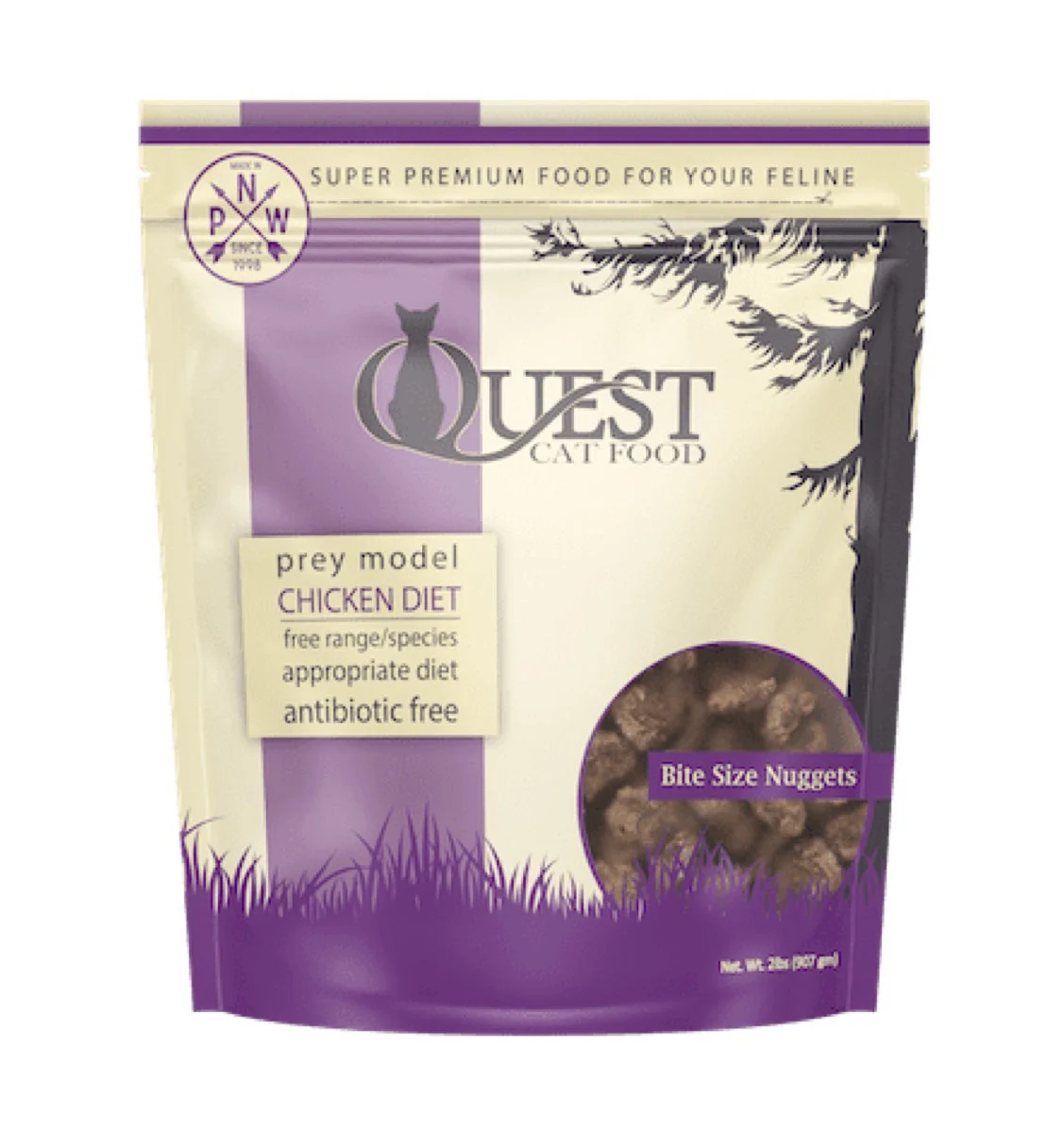
| February 17 and 26 | Quest chicken, freeze-dried and frozen | Company recalls involving low thiamine |
| March 13 | Eight Quest product lots | FDA advisory broader than the three recalled chicken lots |
| June 8 | Steve’s Real Food freeze-dried chicken | Company recall expansion for low thiamine |
| August 26 | Breeder’s Edge and Shelter’s Choice feline milk replacers | Nutrient-deficiency recall |
| August 28 | Northwest Naturals frozen chicken | Raw-food contamination recall with separate cat and dog products |
FDA also maintains an animal-food advisory index. Check it alongside recalls: an agency warning can describe a larger affected group than a company has recalled. Conversely, a laboratory study or a consumer complaint does not automatically establish an FDA recall. Find the actual official document before applying a circulating brand list to your pantry.
A historical notice remains useful when checking stored food. FDA’s “terminated” designation describes the agency’s assessment of the recall work; it does not authorize feeding a matching old package. This guide does not assign an unverified live status to individual lots. For dog-specific products in a shared household, use our 2026 dog-food guide and check each animal’s food separately.
Quest cat food: the recall and the broader FDA advisory
Quest requires two checks: the company’s chicken-product recalls and FDA’s wider warning. In its March 13 advisory, FDA reported extremely low or absent thiamine in eight tested lots. At that time, three had been recalled. Read that distinction as a description of the dated documents, rather than assuming that every advisory lot had entered the same recall process.
Three recalled chicken lots and five additional advisory lots
| Recipe and format | Lot | Best-by date | Documented group |
|---|---|---|---|
| Chicken, freeze-dried | C25288 | 10/15/2027 | Recalled |
| Chicken, frozen | MCD25350 | 06/16/2027 | Recalled |
| Chicken, frozen | MCC25321 | 05/17/2027 | Recalled |
| Pork, freeze-dried | C25358 | 12/24/2027 | Additional advisory lot |
| Beef, freeze-dried | C25318 | 11/14/2027 | Additional advisory lot |
| White fish, freeze-dried | C25337 | 12/03/2027 | Additional advisory lot |
| Chicken, freeze-dried | C25336 | 12/02/2027 | Additional advisory lot |
| Pork, freeze-dried | C25321 | 11/17/2027 | Additional advisory lot |
FDA recommends discussing continued feeding of advisory products with a veterinarian. If a cat has eaten one and shows concerning signs, the advisory says to stop feeding it and obtain veterinary help immediately. A company stop-sale statement and an actual recall are also different actions; the former should not be rewritten as proof that every lot has an identical recall status.
The February 26 company announcement describes beige 2-pound frozen bags and the two frozen lots above. Its introductory sentence reverses the best-by pairings shown in its own table. The table agrees with FDA’s advisory, reproduced here. If your printed lot and date do not align, send a package photo to the company rather than treating the discrepancy as clearance.
The June Steve’s Real Food expansion has conflicting UPC fields
The June 8 expansion adds Steve’s Real Food Chicken Recipe Freeze Dried, 1.25-pound bag, lot C26022, best by January 22, 2028. Its table lists UPC 691730164027; its packaging paragraph gives 691730181031. Those fields conflict. We have not guessed a correction, and a barcode mismatch alone should not settle whether your C26022 bag is involved.
Contact Go Raw at 801-432-7478 or [email protected] with clear photographs of the front, barcode, lot and date. The June instructions say to stop feeding the affected product and return it to the purchase location for a refund or replacement. Ask the company to confirm the applicable package and process before transporting food or substituting another product. The confirmed lot and date provide a much clearer starting point than a brand-only search.
Northwest Naturals frozen chicken: match the cat-food bag
The August 28 Northwest Naturals notice covers two different frozen chicken products. The cat food, also described as a protein topper for dogs, is the 2-pound bag, lot B-5, best by January 26, 2028, UPC 087316384956. The announcement says FDA testing found Salmonella in that product. A separate 6-pound dog-food bag, lot B-19, tested positive for both Salmonella and Listeria monocytogenes. Do not transfer the dog product’s identifiers or test findings to the cat-food bag.
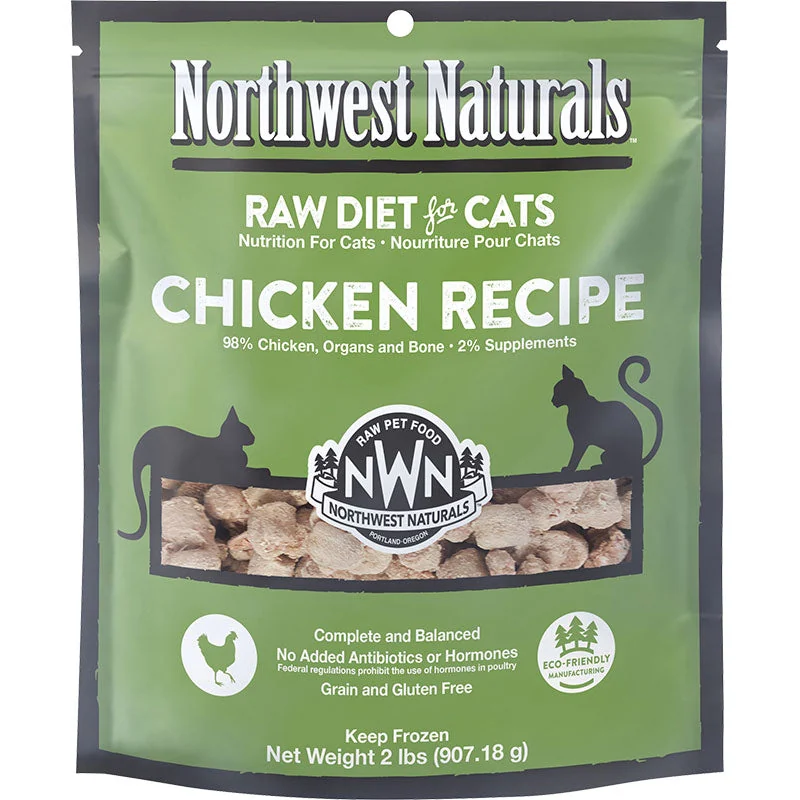
The recalled products went to retail stores nationwide. As of the August announcement, the company reported no associated illnesses. The instructions are to stop feeding the affected lots and return the unused portion to the purchase location for a full refund; questions can go to 1-866-637-1872. Check the notice for contact hours before calling.
For a household with both cats and dogs, make a separate line in your notes for each package: animal, bag size, recipe, lot, date and where it was stored. A label saying “chicken” is not enough to distinguish these two products. Also check unopened reserve bags rather than assuming a matching bag in the freezer is the only one purchased. Photograph the actual code on every package before returning it, because a product image on an order page usually cannot establish which production lot you received.
If a package has been divided between containers, mark which containers came from the matching lot and keep them separate while asking the retailer how to handle the return. Do not donate or feed the unused portion to another animal. Use the exact notice when explaining the issue to a pet sitter, shelter or family member who may have received part of the same purchase.
Kitten milk replacers recalled by Revival Animal Health
Kitten formula belongs in a cat-food check even though it looks different from canned or dry food. Revival Animal Health’s August 26 announcement covers specified Shelter’s Choice and Breeder’s Edge feline milk replacers. It concerns insufficient levels of several vitamins or trace minerals, including potassium, copper, folic acid, choline and vitamin B6. The notice directs owners to stop feeding affected products and arrange a return with the company for a full refund.
Ask a veterinarian promptly about an appropriate replacement feeding plan, especially for kittens that depend on formula. Do not try to fix a recalled formula by changing its concentration or adding a vitamin mixture yourself. Send the clinician the exact product and exposure dates so the advice reflects what the kittens actually consumed.
Match the brand, package size, UPC and best-by date together
| Brand and product | Size | UPC |
|---|---|---|
| Shelter’s Choice Feline Milk Replacer | 1 pound | 817160011032 |
| Shelter’s Choice Feline Milk Replacer | 3.5 pounds | 817160011049 |
| Shelter’s Choice Feline Milk Replacer | 8 pounds | 817160011063 |
| Breeder’s Edge Foster Care Feline Milk Replacer | 12 ounces | 817160010196 |
| Breeder’s Edge Foster Care Feline Milk Replacer | 18 pounds | 817160011278 |
| Breeder’s Edge Foster Care Feline Milk Replacer | 4.5 pounds | 817160010103 |
This is a navigation table, not a substitute for the date restrictions. Each size has its own list. For example, the official 4.5-pound Breeder’s Edge row identifies April 18 and May 1, 2027. Do not apply another row’s earliest and latest dates as one continuous range. Read all four fields together and contact Revival at 1-877-870-4059 if any field is missing or ambiguous.
A rescue receiving donated formula may lack the original receipt, but the package still matters. Photograph its codes, note which litter received it and tell the organization that supplied it. Keep the return inquiry separate from veterinary care. A customer-service response about eligibility cannot assess a kitten’s condition, and a different animal species on a similar brand label should prompt a fresh product check rather than an assumed match.
How to check a bag, can or decanted container
Put the actual package beside the official notice and work field by field. Start with the full recipe and whether it is frozen, freeze-dried, canned or powdered. Next check the net weight, then the production code and best-by date. Copy letters as well as numbers: a missing prefix can turn a useful lot check into a different code entirely. Use a clear photograph when the print is faint instead of relying on a hurried handwritten transcription.
FDA’s lot-number guide shows why retaining the package is valuable. Make one short record for each bag or container: product, size, UPC, lot, date, purchase location and first feeding date. Add the notice link and the contact’s reply if you ask for clarification. This creates a practical handoff for another caregiver without repeatedly searching social media for the original warning.
A UPC is not a production lot
A barcode identifies the retail product; the lot identifies a production batch. Two bags can therefore have the same UPC while only one matches a listed lot. Conversely, a notice may include several package sizes and several UPCs. A scan or product-name search is a starting point, not a complete batch determination.
Compare the exact restrictions in the notice. If it says selected lots, find that lot. If it says all lots of a specified product, do not add a batch restriction that the company has removed. Where an official announcement contradicts itself, as the June Steve’s notice does, contact the company with the complete label instead of selecting the field that produces the most reassuring answer.
Missing packaging and mixed batches need extra care
FDA’s storage advice recommends retaining original packaging and its identifying details. For future purchases, photograph the codes before opening and keep the bag available. If using a storage bin, placing the original bag inside it preserves the association between food and batch. Clean and dry a reusable container before adding a new purchase.
If several bags were poured together, write down that uncertainty. An online receipt can support where and when you bought food, but it cannot recreate a discarded lot stamp. Ask the supplier whether it can trace the shipment and ask your veterinarian about an alternative feeding plan while an affected product remains possible. A search that returns no result cannot establish the safety or nutritional suitability of unidentifiable food.
Feeding decisions, symptoms and household hygiene
Keep three decisions separate: whether the package matches, how to obtain suitable food for the cat and whether the animal needs care. The recall notice helps with the first; a veterinarian can help with the latter two. A food described as complete and balanced still needs to be checked against a lot-specific warning. A nutritional adequacy statement is not a test result for the particular bag in your kitchen.
Do not use the absence of symptoms as a reason to continue feeding a recalled lot. Likewise, vomiting or reduced appetite alone cannot establish which food caused an illness. Provide the veterinarian with the affected recipe, code, dates fed, other foods and supplements, and a timeline of what changed. If several cats eat from the same supply, note each animal’s intake and symptoms separately rather than submitting one combined description.
The Quest advisory identifies appetite changes and vomiting among possible early signs and neurological problems among advanced signs. Contact a veterinarian immediately about concerning symptoms after exposure, including difficulty walking or seizures. Treatment, testing and replacement nutrition depend on the animal; do not use this list to select a supplement dose or postpone care while waiting for a retailer to answer a refund request.
Contamination recalls also involve the people handling the food. FDA’s raw-food guidance explains the risk to animals and households. Freezing food is not evidence that a recalled package has become suitable to feed. Follow the product’s stop-feeding and return or disposal instructions rather than attempting to rescue it through home treatment.
Use FDA’s safe-handling steps: wash hands with soap and water for at least 20 seconds before and after handling pet food, wash bowls and utensils after use, and keep a dedicated scoop. Clean the container, counter and utensils that contacted affected raw food. Cleaning prevents further transfer; it does not correct a nutrient deficiency in the remaining food or reverse an exposure that already occurred.
Refunds, veterinary records and reporting a pet-food problem
Use the remedy for the particular product. The Northwest notice directs returns of unused food to the place of purchase; the Revival feline notice directs customers to contact the company for a return; the June Steve’s notice describes a refund or replacement through the purchase location. Do not assume that one company’s policy applies to every entry in a cat-food list. Ask what photographs, proof of purchase or physical product it needs before disposing of evidence or taking raw food into a store.
Save a copy of the notice you used and the response to your inquiry. Your claim record can be simple: purchase confirmation, package photographs, amount remaining, contact date and any reference number. Record a promised next step accurately rather than assuming a refund has been issued because a form was submitted. An authorized product refund does not automatically promise reimbursement of veterinary bills or private testing.
FDA’s pet-food complaint instructions explain what helps an investigation. Include identifying codes, where and when you purchased the product, storage and preparation details, and what happened to the animal. When illness is suspected, add the veterinarian’s findings and the timing of signs. Clearly distinguish your observations from a clinician’s diagnosis and from a laboratory result. Do not describe a suspected connection as a confirmed finding.
The reporting portal FAQ explains how to follow up and why notifying the manufacturer does not replace notifying FDA. Keep your report confirmation so new veterinary information can be linked to the same account of events. Do not mail food or biological material without instructions from the receiving organization; ask how any requested sample should be preserved and supplied.
For later purchases, return to the official announcement and our latest recall listings before relying on an old screenshot. A changed notice can alter the affected scope, while an old package can remain relevant after the headline disappears. Keep the lot information until the food is finished, and refresh the record when opening the next bag.
Comments
Comments are reviewed before publication. Do not post personal information, serial numbers, medical details, or emergency reports. For urgent safety concerns, use the official agency contact in the recall notice.
Sign in with Google to leave a comment
Loading comments...