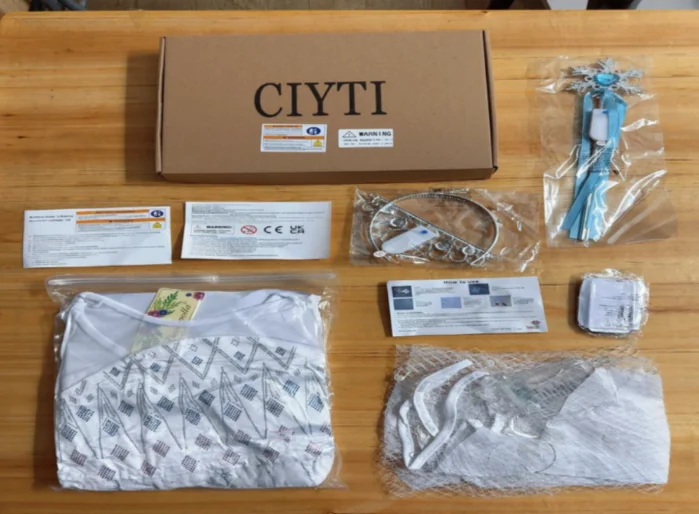
The CIYTI light-up princess costume recall concerns a blue dress set with a light-up crown, wand and remote control. Take the affected set away from children immediately and stop using it. CPSC says children can easily access the button batteries in the accessories. The official remedy is a full refund through the seller, with specific marking and disposal-photo requirements.
The recall was announced October 22, 2026, and covers about 94 sets sold on Amazon from February through June 2025. This guide checks the official information as of October 27, 2026. Product Recall Checker is an independent website; use the CPSC notice to confirm the product and contact channel before acting on a message about the recall.
Identify the CIYTI costume and all its accessories
Open the CPSC notice for recall 27-038 and compare the set with the official photographs. The notice gives a sales price range of $21 to $35 and names the seller as FoShanShiNanHaiQuNuoAiTongZhuangShangHang. The recall is specific to the described CIYTI product, rather than every blue princess dress or every costume that lights up.
Check the whole collection of pieces. The part a child is wearing may be only one component of the original purchase. A crown or remote placed in another toy box remains relevant even if the dress is packed away. Keep the pieces out of children's reach while identifying them.
Use the package and order record rather than an invented model number
CPSC says there are no markings on the product itself; the package has CIYTI on the front. The notice does not provide a model number or UPC for owners to match. Do not invent a code from a similar marketplace listing or assume the absence of a sewn brand label rules out the recall.
If you kept the package, photograph the brand and the full set. If it is gone, look at the original order record, confirmation email or purchaser's account history for the product and seller details. Those records can help connect a costume to the purchase, but a generic description such as “blue princess dress” may still require clarification from the seller.
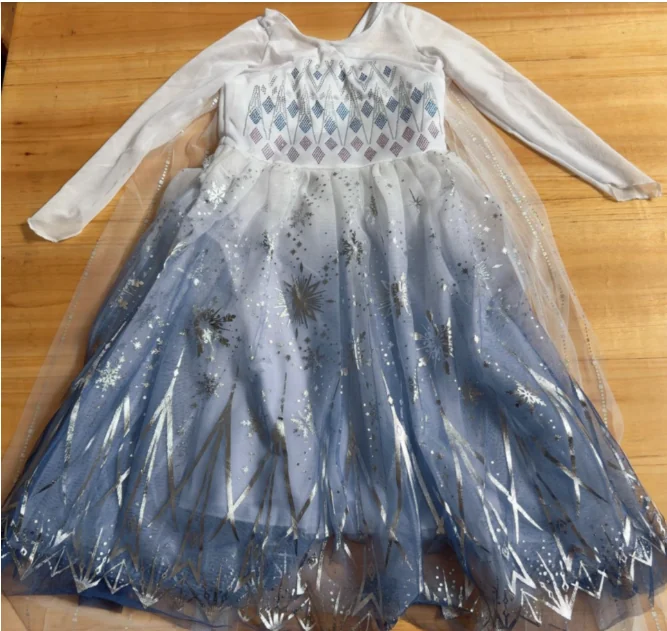
Check dress-up storage and separated accessories
The recall description identifies button batteries in the crown, scepter-style wand and remote control. Look for all three accessories as well as the dress. An adult can make a simple inventory: located, not yet located or no longer owned. This helps when preparing the seller's required evidence without guessing what happened to a missing piece.
The 2025 sales period matters because a costume from a previous celebration may be brought out again for Halloween. Check storage bins, travel bags and accessories kept at another caregiver's home. A newer occasion of use does not change the original product identity, and a missing battery accessory should not be ignored simply because the dress still looks familiar.
Why the battery-access problem requires stopping use
The hazard is the accessibility of button cell batteries. CPSC says children can reach them easily in the recalled accessories. If swallowed, button or coin batteries can cause serious internal chemical burns and death. The concern is therefore more than a loose cosmetic part, a light that no longer works or a battery that needs replacement.
Take the entire affected set away from children while arranging the remedy. Do not keep the crown available for play because the remote has been removed, or assume a child who usually avoids small objects will never handle a loose battery. The official instruction is to stop using the recalled costumes; it does not offer continued supervised use as an alternative.
It is also important to identify the right hazard. This notice cites the toy safety standard and battery ingestion. It is not a finding that all princess fabrics are flammable, a recall of every battery-powered costume or an instruction to check a fictional chemical batch code. Those would be different product questions requiring their own evidence.
A toy safety violation can trigger a recall before an injury
No incidents or injuries were reported in the October 22 notice. That statement describes the reports available for the announcement. It does not cancel the accessibility problem identified by CPSC or make a home inspection an approved alternative to the refund process. You do not need to wait for a battery to go missing before responding.
The CPSC's battery-rule FAQ helps explain why toy notices can refer to a toy standard rather than simply Reese's Law. Toys meeting the battery-accessibility and labeling requirements of the federal toy standard have a statutory exemption from section 2 of Reese's Law. That is an exemption based on compliance with another standard, not permission for toys to expose children to batteries.
For this recall, consumers do not need to classify a product or reproduce a laboratory test. The agency has already identified the violation and stated the action for the CIYTI set. Tape, a homemade cover or simply taking out the currently installed batteries is not an approved remedy in the notice. Ask the seller about any unclear handling step while keeping the set out of use.
Complete the seller's full-refund process
Contact the seller at [email protected], the email listed in the CPSC announcement. Include the product name and recall number so the request is clearly connected to the CIYTI costume. The notice provides a photo-based disposal process. It does not publish a guaranteed payment date, a specific payment method or a blanket rule for claims with missing components.
Before beginning disposal, read the full remedy and its battery note. Plan how to retain the required evidence without leaving a marked costume in circulation or putting batteries into an inappropriate waste stream. If a step is unclear, ask the seller while keeping every located piece away from children.
Mark the dress, crown, wand and remote
The notice asks consumers to write RECALLED in permanent marker on the dress, crown, wand and remote. It lists all four pieces, even though the identified button batteries are in the accessories. A photograph of only the dress does not automatically demonstrate that the other components have been handled as requested.
Have an adult carry out the marking and keep track of which pieces are present. Check the photographs before completing the process so that the marking can be read and the items can be recognized. Do not replace an absent accessory with a different toy to make the set look complete. The purpose is to document your actual recalled product.
| Piece | Recall evidence to account for |
|---|---|
| Dress | Permanent RECALLED marking |
| Crown | Permanent RECALLED marking; battery handling considered |
| Wand | Permanent RECALLED marking; battery handling considered |
| Remote control | Permanent RECALLED marking; battery handling considered |
Document disposal without losing the required evidence
CPSC's remedy says to throw away the toys and submit a photograph of the disposed toys to the seller's recall email. Preserve that required image during the process. An owner who discards everything before photographing it may no longer have the evidence requested for the refund. If you are unsure how the seller wants the disposed items shown, obtain clarification before the evidence is irretrievably lost.
The battery instruction is separate: button cells are hazardous and should be disposed of or recycled according to local hazardous-waste procedures. The phrase about throwing away the toys should not be read as permission to put the batteries in ordinary household trash. Ask the local program how to handle the battery-containing accessories if you cannot safely follow its process.
Keep original photographs, the sent email and any response. Record what you have done and when, particularly if several people are helping. The notice's remedy is a full refund, but a sent message by itself is not proof that the seller has reviewed and approved your evidence or issued payment.
Ask about missing parts or missing purchase records
If the crown is lost, the remote was discarded or the purchase was a gift, tell the seller exactly that. Supply the available package, order and product photographs and ask what can be reviewed. No official missing-part or no-receipt waiver was identified for this recall, so an independent guide cannot promise that partial evidence will be accepted.
A useful message explains: which pieces remain, what purchase information you have, whether any piece has already been disposed of and which instruction you cannot complete. Request the next step in writing. Do not recreate evidence, guess a purchase date or claim a photograph represents a piece you no longer possess. If you later need to report a remedy problem, that clear record will show what you asked and how the seller responded.
Handle button batteries and suspected ingestion correctly
There are two different issues to address: preventing access to batteries during the recall process and obtaining immediate help if a child may already have swallowed one. Neither should wait for the refund. A seller can answer claim questions, but an email response is not an appropriate way to obtain emergency medical guidance.
Keep all located batteries and battery-containing pieces away from children, including younger siblings who did not wear the costume. When adults are sorting a set, do not leave small cells loose on the table or mixed with ordinary costume jewelry. A nonworking light should not be used as evidence that its battery is harmless.
Follow local hazardous-waste instructions
The recall notice directs consumers to follow local hazardous-waste procedures for battery disposal or recycling. The EPA's household battery guidance likewise says button and coin batteries should not go into municipal trash or recycling bins. Contact the local solid-waste authority or household hazardous waste program for the appropriate route.
Explain that the cells come from a recalled toy accessory. Ask whether the program wants loose batteries or the entire battery-containing item, how to prepare it and whether an appointment is necessary. Do not assume every collection box accepts every battery chemistry or every damaged item. The recall does not specify a battery chemistry or cell model, so a guide should not fill those fields with guesses.
EPA describes keeping individual batteries separated in bags or using nonconductive tape to cover terminals; follow the collection program's instructions for your item. If a battery is damaged, seek specific handling guidance. Do not pry, crush or otherwise improvise an extraction method just to produce a refund photograph. If disposal arrangements affect the seller's requested evidence, clarify that before completing the process.
Get immediate help if a child may have swallowed a battery
Seek immediate medical attention for suspected button-battery ingestion. CPSC's battery information center directs consumers to the National Battery Ingestion Hotline at 800-498-8666 or the Poison Help Line at 800-222-1222. Do not wait for a claim reply or a complete inventory of the costume pieces.
The National Capital Poison Center's guidance warns that a child may initially have no symptoms and says not to wait for symptoms to develop. It also says not to induce vomiting. Follow the poison specialist's and emergency clinician's instructions for the child's circumstances instead of attempting a home treatment based on a forum post.
If product packaging or a matching battery's identification is immediately available, that information may help the medical team. Do not delay obtaining help to search for it, take recall photos or contact the marketplace. A missing battery does not by itself prove ingestion, but uncertainty is a reason to obtain prompt professional guidance rather than assume the child is fine because they are acting normally.
Keep the recall resolved through Halloween and afterward
Tell every caregiver which set has been removed and where the remaining pieces are while disposal is arranged. A costume taken out of the dress-up box by one adult can be returned by another who does not know about the recall. Include any relative who borrowed the accessories or keeps toys for visiting children.
Do not sell or donate the recalled set. CPSC's resale guidance states that selling recalled products is illegal, including through secondhand marketplaces. A note saying the lights no longer work does not resolve the recall. If you already passed it to someone else, share the official notice and the purchase information you can locate.
Keep the refund record until payment is actually received. A useful file includes the order or package evidence, photographs showing the requested markings and disposal, the date sent, the seller's replies and any reference number. When following up, ask whether the evidence has been reviewed, whether anything is missing and whether payment has been issued. Describe the status your records show, rather than calling an unanswered application approved.
If seller contact leaves an unresolved remedy problem, the CPSC recall complaint form allows you to report that difficulty. Contact the company first and allow for a response. The form reports concerns to the agency; it does not apply for your refund or guarantee an individual payment outcome. A safety incident or injury should be reported separately through SaferProducts.gov.
Use this check as an opportunity to look at other battery-powered dress-up pieces in the home. Follow each product's own instructions and check its own recall status; a CIYTI notice should not be used to classify an unrelated toy. A broken or easily opened battery compartment needs attention even if no matching recall is found. CPSC's battery guidance explains the need for secure toy battery closures.
Our Amazon recall-checking guide can help locate purchase and recall information, while the latest recall listings provide a starting point for new searches. Save the official CIYTI notice with your claim rather than relying on a seasonal social post. The recall remains relevant after Halloween, when accessories may otherwise return to ordinary play or be packed away for another year.
Comments
Comments are reviewed before publication. Do not post personal information, serial numbers, medical details, or emergency reports. For urgent safety concerns, use the official agency contact in the recall notice.
Sign in with Google to leave a comment
Loading comments...