
Updated November 10, 2026: the current UK notice for Milton Baby Bottle Cleaner 500ml describes a withdrawal from the market. It should not be read as a new instruction for every household to return every Milton product. Check the exact bottle, batch and expiry against the official record, then read the manufacturer's explanation of the corrected recall wording.
Read the current action beyond the recall headline
The Office for Product Safety and Standards notice is dated July 29, 2026. Its current title is “Product Withdrawal,” and its measure is withdrawal from the market. The update history records a change to the corrective action on that same date. November 10 is this guide's checking date, not the announcement of another withdrawal.
A confusing detail is that the official web address still contains the words “product-recall.” A saved social post, council repost or retailer message may also retain recall wording. A URL is an address, rather than a complete account of the action currently described on the page. Read the title, measure and corrective-action paragraphs together before deciding what a message asks you to do.
In its product notice, Milton explains that some retailers issued public-recall messages and says these were not required. That explanation belongs alongside the regulator's current wording. Neither an older alarming headline nor an isolated reassurance is a substitute for reading both sources in context.
For a household, the practical distinction is between a business removing affected stock from sale and a notice instructing owners to take a specified action. This particular corrected record should not be expanded into a return order covering an entire brand. Equally, the correction is not a reason to ignore a bottle that appears to match the published identifiers or a question that needs the manufacturer's clarification.
Begin with a small, factual record: the product name on your bottle, its capacity, the country where it was bought and the message you received. Keep the original message rather than rewriting it from memory. That gives you a concrete comparison to make when reading the current notice, and it helps prevent instructions about a different product or market being applied to yours.
Match the bottle to the six published batches
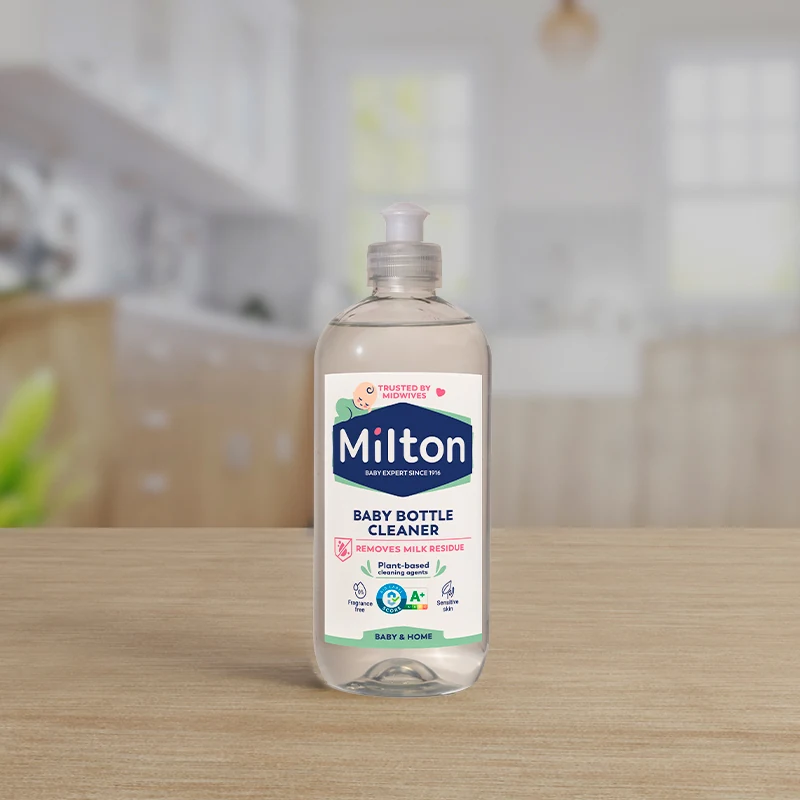
The product in the notice is Milton Baby Bottle Cleaner 500ml, described as a dishwashing liquid for cleaning baby bottles. Start with that identity before looking at the numbers. A photograph of another Milton item, a shop's general brand listing or the word “baby” on a different cleaner is not a product match.
The official product safety report lists the following combinations. It identifies the cases as 2607-0040 and 2607-0082. These are references for the notice; the printed batch on your bottle is a different field.
| Published batch code | Published expiry marking |
|---|---|
| 6030 1103M | Exp 01/2029 |
| 6077 1103M | Exp 03/2029 |
| 6110 1103M | Exp 04/2029 |
| 6111 1103M | Exp 04/2029 |
| 6112 1103M | Exp 04/2029 |
| 6133 1103M | Exp 05/2029 |
Read the batch code and expiry together
Transcribe the complete code, including the 1103M portion, and compare it with its own row. The three entries with an April 2029 expiry are individually listed batches, not an instruction to include every code numerically between them. Do not fill a gap in the published list with a guessed range.
Keep the date in its printed month-and-year format. Exp 04/2029 does not identify a particular day in April, and it does not mean the July 2026 withdrawal can be ignored until 2029. An expiry date and the date of an official product action answer different questions. A future date is therefore neither a replacement for the batch comparison nor a promise about the bottle's current status.
When the printed code is unclear or incomplete
Use clear light and photograph the marking without digitally filling in missing characters. Save both a wider product photograph and a closer view of the text. If a character remains uncertain, record it as uncertain. Guessing a digit to force a match can be as misleading as deciding that an unreadable code is absent from the notice.
The official report does not provide a barcode shortcut that replaces this check. A shop receipt can help establish where and when you bought something, but a generic receipt description may not identify its manufacturing batch. Keep these pieces of information separate when asking for clarification.
If you own more than one bottle, compare each one. A household purchase history or a matching front label does not establish that every bottle has the same code. Where the identity or marking remains unresolved, ask the manufacturer about that specific bottle rather than treating either this table or an empty search result as a safety clearance.
Understand what the manufacturer reported
Milton says it identified insects in a small number of UK Baby Bottle Cleaner bottles, removed the affected products from sale and investigated. Its product notice reports microbiological laboratory testing according to ISO standards and states that there is no risk to babies' health or safety. This is the manufacturer's account of its investigation and conclusion.
Read that account with the corrected official action, rather than replacing one with the other. The regulator's record describes the affected batches and possible insects in the liquid; the company explains its response. An accurate summary can preserve both descriptions without adding a new claim about infection, toxicity or the condition of every bottle ever sold.
Keep the testing statement in its proper scope
The public manufacturer notice does not attach individual laboratory results for a bottle in your home. It also does not give a sample count or identify a particular ISO standard number. Avoid adding those details from assumption, and do not interpret the mention of testing as a personal medical assessment. The absence of those details from the short notice is a limit on what this guide can report, rather than evidence that a particular unreported test did or did not occur.
The same care applies to the company's statement about restoring supply. A description of work with retailers does not tell you whether every branch has stock today, which batch a new order would contain, or how a particular retailer will answer an older message. Those are separate questions to ask with the relevant product or purchase details.
When discussing the notice with another caregiver, keep observation and interpretation separate. “This is the batch printed on our bottle” is a checkable observation. “Every product from the brand is affected” is a much broader assertion that the published scope does not support. A short record of the actual product and the actual source is more useful than a forwarded warning stripped of its context.
Separate bottle cleaner from sterilising products
A brand name is not a description of a product's job. Milton sells different items for cleaning and sterilising, as well as equipment. The Baby Bottle Cleaner product page describes the washing stage before sterilising. A bottle of cleaner is not interchangeable with a sterilising tablet, sterilising fluid or the unit used to hold feeding equipment.
This matters when an abbreviated warning says only “Milton baby product.” Before comparing batches, write down the full name and the form of the item: liquid cleaner, tablet, another liquid or equipment. Include the stated capacity or pack size. If you are checking a bottle of sterilising fluid, do not copy the cleaner's code table onto it merely because the manufacturer's name is familiar.
The NHS explanation of sterilising baby bottles separates cleaning from sterilising too. It describes cleaning equipment before sterilisation and notes that a dishwasher can clean feeding equipment without sterilising it. Follow the instructions applicable to the equipment and method you actually use; this product notice is not a new recipe for preparing sterilising solution.
A household comparison can therefore use three separate lines: the cleaner used for washing, any product used for the sterilising stage, and the feeding equipment itself. An issue identified on one line does not automatically establish a recall on the other two. If there is a separate notice about another item, that notice needs its own product and identifier check.
Do not infer a recall decision from packaging colour, a marketing claim or a newer product photograph either. The relevant question is whether your particular item matches the named product and published identifiers. The brand's wider history, awards and promotional descriptions cannot answer that narrower question, and a changed image in an online shop does not rewrite the markings on the bottle you already own.
Resolve a matching bottle or an old retailer message
If the bottle matches a listed combination, or you cannot resolve its marking, use the manufacturer's official contact route for a product-specific answer. The product notice lists [email protected], and Milton's Contact Us page offers a form and the telephone number 0800 097 5606. Check the current official page when making contact rather than relying on an address copied into an unverified message.
Ask about the specific bottle and notice
Organise the question before sending it. State that you are asking about the UK Baby Bottle Cleaner 500ml notice, give the batch and expiry exactly as printed, and explain whether either marking is uncertain. Include the relevant product photographs privately if the support team requests them. A concise explanation of the item is more useful than a general question about whether the brand has ever had a recall.
Ask which current instruction applies to the bottle you own and how to resolve any mismatch between the manufacturer's notice and a retailer's older message. Keep the reply with your product record. If the response describes another product, size or country, ask for the difference to be clarified before applying it to your item.
This website cannot authenticate a bottle, process a refund or act as Milton's customer service. Do not post purchase-account details, payment information or personal medical information in the comments. A manufacturer may need product and contact information to answer you privately; that is different from making it public for other readers to interpret.
Keep return and refund terms tied to the retailer message
Someone who received a retailer message may have a separate practical question about a proposed return. Keep that message, its date and any purchase record, and ask the retailer what its instruction means in light of the current correction. Explain whether the request concerns an unopened bottle, a partly used bottle or a product already discarded. Do not invent missing purchase details.
The corrected OPSS action is not a universal promise of a no-receipt refund, replacement or reimbursement for every Milton item. Nor should a refund rule from an unrelated recall be copied into this case. Ask about the actual notice and retailer involved, including what to do if the original packaging is missing. Confirm any requested handling or return method before sending a liquid product, and retain a record of the instruction received.
Keep health questions separate from a batch match
Finding a listed code establishes a product-identification issue. It does not by itself establish that someone swallowed the cleaner, became ill because of it or needs a particular treatment. Similarly, the manufacturer's public testing statement cannot assess an individual child's symptoms or a specific incident in a home.
If you are concerned about a child's health after using a product, explain the actual circumstances to an appropriate healthcare professional. Distinguish between equipment washed with the cleaner as part of a feeding routine and suspected direct exposure to the liquid. Say what happened and when, without treating a forwarded headline as a diagnosis.
For suspected poisoning, use the NHS poisoning guidance promptly. It directs people to call 999 or go to A&E when someone may have been exposed to something harmful, and to call NHS111 when unsure whether something swallowed, touched or breathed in is harmful. Do not wait for a product-support reply in a medical emergency. The NHS also advises against trying to make someone vomit.
Keep the container or packaging information available for the professional assessing the situation, where possible. A clear description of the substance and exposure is more useful than guessing from the expiry date. Do not experiment with a cleaner to see whether it tastes or smells unusual, and do not turn another person's experience in an online comment into a treatment instruction.
A routine product query and a health concern can therefore need different routes at the same time: manufacturer support for the bottle and notice, and healthcare advice for an individual's circumstances. This guide can help organise the first comparison; it cannot resolve the second from a batch number or photograph.
Keep a useful record of the UK notice
Keep the product comparison and the source history together. A useful private note includes the full product name, capacity, batch, expiry, place of purchase, official case reference and the date you checked the notice. Add any response from the manufacturer or retailer. Leave an unresolved field marked unresolved rather than filling it from another person's photograph.
Record three different dates separately where they appear: the original product-action date, a later official update and the date an article or message was published. A council repost or a newly indexed search result does not automatically announce a new event. If the current source changes, compare the changed scope or instruction with your saved record instead of assuming that every previous detail has changed with it.
The OPSS guide to product recalls and alerts explains the different notice types and links to its searchable list and email updates. Use the official entry and the manufacturer's linked notice for this particular product. A retailer's latest-news list can be useful for finding a message, but a product's disappearance from a short list does not independently establish that its official case has ended.
Use UK sources for this UK product check
Product Recall Checker's searchable feed is drawn from U.S. agencies. It is not a complete UK product-safety register, so a missing Milton result here would not clear a UK bottle. Our About page explains the site's role. The broader baby-product recall guide can help with U.S. checks, but its sources should not be substituted for the UK notice discussed here.
For a later purchase or a different country, start a new comparison using the actual product and relevant market. Do not carry a July 2026 UK statement across a border or onto another item without checking the source's scope. Keep questions specific enough that the manufacturer can identify which product and instruction you mean.
Product Recall Checker is an independent information website, not Milton, a retailer or a government agency. This article explains public information rather than issuing an individual product clearance or medical opinion. The current official notice and the appropriate manufacturer's response remain the sources for resolving your product-specific question.
Comments
Comments are reviewed before publication. Do not post personal information, serial numbers, medical details, or emergency reports. For urgent safety concerns, use the official agency contact in the recall notice.
Sign in with Google to leave a comment
Loading comments...