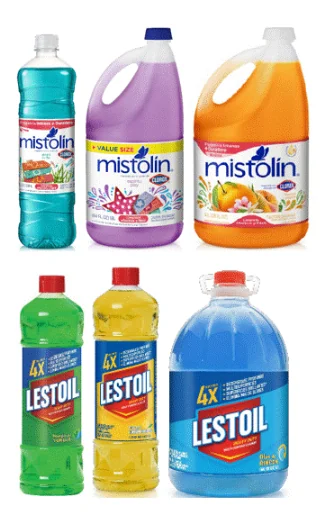
The Mistolin and Lestoil recall applies to specified scented cleaners sold in Puerto Rico and the U.S. Virgin Islands. Check the product, scent, bottle size, barcode and side-of-bottle date code together. The affected production code begins with PR01 followed by five digits from 25091 through 26168. Stop using a matching product, save the required photographs and register for reimbursement before disposing of it as instructed.
CPSC announced this recall on September 3, 2026. This guide checks the notice and current manufacturer instructions as of October 27, 2026; it does not describe a new October recall. Product Recall Checker is independent and does not administer claims. The agency notice and official recall website provide the authoritative product scope and remedy.
Confirm the product and sales region before checking the code
The CPSC notice, recall 26-741, covers about 6.3 million bottles of scented Mistolin Dilutable Cleaners and scented Lestoil Heavy Duty Multi-Purpose Cleaners. It expressly limits the recall to products sold in Puerto Rico and the U.S. Virgin Islands. The named manufacturer is Clorox Manufacturing Company of Puerto Rico, Inc.
Retailers listed include Walmart, Sam's Club, Costco, Supermercados Econo, Supermercados Selecto and other major retailers in those territories. Recognizing one of those chain names is not enough to establish a match. The sales region, product variant and production code all matter. A bottle purchased at a mainland store should not be classified solely because the chain also operates in Puerto Rico.
If someone brought the bottle from a trip or gave it to you, establish where it was bought when possible. The cupboard where it sits today does not necessarily identify its original sales market. If its origin is uncertain, use the photographs and any available purchase record to ask the recall administrator rather than declaring it included or excluded from a regional headline.
This notice does not recall every Clorox product
The company name in the headline should not be confused with a product label. This notice identifies Mistolin and scented Lestoil cleaners; it does not identify Clorox bleach as the recalled product. Use a photograph of the actual cleaner and its identifiers when sharing the information with family members.
The official recall hub also expressly excludes Lestoil Original (Unscented) and says Mistolin and Lestoil cleaners made and sold in other markets are outside this recall. Those scope statements should not be expanded into a general assessment of every household cleaner. A different product or another recall requires its own check.
Read the scent, UPC and PR01 date code together
The barcode identifies a product variant; the date code identifies the relevant production range. Neither is interchangeable with the purchase date on a store receipt. Work through the fields on each bottle rather than assuming bottles stored together share the same code.
Keep the original label intact and photograph it before disposal. A clear front view helps establish the brand and scent, while separate close-ups show the barcode and side printing. A shopping receipt can support the purchase price, but it normally cannot show which production code is printed on the bottle in your cupboard.
Match the affected scent and bottle size
| Product line | Scents named in the notice |
|---|---|
| Mistolin Dilutable Cleaners | Alegra tu Día; Espíritu Play; Flores de Primavera; Fresco Despertar; Frescura de Lavanda; Frescura Tropical; Manzana y Canela; Pino y Especias; Sólo para Ti |
| Scented Lestoil Heavy Duty Multi-Purpose Cleaners | Energía del Yunque; Fuerza de Lavanda Tropical; Intenso Limón Boricua; Olas de Rincón |
The notice lists 28, 40, 64 and 128 fluid-ounce bottles across the affected products. This does not mean every scent was sold in every listed size. Compare your particular scent and size with the official product-and-UPC table. Keep the Spanish scent wording from the label when contacting support so a translated description does not obscure the exact variant.
Read the five digits after PR01
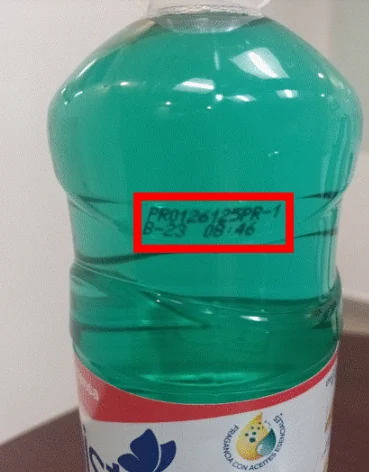
Look for PR01 at the start of the side-of-bottle date code, then read the five-digit number immediately after it. The affected interval runs from 25091 through 26168. CPSC says that corresponds to production from April 1, 2025 through June 17, 2026. It is a production range, not a requirement that you bought the bottle on those dates.
As a reading example, the boundary numbers 25091 and 26168 are within the stated interval. PR01 followed by a number outside that interval does not match this code criterion. The prefix alone is insufficient, and a number copied from the barcode is not the five-digit production number. If the printing is smeared or partly missing, photograph what remains and ask the administrator rather than filling in the missing characters.
Photograph the full barcode when digit counts differ
There is a wording difference between the official sources: CPSC asks for a photograph of the 12-digit UPC, while the manufacturer's FAQ calls the number beside the barcode an 11-digit number and displays 11-digit entries in its table. Preserve the complete printed barcode and all visible digits in your photograph rather than editing a number to make it fit an assumption.
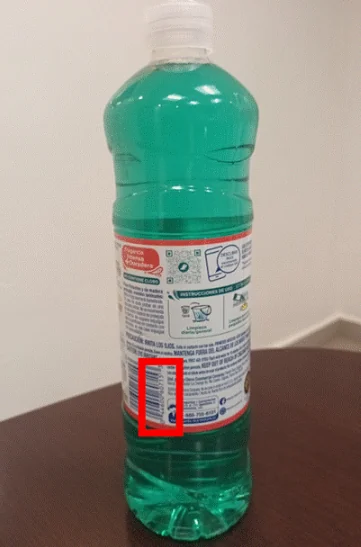
Follow the current claim form's instructions when entering the code. If a field rejects what is actually printed, send the photograph and a description of the error to the recall contact. Do not add, omit or borrow digits from another bottle without clarification. The physical label and date-code evidence are more useful than a guessed numerical match.
Understand the bacterial risk and the stop-use instruction
The recalled cleaners may contain bacteria, including Pseudomonas aeruginosa. CPSC identifies a risk of serious infection for people with weakened immune systems or external medical devices. It says the bacteria can enter through inhalation, the eyes or broken skin, while people with healthy immune systems are usually not affected.
That risk description does not create an exception allowing a healthy household to continue using an affected bottle. The manufacturer's FAQ says to stop even if the product appears normal. Do not smell, spray or test it to decide whether it is contaminated. The recall uses product identifiers to guide action rather than a home assessment of its appearance.
A cleaning-product name is also not a guarantee that a product kills every organism. The EPA distinguishes cleaning from sanitizing and disinfecting: those are different functions and claims. That distinction helps explain why the phrase “cleaner recall” is not contradictory. It does not establish how contamination happened in these particular bottles or prove that every bottle contains bacteria.
The CDC's overview of Pseudomonas explains that the organism occurs in the environment and can cause infections, particularly in vulnerable healthcare patients. Its discussion of antibiotic resistance is general background. The recall notice does not identify a specific resistant strain, so headlines about “drug-resistant bacteria” should not be treated as a confirmed laboratory finding for your bottle.
No incidents or injuries were reported in the September 3 notice. Preserve that date when discussing the figure; it is not a guarantee that exposure cannot cause harm. If someone has a health-related concern after use, seek medical attention. The manufacturer's recall FAQ also directs consumers to call 855-215-5439 to be routed to a Medical Information Consultant for a potential adverse reaction. A refund application cannot diagnose an infection.
Request the correct refund with or without a receipt
Register through the official reimbursement form linked by CPSC or use the contact options on the manufacturer recall hub. The published phone number is 855-215-5439, and the recall email is [email protected]. Use those official routes when asking about a particular bottle or existing application.
The claim process verifies a recalled product and then issues the stated remedy. A store purchase, a photograph and a receipt each answer a different part of that process. Keep them connected to the correct bottle, especially if you have several scents or sizes from different shopping trips.
Save both code photos before registering
CPSC calls for pictures of the barcode and the date code printed on the side. Take both and verify that they are readable before submitting. Keep a wider product photograph as useful context, but do not treat it as a replacement for either identifier close-up.
The manufacturer's FAQ also describes an email option for sending the UPC photograph and contact information, including a mailing address. Because the CPSC instructions request both identifiers, retain and provide the date-code image as well. If an application or email exchange requests more information, answer that specific request rather than assuming an abbreviated FAQ means a different identification rule applies.
Save the submission confirmation and a copy of the details entered. If the web form does not load, the phone and email contacts provide a way to ask for assistance. The form is a JavaScript application, so a blank loading screen is a technical problem to clarify, not proof that the recall has ended.
Receipt status changes the price basis, not the bottle check
The CPSC notice distinguishes two refund calculations: the purchase price with a receipt, or the manufacturer's suggested retail price without a receipt. A missing receipt does not automatically prevent a remedy for an eligible bottle. It also does not remove the requirement to establish that the bottle belongs to the recall.
This is why “no receipt required” should not be shortened to “no proof required.” You still need the product evidence requested in the official process. A UPC photograph identifies a variant, and the production code helps determine whether it is in scope. If the receipt covers several purchases, make clear which item corresponds to the recalled bottle and preserve the original record.
Do not assume the suggested retail price equals a price quoted in a news article or the current shelf price at another retailer. Ask the administrator to explain the amount if you cannot reconcile it with the applicable refund basis. This guide does not provide an invented reimbursement table or promise extra compensation beyond the official remedy.
Understand the current check-delivery estimate
The manufacturer's current FAQ says reimbursement is by check covering product costs and approximate tax, with an estimate of approximately four to six weeks after the request is processed. Elsewhere it connects issuance to confirmation that the product is part of the recall. Treat that as the manufacturer's processing estimate, not a guaranteed arrival date.
The clock does not start for every consumer on September 3 simply because that was the announcement date. If you applied later, or additional evidence was requested, ask which processing stage your own application has reached. Confirm that the mailing address is correct and keep the response about issuance or delivery.
Use the official recall route for reimbursement. A law firm's case-intake form or an article about litigation is not the manufacturer's claim form and does not establish the refund status of your bottle. If you are following a separate legal matter, its requirements should not be substituted for the product photographs and registration described here.
Dispose of the cleaner in its original container
For this particular recall, the official instruction is to dispose of the product in its container with household trash. The manufacturer's FAQ places disposal after submitting the recall information. Save the required photographs and application record first so the identifiers are available if a question arises later.
Keep the liquid in its original bottle rather than pouring it into another container. The recall does not tell consumers to empty it down a sink, return it to a store or reuse the bottle. Do not continue cleaning with it to finish the contents before applying. The stop-use instruction applies to the remaining product regardless of how much is left.
Do not try to fix the recalled cleaner by adding bleach, another disinfectant or any other chemical. The CDC's household cleaning guidance says not to mix cleaning products or chemicals. The recall's remedy is reimbursement and disposal, rather than home reformulation or an improvised attempt to sterilize the contents.
Keep the bottle unavailable for household use while completing these steps and tell anyone who normally uses the cleaning supplies. If it is leaking or another circumstance makes the published disposal instruction unclear, ask the recall administrator and the local waste authority for guidance. Do not substitute a disposal instruction from a battery, pesticide or different cleaner recall.
Check each additional bottle before clearing the shelf. The same scent or a matching UPC can appear on bottles from different production periods. Conversely, different affected scents may all require a claim. A short inventory connecting each bottle to its own photographs helps prevent either overlooking an affected bottle or treating every cleaner in the cupboard as recalled.
Handle missing bottles, unclear codes and unresolved claims
The most difficult question for some owners is not the receipt but the product evidence. A used-up bottle, a torn label or faded side printing can prevent the usual code check. The official no-receipt provision should not be treated as an automatic waiver of those identifiers. Explain the exact problem to the recall administrator and ask what evidence can be reviewed.
Similarly, a bottle outside the published range should not be entered with an altered code to make it match. If you believe an apparently nonmatching product caused a hazard, report the concern accurately. Product identification, eligibility for this refund and evaluation of a reported incident are related but distinct questions.
Ask the administrator before guessing eligibility
Send the clearest available photographs and identify any missing information. If you have no bottle, say that directly and provide any retained purchase records or earlier photographs. This guide cannot guarantee approval without the requested evidence, but neither should a third-party headline be treated as an individual decision on your application.
For an existing claim, include the submission date, reference number and the last communication. Ask whether the remaining issue is product eligibility, photograph review, reimbursement calculation or delivery of an issued check. Quote any estimate you received accurately. If your mailing address has changed, ask the administrator how to update the existing record.
Keep an account of contacts and replies. A screenshot showing that a request was sent is useful, but it is not proof that the identifiers were verified. A clear record lets you explain the unresolved step without sending contradictory versions of the same bottle's details.
Separate a remedy complaint from a medical or safety report
If you have contacted the company and continue to experience a remedy problem or cannot obtain a response, use the CPSC recall complaint form. The agency asks consumers to contact the company first and allow for a response. Include the recall link and the specific difficulty, such as an unanswered request for help with a code or an unresolved reimbursement question.
CPSC says the form is not a company refund application and its staff do not negotiate higher refunds or different remedies for individual consumers. Do not assume submitting it will issue a replacement check or establish a new payment deadline. Keep the manufacturer's claim record and the agency complaint record separate.
A hazardous incident or product-related injury can be reported through SaferProducts.gov. Seek medical advice for health concerns; neither a recall match nor a refund approval establishes a diagnosis or proves what caused symptoms. Use the manufacturer's Medical Information Consultant contact for its stated purpose as needed.
For other household products, our latest recall listings and major recall guide can help begin the search. Carry forward the same method: exact product, exact identifiers and the right official notice. For Mistolin and Lestoil, keep the regional scope, scented variants and PR01 interval together whenever sharing the recall with someone else.
Comments
Comments are reviewed before publication. Do not post personal information, serial numbers, medical details, or emergency reports. For urgent safety concerns, use the official agency contact in the recall notice.
Sign in with Google to leave a comment
Loading comments...