A Listeria recall applies to the food and identifiers in its official notice. This selected U.S. list, checked October 17, 2026, separates recent product warnings from older outbreak investigations. Match the full product name, package size, lot or date restriction, and the latest notice version. Do not eat food that matches a recall; follow the specified return or disposal instructions.
Product Recall Checker is independent and does not replace FDA, USDA FSIS, a retailer’s official notice or medical advice. Products listed together here should not be assumed to share one outbreak.
Read the product list and the outbreak status separately
A recall tells you which products a company is removing and what consumers should do. An outbreak investigation examines linked illnesses and their possible source. A food can be recalled after a positive test without a confirmed human outbreak. An investigation can also remain open before officials identify a food. FDA explicitly distinguishes these situations in its investigation table.
| Food or event | Document to open | Important distinction |
|---|---|---|
| Starfish smoked seafood | October 9 trio and October 16 salmon notices | Two product descriptions and separate code checks |
| Bettergoods lemon Alfredo fettuccine | October 1 expansion | All lots of the specified 22-ounce product |
| June 2026 soft-cheese investigation | FDA and CDC event updates | Use that event’s product and status statements |
| 2025 prepared pasta; 2024 BrucePac products | Original event pages and downstream lists | Historical examples, not automatically today’s notices |
Use FoodSafety.gov’s agency links to reach FDA notices, FSIS meat and poultry actions, and CDC investigations. One agency’s list is not a substitute for the others. In particular, the number of company announcements is not a count of outbreaks: several retailers can recall meals that contain an ingredient from one upstream supplier.
Read each record with two separate questions in mind: “Does this package match?” and “What has the health investigation established?” A statement that no illnesses were reported on the announcement date does not erase a product recall. A declaration that an outbreak has ended does not turn stored recalled food into an acceptable meal. This list offers specific entry points; it does not claim to enumerate every Listeria-related action in the United States.
Starfish smoked seafood: check both October notices
Starfish illustrates why the latest official page matters. The October 9 FDA posting describes a seafood trio; a later FDA posting, published October 16, describes sliced Norwegian salmon with different identifiers and distribution. Open both when reconciling an older alert, but do not combine their fields into a blanket recall of every Starfish smoked-fish product. Use the latest product-specific notice and ask the distributor to resolve an uncertain package.
The October 9 seafood-trio package
The October 9 page names Starfish Seafood Trio, containing cold-smoked salmon, halibut and trout, in an 8-ounce vacuum package. It lists lot D139149161-153 and expiration December 1, 2027. That explains the trio wording still present in older news stories and saved recall lists.
Those old identifiers are not the identifiers of the sliced-salmon package on the later page. If an alert you received says “trio” but your label says Norwegian salmon, do not dismiss the warning because the old code differs. Equally, do not assume that the newer salmon notice alone establishes the current handling instructions for a trio you own. Send the full package information to Krasnyi Oktyabr and ask which notice applies. Keeping each document’s product description intact prevents an ambiguous old screenshot from becoming a misleading combined list.
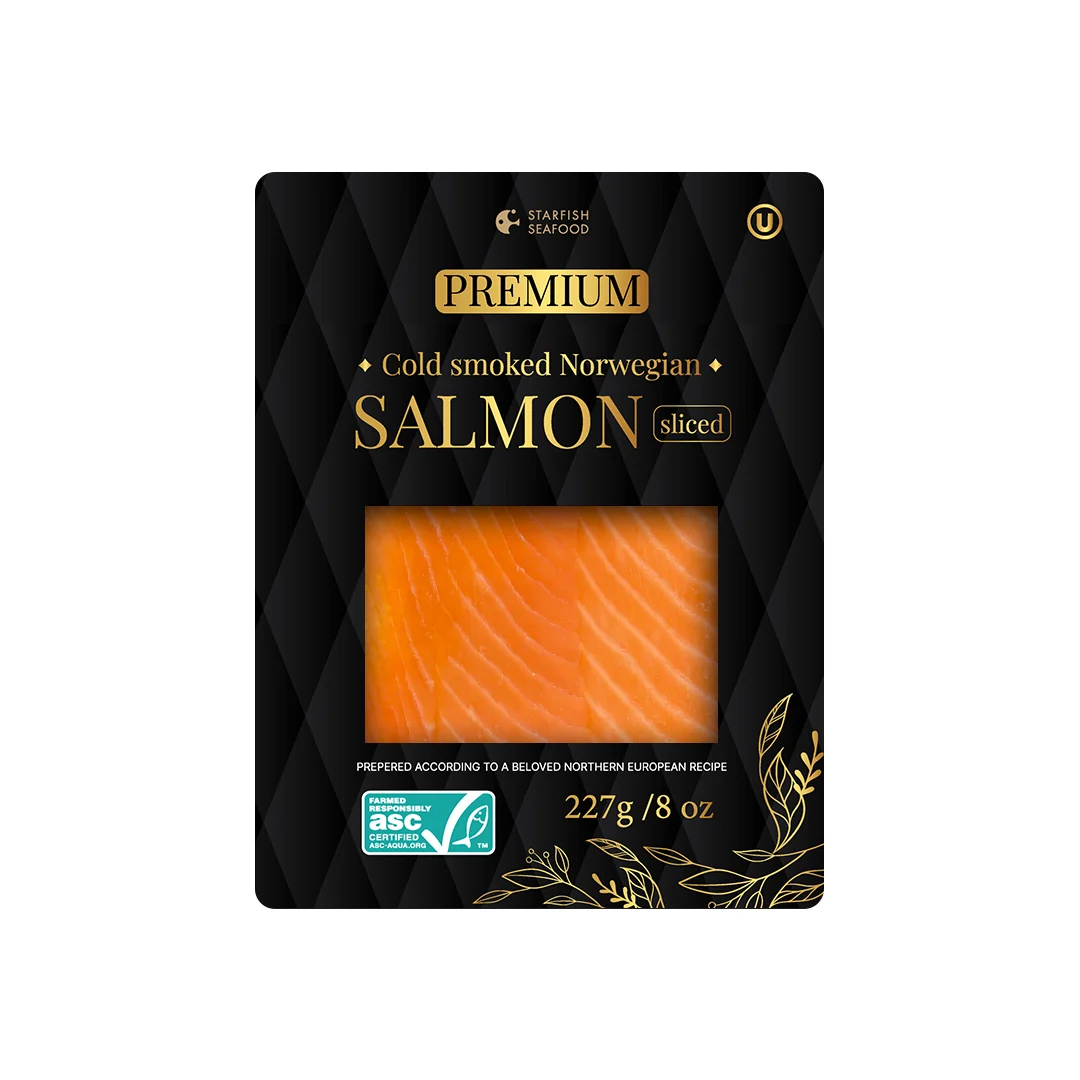
The October 16 cold-smoked salmon notice
The later FDA notice specifies Starfish Seafood Premium Cold Smoked Norwegian Salmon Sliced, 227 grams/8 ounces. It gives UPC 4751048940099, lot D080-148, and best before 27.11.2027, meaning November 27, 2027. The product is frozen and vacuum packaged, with Latvia identified as its origin.
That page lists distribution in New York, Florida, Georgia, New Jersey, Pennsylvania and Ohio. Its company-announcement date is October 9, while its FDA publication date is October 16. These dates should not be counted as two independent incidents. The stated action is not to consume the affected salmon and to return it to the purchase location for a full refund. Contact Krasnyi Oktyabr at 718-858-6720, weekdays 9 a.m.–5 p.m. Eastern. The notice reports no associated illnesses as of its publication; it does not establish a link to another Listeria outbreak on this page.
Bettergoods lemon Alfredo fettuccine: the all-lots expansion
Gias Foods’ October 1 notice covers all lot codes of bettergoods Authentic Italian Lemon Alfredo Fettuccine, frozen, in the 22-ounce yellow package, UPC 194346442706. It was distributed nationwide at Walmart. The instruction is to return the affected product to the purchase location for a full refund; the company contact is [email protected].
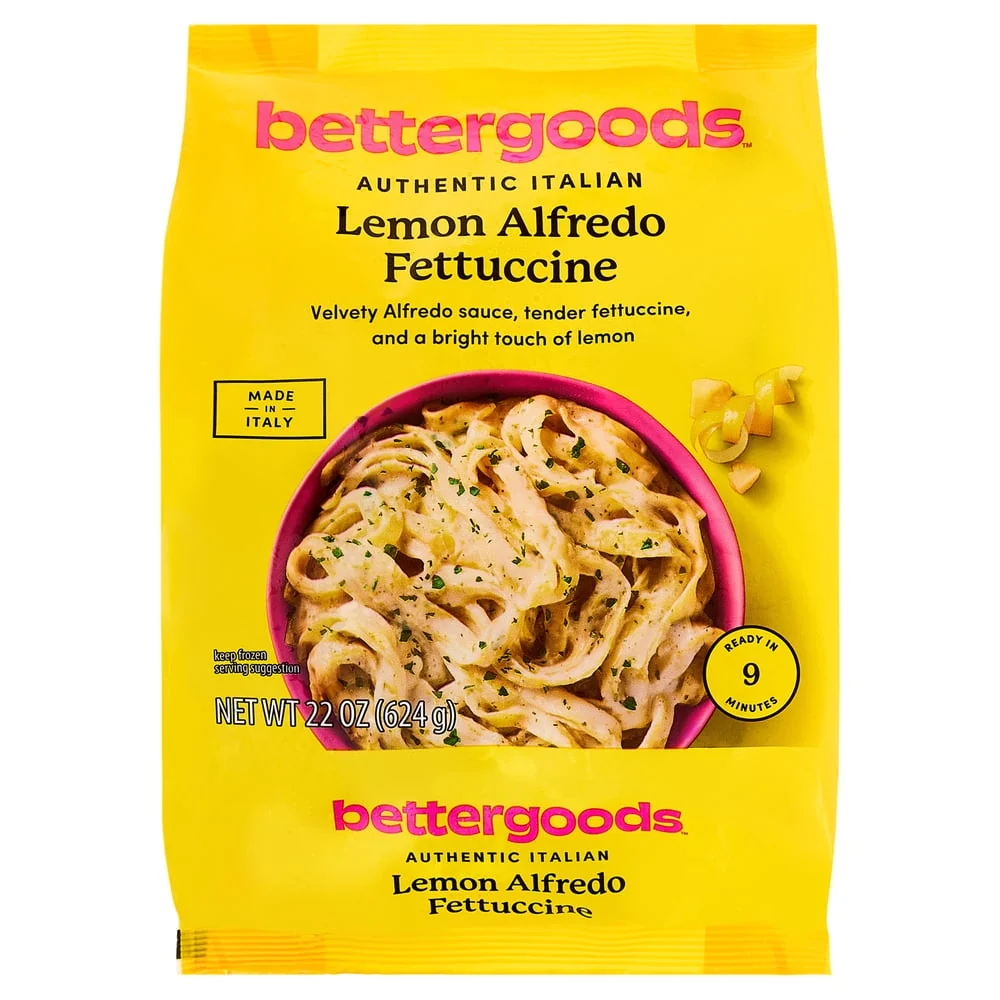
The original September announcement listed L6079C and L6080C with September 2027 expiration dates. A saved list limited to those codes is therefore incomplete after the October expansion. If your bag is the specified product but carries another lot, do not use the old two-lot restriction to rule it out.
The company attributed the recall to state sampling and reported no illnesses as of the October announcement. That statement does not link this product to the separate 2025 prepared-pasta outbreak. “Pasta” and “Listeria” are not enough to establish that two notices concern the same supplier, production run or illness cluster.
Check reserve bags in the freezer and any portions transferred into other containers. Record what you know about the original package before contacting the store; describe missing information honestly. The words “all lots” expand the code scope of this named product, not the scope to all bettergoods meals, all Alfredo sauces or every Walmart frozen-food item. Our Walmart Listeria guide provides retailer-specific navigation when you also need help finding a purchase record or distinguishing older Walmart notices.
Soft cheese and older outbreak-linked foods
Older event pages answer a different question from a list of this week’s announcements: whether food bought earlier and still stored at home matches a documented recall. Read the final update before the previous chronology. Otherwise, a search landing midway down a long investigation page can make an ended event appear ongoing.
The June 2026 cheese investigation has its own product scope
FDA’s soft-cheese investigation page identifies an outbreak linked to requesón supplied by Clover Hill Dairy. Its current status is ended, with the investigation complete. CDC’s August 26 update reports 15 cases in four states, 14 hospitalizations and one death. Those are this event’s dated figures; they are not a total for the fish or pasta recalls above.
The affected supply chain includes repackaged cheese, so a front-label brand alone can be insufficient. FDA describes Clover Hill Dairy manufacturer or plant number 24-128 on clamshell labels where available. Its linked product lists identify the company’s expanded cheese recall and distributor products, including certain La Colonia and Selectos Latinos requesón cheeses. Use the corresponding company notice to match the actual product rather than extending the recall to every item carrying a distributor’s brand.
“Outbreak over” does not mean an old recalled container can be eaten. FDA still tells consumers to check refrigerators and freezers. Its advice for this cheese event is to discard frozen cheese without original packaging when you cannot determine whether it belongs to the recall. For a purchase cut or repacked at a store, ask the store for manufacturer and receiving information instead of inventing a missing lot number.
Prepared pasta and BrucePac are separate historical events
The 2025 prepared-pasta investigation has its own linked companies and product lists. FDA’s February 12, 2026 update marks that investigation ended and retains instructions to check stored recalled meals. The 2026 bettergoods lemon Alfredo notice is a different document; matching the word “fettuccine” does not establish a shared recall.
Similarly, the official BrucePac meat-and-poultry bulletin belongs to the October 2024 action. A downstream meal may display a retail brand rather than the ingredient supplier. Find the meal in that event’s list, then compare its own identifiers. Do not apply an upstream manufacturer’s establishment number to an unrelated package or assume that every meal sold by the named retailer was recalled.
These examples also explain why retailer-specific archives can be useful without being interchangeable. The ALDI Listeria guide focuses on ALDI’s historical notices; the cross-brand list here helps you choose the right event before checking any store-specific details.
Match identifiers across brands, retailers and ingredient recalls
Read a recall as a set of conditions. FDA’s consumer recall guide explains the identifying details notices supply, including names, packaging, UPCs, codes, dates and distribution. Some conditions identify a retail product, while others restrict which batches of that product are affected. Missing one condition can change the answer.
| Field | What to compare | Common mistake |
|---|---|---|
| Product and format | Full recipe; frozen, chilled or shelf-stable form | Matching only “Alfredo” or “salmon” |
| Size and UPC | The exact retail package | Using a different size’s barcode |
| Lot and date | Every listed restriction or an explicit all-lots statement | Reading two dates as one broad range |
| Manufacturer or plant | The identifier requested by that notice | Substituting an unrelated supplier’s number |
| Notice version | The most recent product-specific update | Using an old two-lot screenshot after expansion |
A retailer list tells you where affected food may have gone, but it is not a lot code. FDA’s cheese investigation warns that such store lists can be incomplete or can include locations that did not actually receive the product. Pair the store information with the product identifiers. For repacked food, ask the deli or store to trace its receiving records to the manufacturer and affected shipment.
If the label is missing, separate confirmed facts from assumptions. A receipt can establish a purchase date and item, while a photograph of a package may establish a lot. Neither should be silently substituted for the other. Describe any mixed batches or shared portions when contacting the company. A nonmatch to one recall does not establish that a food is free of every other defect; continue checking the specific product when new information becomes available.
What to do with recalled food and possible exposure
Once the package matches, stop serving it and follow its notice. Do not taste a small portion to judge whether it is affected, and do not treat ordinary cooking directions as an alternative to a recall’s return or disposal instructions. Photograph the identifying label if you can do so without opening or spreading the food, then keep children, pets and other household members from taking it.
Tell anyone who received part of the same purchase which exact product was involved and send the official link. A useful message includes the full name, size and codes, rather than “all cheese” or “all frozen pasta.” If food was prepared for a group, preserve the menu, purchase record and dates so a healthcare professional or public-health investigator can understand the exposure.
Remove the food and clean affected refrigerator areas
CDC’s five-step refrigerator cleaning instructions cover removing recalled food, emptying the affected storage areas, washing removable parts, cleaning the interior and returning food to clean storage. Clean surfaces and utensils that contacted the recalled food, including a preparation counter or reusable container. Wash hands after handling the package and cleaning.
Use the official cleaning directions and the label of any cleaning product. Do not improvise stronger mixtures or combine cleaning chemicals. Cleaning the refrigerator does not make the recalled food acceptable to eat. If you are keeping a sealed package temporarily for a company’s requested return, keep it separate and clearly marked so another person does not mistake it for food still intended for dinner.
When to contact a healthcare professional
CDC’s symptom guidance says to contact a healthcare provider if you ate recalled or outbreak-linked food and develop fever with other symptoms, such as fatigue or muscle aches. Mention the suspected food and when you ate it. Severe symptoms can include headache, stiff neck, confusion, loss of balance or seizures; seek medical care promptly rather than waiting for a refund decision.
People who are pregnant, aged 65 or older, or have weakened immune systems face higher risk of serious illness. CDC notes that most experts do not recommend testing or treatment for someone who ate possibly contaminated food but feels well; discuss individual questions with a healthcare professional. Do not self-prescribe antibiotics, and do not use a recall list to diagnose an illness. Keep the package information and timeline available so the clinician can assess the situation accurately.
Keep a useful recall record as notices change
A useful saved record includes the official URL, the date you checked it, the notice’s publication and update dates, and the identifiers you compared. Add a clear result: confirmed package match, a particular field still unknown, or company clarification requested. Avoid a bare “safe” label; it conceals which notice and which product were actually checked.
Keep product scope, regulatory status and outbreak status in separate fields. FDA’s recall index defines a terminated recall in terms of removal or correction work and disposition. FDA’s enforcement reports can provide classifications and changes to a record. Neither should be treated as a substitute for the current consumer directions or as permission to eat a matching package still at home.
When a notice changes, compare what changed rather than simply replacing the date on your notes. Did the product name change? Were all lots included? Did a new retail package appear? The Starfish documents require close attention to product identity; the bettergoods expansion changes lot coverage. These are different kinds of updates, and a short summary that says only “recall expanded” may lose the detail that matters to your package.
For a return, retain the store’s instructions, submission confirmation and any reference number until the process is resolved. If the label is unclear, send readable photographs and ask a precise question about the missing field. For an illness concern, maintain a separate medical timeline; a refund confirmation does not establish a diagnosis.
Use our guide to CDC outbreaks versus FDA and USDA recalls when choosing the right official source, and latest recall listings for new starting points. Reopen the official notice before sharing a warning so the next person receives the product boundaries and actions that were actually verified.
Comments
Comments are reviewed before publication. Do not post personal information, serial numbers, medical details, or emergency reports. For urgent safety concerns, use the official agency contact in the recall notice.
Sign in with Google to leave a comment
Loading comments...