Find the official Publix recall list before checking a product
The official starting point for a Publix recall list is the Publix newsroom recalls page, also linked from the retailer's Product Information FAQ. Open the relevant announcement and compare its exact food name, size, UPC, lot or affected dates, and distribution with the package you own. If you searched for a Publix recall list PDF, first locate the original notice; a downloaded list is useful only when you know its source and version.
This guide was checked on October 17, 2026. It explains how to verify a product, save useful documentation and interpret official notices. The GreenWise berry example below is a verified 2026 recall whose FDA page now states that it has been completed and terminated. It is not presented as today's newly announced recall, and the selected example is not a complete list of every product sold at Publix that has ever been recalled.
Use two searches when needed: the retailer's name with the food, and the producer or brand printed on the label. A supplier announcement can name a product sold at Publix without using Publix in its headline. Likewise, a general food-recall headline can mention many retailers while only a particular package, date or production run is relevant to your shopping.
For agency records, the federal food recall page helps route you to FDA and USDA FSIS resources. The appropriate source depends on the product. Keep the exact original notice rather than relying on a social post or a search preview. If the retailer directory does not display its list on your device, try the linked agency announcement or ask Publix for the specific notice; a blank list is not a product clearance.
Before starting, gather each package you intend to check and photograph its label. If the food has been transferred to another container, look for saved packaging or purchase details and note what is missing. Product Recall Checker is an independent website. Our 2026 food recall guide can help locate records, while the company or agency notice determines the affected scope and consumer action.
Use a recall PDF as a dated copy of the notice
A PDF can be convenient for checking a freezer away from a computer, sharing an exact product table with a family member, or keeping a record of the instructions you followed. Its file format does not make it complete, current or official. Begin at the retailer or agency notice, and use any download linked there. If none is supplied, your browser's print or save-as-PDF option can create a personal reference copy of the webpage.
The official Publix FAQ directs customers to a recalls webpage; it does not establish that one universal PDF contains every current Publix recall. Search results can also surface supplier manuals, business forms, old announcements and third-party lists. A document mentioning Publix is not necessarily intended to tell a household which groceries to discard. Check who published it and what event it actually describes before using it.
What to save with a printed or downloaded list
Keep the source URL, announcement date, update date if shown, and the date you saved the file. Preserve the complete product table and its notes, including any distribution limits and remedy contact. A cropped image that retains a product name but cuts off the affected lot range is a poor checking document. So is a printed first page that excludes the next page's continuation of the list.
- Use a filename that identifies the product and notice date.
- Check the print preview for clipped UPCs, missing columns and unreadable labels.
- Keep the official link with the file so you can reopen the current version.
- Mark your own package comparisons separately; do not edit the source table to make an uncertain match look confirmed.
Suppose a saved notice names one lot and a later official update names all lots of that same defined product. The old PDF remains a record of what was announced earlier, but it no longer supplies the complete range for a fresh check. FDA's Enforcement Report documentation describes updates to code information and product descriptions. Revisit the original source when circumstances change instead of trusting the date on a downloaded file's folder.
If you share a copy, include the original link and its saved date in the message. That small step lets the recipient verify the information independently and prevents a historical document from circulating as an undated current warning.
A verified 2026 example: GreenWise frozen blueberries and mixed berries
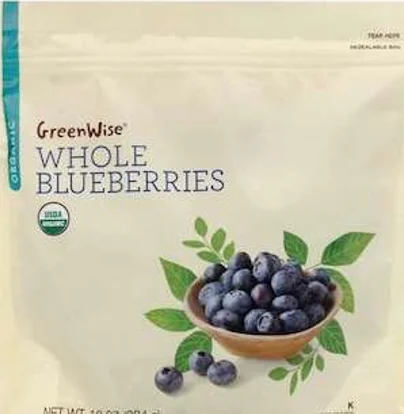
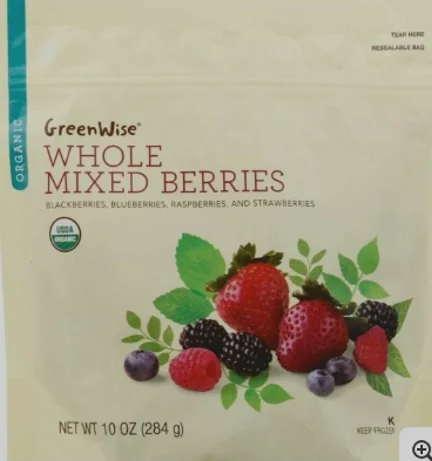
Publix announced an all-lots recall of specified GreenWise organic frozen berries on July 29, 2026; FDA posted the announcement July 30. The stated concern was possible E. coli O145:H28 contamination. The official announcement lists these four products. Its page now identifies the recall as completed and terminated.
| GreenWise organic frozen product | Package size | UPC as published |
|---|---|---|
| Whole Blueberries | 10 ounces | 41415-06453 |
| Whole Blueberries | 48 ounces | 41415-12053 |
| Whole Mixed Berries | 10 ounces | 41415-06753 |
| Whole Mixed Berries | 48 ounces | 41415-12153 |
How the all-lots notice changed the earlier single-lot check
The earlier supplier announcement of July 3, 2026 covered 10-ounce GreenWise organic frozen blueberries, lot 60401, with a best-by date of February 9, 2028. The later Publix announcement covered all lots of the four defined products above. Someone using only the earlier single-lot instructions would miss that change in scope.
For your own check, compare the food and size before deciding how the all-lots wording applies. That phrase belongs to the products described by the announcement. It does not extend the recall to every frozen fruit, every GreenWise food or a different retailer's product just because it contains blueberries. Keep the source table attached to any abbreviated note you share.
Why the completed and terminated status matters
FDA's recall collection defines termination in terms of reasonable removal or correction efforts and proper disposition under the recall strategy. It is an administrative status, not a statement that a forgotten recalled package has become suitable to eat. The status should also prevent an old event from being described as a newly announced emergency.
Read three things separately: what was announced, which products were affected, and the status displayed when you check. Preserve each in your notes. If a package seems to match this historical notice and you still possess it, use the original instructions and ask the company about any unresolved handling question. Do not use the current year alone to decide that a long-lived freezer item falls outside an older event.
Compare the food in your home with the complete product description
A useful recall list tells you how to distinguish affected food from similar products. The FDA's consumer recall guidance identifies names, sizes, codes, date information, packaging photographs and distribution as relevant fields. Compare whichever fields the actual notice supplies. Do not invent a date restriction when the notice says all lots, or ignore one when it identifies only a limited batch.
| Check | Where to focus |
|---|---|
| Product identity | Full brand, food name, flavor or mixture, package size and format |
| Product code | UPC or other identifier exactly as the official notice publishes it |
| Production scope | Lot, batch, date or all-lots wording attached to that defined product |
| Distribution | States, stores or other restrictions supplied in the notice |
| Action | What consumers should do and which official contact handles questions |
Keep the code types distinct. A UPC is not a lot number, and a purchase date is not a best-by date. For relevant meat or poultry notices, USDA FSIS explains establishment identifiers that may appear in the product description. Copy them when the notice calls for them; do not use the inspection mark alone as a recall determination.
Imagine checking two bags bought on separate grocery trips. One is a different size, while the other has a partly unreadable seal. Compare each independently. The first may require a different row or notice; the second leaves a specific question unanswered. A photograph of two similar bags cannot resolve either issue without their identifiers. Write down the difference instead of forcing both into one conclusion.
If food was repacked at home, look for the original bag, a saved label photograph, or a purchase record. A receipt can support identification but may not show the production code. Tell Publix exactly what is missing and ask how to proceed. Until a possible match is resolved, keep the food out of use. Our produce recall guide can help you locate related notices, but use the original product description for the final comparison.
Handle a confirmed or uncertain recall match
For a confirmed match, keep the item out of meals and follow the original notice. For an uncertain match, identify the missing field and ask the official contact for help before using it. These are different outcomes, and recording the difference prevents an incomplete search from becoming a confident claim that a product is safe. Let anyone who prepares food in the household know which package is being checked.
Return or dispose of the food as the notice directs
In the July 2026 GreenWise announcement, Publix instructed consumers not to eat the listed berries and to discard them or return them for a full refund. It supplied Customer Care at 800-242-1227. Use the contact and procedure in the notice relevant to your own item; do not assume that a different recall has exactly the same remedy or documentation requirements.
Before a return, save readable product information and ask what the store needs if the receipt or packaging is missing. A general description of a refund is not a promise of a particular payment method or immediate processing time. If a package leaks, explain that when asking how to proceed rather than carrying loose food into the store. If the notice instructs disposal, prevent others from retrieving and eating the product.
Clean contact surfaces and protect other household members
FoodSafety.gov advises against eating or opening recalled food, donating it, or feeding it to pets. An ordinary smell check cannot exclude the microorganisms that cause foodborne illness. Do not taste a suspect food in order to decide whether a warning applies. Identification comes from the official scope and package information.
If the food contacted a refrigerator, reusable container or preparation surface, follow the CDC's recall cleaning instructions. Clean relevant removable parts and interior surfaces with hot, soapy water as directed, and wash your hands afterward. Let cold glass shelves warm to room temperature before using hot water. Do not leave other perishable food unrefrigerated for more than two hours while cleaning.
Work through actual contact points: the drawer where the package sat, the counter where it was opened, or the container used for a smoothie. Tell other household members about the affected food so that moving it does not accidentally put it back into use. Keep clean food and cleaned items separate from the handling area while following the official instructions.
Ask about missing labels or a possible illness
For an identification question, prepare the food name, package size, remaining codes, shopping location, approximate purchase date and any photographs. Say which detail is uncertain. That makes it possible for Customer Care to address the actual question without guessing what was in an unmarked container.
If someone may be ill from food, contact a healthcare professional; for an emergency, call 911. FoodSafety.gov also explains reporting to local health departments and the appropriate federal agency. Keep the health question separate from the refund request. A successful return does not diagnose symptoms, and waiting for a retailer response should not delay medical care.
Monitor updates without confusing a new posting with a new recall
When you revisit a Publix recall list, identify what has changed. A new product, broader lot range, corrected date or revised remedy can require another household check. A later database classification may describe a recall that was already announced. FDA explicitly explains that classification and posting in its Enforcement Report should not be treated as an expansion or change to a company's public warning.
The GreenWise example illustrates a real scope change: an earlier single-lot supplier notice was followed by an all-lots retailer notice for defined products. That is different from assuming a news headline about a risk classification means additional products were added. Open the original update, compare its product description and code fields, and keep the differences in your notes.
Outbreak information also has its own purpose. A CDC or FDA investigation can discuss illnesses, evidence and a developing timeline, while a recall announcement specifies products and consumer instructions. Those pages may update on different schedules. Our outbreaks versus recalls guide explains how to read them together without treating every investigation as an identical product list.
For routine monitoring, use the retailer's official directory and FDA's topic-based email updates. Treat an alert as a reason to perform the package comparison, rather than proof that every item you own is affected. If you keep a personal PDF archive, mark a superseded copy and save the current source link alongside it so another household member does not use the wrong version.
A useful final record has five elements: the exact product, its relevant identifiers, the original announcement, the date you checked and the action you took. If no notice matches, record that limited result without converting it into a guarantee. If a detail remains unclear, ask Publix or the recalling company. You can use our latest recall records to find leads, then return to the official notice for the scope and remedy that apply to your food.
Comments
Comments are reviewed before publication. Do not post personal information, serial numbers, medical details, or emergency reports. For urgent safety concerns, use the official agency contact in the recall notice.
Sign in with Google to leave a comment
Loading comments...