Updated November 10, 2026. To check a Lidl product bought in the United States, start with Lidl's US recall page, open the individual notice and compare the complete product description, package size, UPC, lot and printed date with your item. A familiar brand or a matching photograph is only a starting point. This guide explains that check; it is not a complete list of every currently active Lidl recall.
Start with Lidl's US notice page
The official Lidl US Product Recalls page links individual announcements, downloadable notices and agency information. Use the original entry instead of a cropped social-media warning. The page contains older notices as well as newer ones, so an item appearing there does not establish that it was newly recalled today.
Begin by recording three things: where the product was purchased, what the actual package says and which dated notice you are examining. Open the product-specific document before deciding whether the notice concerns your purchase. A retailer archive can help you find a warning, but its heading does not replace the document's affected-product details.
Dates also describe different events. For example, the FDA-posted Gelatelli announcement gives October 16, 2026 as the company announcement date and October 17 as the FDA publication date. That difference does not, by itself, mean two separate recalls occurred. Keep the date label with the date rather than copying whichever number appears first in a search result.
If that is the product you are investigating, our Gelatelli gelato guide covers its specific container and remedy. For another item, continue with its own notice. Our food recall records can help locate US information, but absence from a short article or search result does not establish that a product is safe.
Match the package before the headline
Put the notice and the product beside each other. Work across the identifying fields instead of stopping after the first familiar word. FDA's food recall guidance describes the package information companies supply to help consumers make that comparison. A photograph is useful, but the printed codes often distinguish packages that look almost identical.
Use the brand, size and code together
A Lidl product may be identified under a private-label name rather than the retailer's name. Search both the exact brand and the product description. Then compare the size, flavor or variety, barcode and the production identifiers actually listed in the notice. A UPC generally identifies a retail product; a separately printed lot can distinguish a particular production group. One matching field does not cancel a mismatch in another required field.
| Field to compare | Useful check |
|---|---|
| Name and variety | Read the complete description, including flavor or filling. |
| Package | Compare the stated weight, volume and container type. |
| UPC and other identifiers | Copy every digit, preserving leading zeros. |
| Lot and printed date | Match the actual code or specified range, not a similar-looking number. |
| Market and distribution | Check the stores, locations and dates supplied by the notice. |
For example, two containers can share a barcode while carrying different lots. That is a reason to check both containers, not evidence that either particular container is recalled. Keep any uncertainty visible in your notes: “lot unreadable” is more accurate than filling the space with a number copied from the announcement.
Keep sale dates separate from printed dates
A distribution period describes when products moved through the supply chain; it is not necessarily the best-by date printed on the package. Your receipt provides another date again. Compare each with the corresponding field, and do not substitute one for another because the month happens to match.
FDA's date-label explanation describes “Best if Used By” as a quality-related phrase. A future date is not an exemption from a recall. Likewise, a notice published this month can concern a product with a much later printed date. Identify the affected package first; use storage or quality guidance separately rather than as a way to override a recall instruction.
Read a dated example without broadening its scope
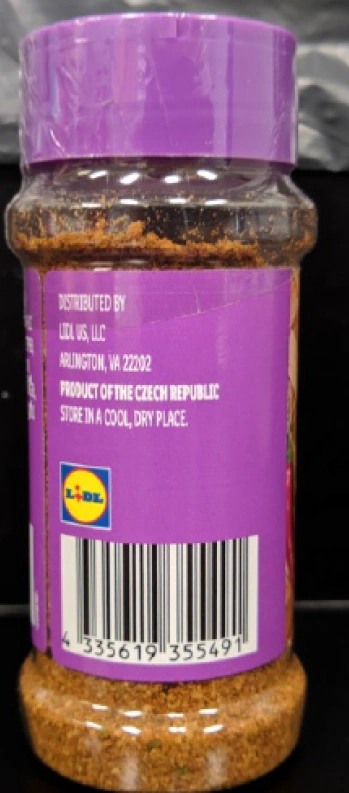
The August 2026 Vitasia notice illustrates why all the fields matter. Lidl identified one lot of Asian Style Wok Spice Mix because of potential Salmonella contamination. The announcement date is August 11, 2026; FDA posted it on August 12. Those dates belong to this event, rather than a new warning created whenever the page is shared again.
| Vitasia notice field | Published identifier |
|---|---|
| Product | Asian Style Wok Spice Mix; Vitasia Chinese Style branding |
| Size | 1.58 oz (45 g) |
| UPC | 4335619355491 |
| Lot | 155846 |
| Best-before marking | JUN 2028 |
The barcode can get you to the correct product family, but it does not replace the lot and date comparison. Look around the actual container for the remaining markings. The table concerns this specified spice mix; it is not a declaration about all Vitasia foods, every spice jar or products sold under the same name outside the US.
Why an expanded cookie notice changes the check
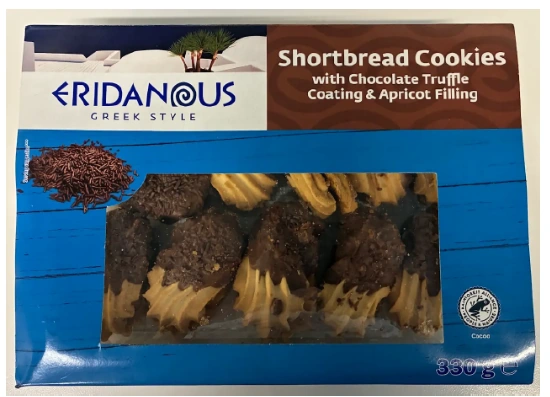
A notice can also change after its first publication. Lidl's July 31, 2026 ERIDANOUS expansion followed an initial July 24 notice. It included two 330 g cookie varieties with foreign-language ingredient and nutrition panels: the chocolate-truffle coating and apricot-filling product, UPC 4056489125839, and the apricot-filling, cocoa-topping and coconut-sprinkle product, UPC 4056489125846.
The expanded announcement concerns missing English ingredient, nutrition and allergen declarations, identifying wheat, soy, milk, egg and tree nut (coconut). Its scope is the specified products with the described packaging problem. Do not invent a separate lot restriction when the notice does not provide one, or replace its packaging condition with a guess based on the front of the box.
If you previously checked only the initial document, reopen the expansion and compare again. Keep both the earlier and later dates in your record so you can explain which version you used. An expansion is useful evidence that a saved screenshot can become incomplete; it is not a reason to classify every product from the retailer as affected.
Follow the remedy in that exact notice
After matching a product, read the action paragraph before deciding what to take back to a store. FDA's consumer recall explanation emphasizes following the notification's instructions. A food disposal instruction, a household-product repair and a refund process are different actions. Do not transfer one product's arrangement to everything sold by Lidl.
For the Vitasia lot above, the announcement tells customers to discard the recalled product or return it to their nearest Lidl for a full refund. It explicitly says a receipt is not required for return. That is the stated remedy for this notice, not a general promise about every recall or every request submitted after disposal.
If contacting customer care, identify the notice and product first. Then explain whether you still have the package, whether its code is readable and which instruction you need clarified. The Vitasia announcement provides (844) 747-5435, Monday through Saturday, 8 a.m. to 8 p.m. Eastern Time. Recheck the original document when using a contact detail from an older saved warning.
For your own record, write down the route you followed and the date. If practical before disposal, preserve a clear package photograph and the relevant identifiers without keeping an affected item in use merely to build a claim. If the product is already gone, describe that honestly and ask what information the official contact can use. Do not retrieve discarded food from a bin to reconstruct a missing code.
Keep a remedy question separate from a health concern. A refund decision does not establish whether a symptom was caused by food, and a customer-care response is not a medical assessment. FDA's food-recall guidance directs consumers with symptoms to a healthcare provider. Supply relevant exposure information privately to the appropriate professional; there is no need to publish receipts, contact details or medical information in website comments.
Choose the right agency when a list does not answer your question
The next search should follow the product, not just the retailer. A missing result on one page can reflect the agency, record type, wording or date filter you selected. It is not a product-safety decision. Keep the exact label information available as you move between sources so that a broad search does not gradually replace the original question.
Food announcements and enforcement records are different views
FDA's public warnings and its Enforcement Reports serve related but different purposes. FDA explains that classification can follow the firm's initial warning, and the later posting or classification should not automatically be read as an expansion of that warning. Compare the company, product description, codes and event dates before concluding that two records describe two different problems.
If a news headline says a recall was “upgraded,” open the official record and identify what changed. A classification update, an added product and an enlarged date range answer different questions. Our FDA recall-class guide explains the categories, but a class label does not replace the affected-product details or instructions.
For meat, poultry and relevant egg products, follow the USDA FSIS route identified by the original notice rather than assuming every food belongs in FDA's announcement list. Mixed products can require a closer look. Our FDA search guide helps explain the available records; the responsible agency's actual announcement remains the authority for a particular item.
Nonfood items need a separate check
For many toys, electrical items and household products, search the CPSC recalls and product safety warnings instead of relying on a food database. CPSC provides product, date, hazard and category searches, and individual notices give the relevant remedy. A brand sold in the same store does not make an appliance part of a food recall.
For a household item, note the model and serial number or manufacturing date when the notice requires them. Photograph the actual identification label rather than only the front of the product. Compare the complete model suffix too: a similar model name can describe a different item. If the official record does not answer the question, use its designated contact rather than converting an unsuccessful search into an all-clear.
Resolve an unreadable code or a product you no longer have
If a code is missing, smudged or cut off, the comparison is incomplete. Check the notice's package photographs for the expected location, then inspect the corresponding part of your own package. Changing the lighting or photographing the label from another angle may make an existing marking readable. Do not supply the announcement's lot number as if you had observed it on your product.
Create a short uncertainty record before contacting the firm. Include the full product name, size, visible markings, purchase location and approximate purchase date. Identify the field you cannot establish. A useful question is whether the visible information is sufficient to identify the product, rather than asking the representative to confirm a conclusion you have already assumed.
A receipt or order history can help establish which item was purchased. It may not establish the production lot of the particular package that reached your home. Keep those two questions separate, especially when several packages were bought together or another household member transferred the food to a different container. Ask what further information can resolve the remaining gap.
If the item was discarded, use photographs or records you already have and tell the company what is unavailable. Do not claim to have matched a field you can no longer inspect. FDA's consumer guidance directs people to contact the company for further information; this website cannot determine a lot from a description or promise which alternative evidence a particular remedy process will accept.
Retain any answer with the notice version and date you used. That makes a later follow-up more precise if the scope changes. A clear record can also distinguish an unresolved identification question from a completed product return, which are different stages of the process.
Recheck the notice without turning history into today's recall
Save the original notice URL, the date you checked it and the package identifiers you actually read. Revisit that source when a new message describes an expansion or a changed remedy. A bookmarked document is more useful than an undated list that says only “Lidl recall,” because it preserves which product and version your earlier decision concerned.
FDA explains that its public recall announcements are eventually archived and that not every recall has a press release on that page. An old link moving to an archive is therefore different from an official determination about the package in your kitchen. Use the agency's history and the firm's instructions to resolve a specific question; do not infer current safety merely from a notice's age or search position.
If comparing ALDI and Lidl warnings, keep a separate record for each retailer and product. Our ALDI recall guide is a separate starting point. Similar product categories, shared suppliers or a combined news headline do not establish identical affected ranges. Link each package to its own original notice before combining any findings into a household checklist.
Keep UK and Irish searches in their own markets
A purchase in Great Britain should be checked through Lidl GB's notices. Northern Ireland has a separate Lidl recall page; for purchases in the Republic of Ireland, begin at Lidl Ireland's official website. Read the market stated in the relevant notice rather than assuming that one of these pages is interchangeable with the US archive.
This site's searchable recall feed uses US sources. It does not provide comprehensive UK or Irish product clearance. Product Recall Checker is an independent website, not affiliated with Lidl, FDA or any government agency. Our recall search and latest records can help locate information, while the original notice determines the affected scope and action.
Comments
Comments are reviewed before publication. Do not post personal information, serial numbers, medical details, or emergency reports. For urgent safety concerns, use the official agency contact in the recall notice.
Sign in with Google to leave a comment
Loading comments...