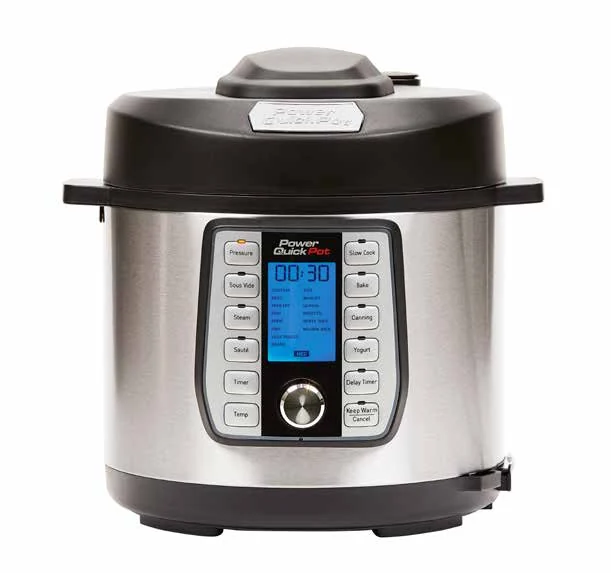
Stop using the six-quart Power Quick Pot if its back label identifies model Y6D-36. CPSC issued a burn-hazard safety warning on October 15, 2026. It says Tristar Products refused to recall these cookers or offer consumers a remedy. That means the notice does not announce a manufacturer refund, repair or replacement program.
Checked October 27, 2026, this guide explains the exact product match and the practical steps that follow. Product Recall Checker is independent and does not replace the official agency notice.
Check the back label for Y6D-36
Look for the model on the label at the back of the unit. Read it from a cold, unplugged cooker that is not operating. A front photograph can identify the brand, but the label is the better way to resolve the model. If you need someone to help read it, send a clear photograph rather than a number copied from memory.
The official warning 27-030 concerns about 393,000 units. That figure describes the affected product population; it is not the number of reported injuries. Do not confuse either figure with a model, serial number or receipt reference.
Use the brand, six-quart size and model together
The identifying combination is Power Quick Pot, six-quart capacity, model Y6D-36. The described appliance has a stainless-steel body, black pressure lid, button controls and digital display. “Power Quick Pot” appears on the front. Use those visual features to orient your search, then confirm the back label. Several pressure cookers share a similar body shape, and a resemblance in a news photograph is not an exact match.
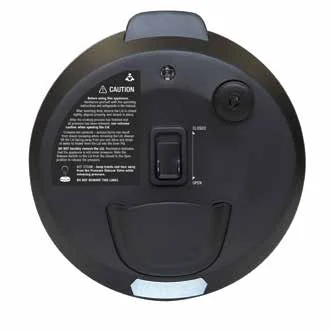
Check the order record too, particularly if a gift box or saved manual belongs to a different cooker. The notice lists nationwide sales through Walmart.com, Amazon.com, eBay.com and other retailers from approximately July 2018 through November 2023, at prices from $44 to $160. Those details can help find an old transaction. They do not turn a similarly priced cooker from another brand into this model.
If the label is worn, keep the uncertainty open and request help identifying the unit. Do not select the nearest-looking model number simply to finish the check. Keep the appliance out of use while clarifying a potential match.
Why CPSC says to stop using this pressure cooker
The agency says the lid can open while the cooker remains pressurized, unexpectedly releasing hot contents. It obtained 24 reports of that event resulting in serious burn injuries. Read that wording carefully: the notice reports incidents received by the agency, rather than providing a complete medical census or a probability for any one cooker. It does not supply enough information to calculate a household failure rate.
The hazard is not limited to a cooker that looks damaged. A model check addresses whether the appliance falls within the warning; a cosmetic inspection addresses a different question. A clean lid, intact exterior and a history of successful meals cannot establish that the specified model is outside the agency's instruction.
This is also why the response should not depend on reproducing the event. Do not cook a test batch, use water to demonstrate the fault, or try opening the lid under pressure for a recording. Your label photograph and purchase documentation can establish identity without exposing someone to hot contents. An existing incident can be described in writing without repeating it.
If you are reading the warning while the appliance is already in use, do not interpret this identification guide as a pressure-release procedure. Do not force the lid or experiment with the mechanism. The notice does not provide a new operating technique that makes the affected cooker acceptable to continue using. Immediate danger and injury require appropriate emergency or medical assistance; filling out a product report can come later.
Tell other people who use the kitchen about the warning, including someone who may only recognize the cooker by its appearance. A household message with a photograph and the model number is more useful than a vague instruction to avoid “that recalled pot.” It reduces the chance that another person starts the appliance while the buyer is looking for a receipt or waiting for customer service.
There is no announced Tristar recall remedy
Searching for “Power Quick Pot recall refund” leads to a difficult distinction: an official warning can exist without a company-operated recall program. The current warning tells consumers what to do about the hazard. It does not provide an enrollment form, shipping label, repair kit or scheduled manufacturer payment.
What the importer refused to provide
CPSC identifies Tristar Products, Inc., of Altamonte Springs, Florida, as the importer and states that it refused to recall the products or offer a consumer remedy. The notice does not explain a company's motives, and it does not decide an individual buyer's legal claim. Avoid turning the refusal into an unsupported story about bankruptcy, ownership changes or a particular lawsuit.
The practical consequence is narrower: there is no announced Tristar recall remedy to apply for through this notice. A complaint to the government does not become a manufacturer refund application. CPSC's recall complaint guidance distinguishes concerns about a remedy from contacting a company to obtain one. It also says agency staff do not negotiate a higher individual refund or different remedy.
What to ask the retailer about your purchase
You can ask the actual seller whether it has separate instructions for this warning. Give it the model, warning number and order information, and ask for a written answer. State clearly that this is safety warning 27-030. Do not assume a policy written for products under an active cooperative recall automatically supplies the answer for a warning.
A useful inquiry asks whether the seller offers any return assistance, what evidence it needs, and how the product should be handled if it accepts a return. Keep its reply and reference number. This guide has not verified a universal retailer refund program for the cooker, so it does not promise one. A refund offered for a different brand's appliance cannot establish eligibility here.
For online purchases, our Amazon account guide and Walmart product guide explain where to start checking records. A missing account alert does not cancel the model-specific warning, and an unanswered financial inquiry does not make continued use appropriate.
Avoid unofficial lid fixes and cooking workarounds
A cooker with several advertised functions can create a tempting question: could you keep using it in a different mode? The present CPSC warning tells owners to stop using the cooker. It does not announce an exception for a selected button, recipe, temperature or non-pressure cooking setting. Do not import an exception from a notice covering a different product.
Likewise, a replacement gasket, valve or lid advertised online is not evidence of an approved correction for this warning. Product names and part descriptions can overlap. The fact that a part fits, or that a seller calls it compatible, does not establish that it resolves the hazard identified by the agency. This guide does not recommend modifying the lid or disabling a locking component.
If someone claims that a new repair makes the unit usable, ask for the dated official instructions and the exact model range they cover. Compare those instructions with warning 27-030. A screenshot missing the source address, an undated support message or a video about a similar cooker cannot establish a changed agency recommendation. Keep the unit out of use while checking such a claim.
Old operating literature can still appear prominently in search. The historical Power Quick Pot manual hosted by Home Depot describes the product and its ordinary operation. It is useful for recognizing what you purchased; it is not a later correction notice for the October 2026 warning. Read dates and purposes as well as brand names when comparing documents.
For the same reason, do not rely on “I only use mine for one recipe” or “I never open it early” as an exemption. Those descriptions explain habits, not product eligibility. The unresolved hazard and the current stop-use recommendation are the relevant basis for deciding whether to put this model back on the counter.
Dispose of the cooker without passing it to another user
CPSC tells consumers to dispose of these cookers and specifically says not to sell or give them away. An appliance that still turns on can be especially easy to pass along by mistake. Removing it from your cooking routine is only the first step; make sure the next destination does not return the same cooker to somebody else's kitchen.
Contact your local solid-waste or appliance-recycling service and describe the unit and warning. Ask where an electric pressure cooker should go, whether the receiving site accepts it intact, and whether there are booking, residency or fee requirements. Do not assume a collection program for phones accepts kitchen appliances. EPA's electronics recycling information is general background; the receiving program must answer the product-specific handling question.
Keep useful identification photographs before the unit leaves your possession. Do not disassemble a pressure mechanism to obtain a better picture, separate parts for resale, or improvise a disabling procedure copied from a different recall. Ask the receiving service how it wants the item presented. If a retailer has given you specific return instructions for your purchase, clarify those before choosing the disposal destination.
Gifts, secondhand purchases and shared kitchens
The warning follows the product, not the original gift receipt. If you gave this model to someone else, contact the current user with the official notice and a clear description of the cooker. A buyer's retailer alert may never reach a gift recipient, tenant, relative or person who bought the unit used.
If you have a pending secondhand listing, remove it rather than add a vague disclaimer. Do not leave the cooker beside a donation box or label it “free.” The agency's instruction is not to transfer it to another user. When several people share a kitchen, explain which appliance is involved and where it has been placed while disposal is arranged.
For a unit already passed on, share what you actually know: the model seen on the label, the warning link and the current stop-use instruction. Avoid claiming the recipient's different cooker is affected simply because it looks similar. Ask them to check the identifying label too.
Report a product incident with the details you actually know
The warning directs reports of injury or product defects to SaferProducts.gov. That channel matters even when there is no cooperating company remedy. It communicates what happened to the product-safety agency; it is separate from asking a seller for assistance and from seeking medical care for an injury.
Prepare a concise sequence of events before completing the form. Describe the appliance, what it was doing, what you saw or heard, and the resulting injury or risk. Include the date or an honest approximation. If you do not know whether a component failed internally, say what happened externally instead of naming a mechanism you have not inspected.
Useful material to gather includes:
- The back-label photograph and a front view identifying the product.
- The approximate purchase date and seller, if known.
- The date and location of the incident and the people who directly witnessed it.
- Existing photographs, messages or records that help explain the event without recreating it.
- A distinction between symptoms you observed and any diagnosis actually given by a clinician.
The agency's reporting FAQ explains that publication requires specified information, accuracy verification and publication consent. It also explains how contact details are handled. Read those choices before submitting attachments. You do not need to publish personal documents in a social-media comment to communicate with the agency.
Keep your confirmation and a copy of the factual account. If you also contact a retailer, retain that correspondence in the same folder but label it separately so a safety-report number is not mistaken for an accepted return. Neither filing establishes a refund deadline. It is reasonable to ask what further information is needed; it is not reasonable to assume the form has approved payment simply because it accepted your report.
Do not turn the agency's 24 received reports into a claim about how many customers complained on social media or how many cookers failed overall. An individual report should add your actual experience rather than repeat a headline's figures as personal evidence.
Power Quick Pot warning questions
Several questions remain easy to mix together after reading a short news report. The answers depend on whether you are identifying the appliance, following the safety instruction or asking someone to help with the purchase. Keep those decisions separate when reviewing the following situations.
Does this notice include every electric pressure cooker?
No. The notice identifies the specified six-quart Power Quick Pot model. It is not a notice for every electric pressure cooker, every Tristar appliance, every product containing “Power” in its name or another brand such as Instant Pot. Search the exact manufacturer and model for a different appliance. Do not copy a model from this article into a report about an unrelated product.
Conversely, a product that is outside this particular notice has not been certified safe by that exclusion. It may have its own warning, recall or other problem. A precise result should say whether a specific notice matches, rather than turn one search into a general safety guarantee.
Do I need a receipt to follow the safety warning?
No receipt is necessary to act on the stop-use instruction for a matching cooker. A receipt can help identify the seller and support an inquiry about your purchase, but looking for one should not delay removing the appliance from use. A secondhand owner or gift recipient can check the back label even without the original transaction.
This is different from promising a no-receipt refund. No Tristar recall payment is announced here. If a seller separately offers assistance, ask that seller what records it requires and retain its answer. Do not assume the documentation rules for a different product carry over.
Where should I look for a later update?
Reopen the official warning and the CPSC recalls and product-safety warnings index. Check the date and exact model before relying on a later repair or refund claim. You can also use the agency's subscription page for alerts. No future remedy is guaranteed by subscribing.
For your own records, finish with the label photograph, the official notice link, any seller response and the disposal arrangements. Our latest notices and independent recall search help locate information, while the original source remains the authority for the current action.
Comments
Comments are reviewed before publication. Do not post personal information, serial numbers, medical details, or emergency reports. For urgent safety concerns, use the official agency contact in the recall notice.
Sign in with Google to leave a comment
Loading comments...